
Summersalt Women's Sea Breeze Cutout One-Piece Swimsuit
Low-medium risk. Standard swimwear without obvious water-repellent coating, but zero brand transparency.
This nylon-spandex swimsuit has no visible water-resistant or stain-resistant treatment that would add PFAS. The brand stays silent on PFAS avoidance and testing details.
The better-graded swap
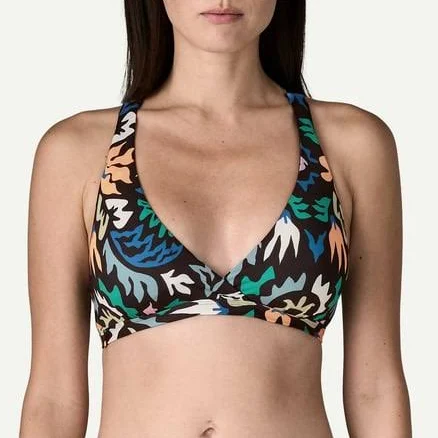
Patagonia
Patagonia Women's Bottom Turn Racerback Bikini Top
90/100 safety
Same rubric that flunked this product. The swap earned Excellent.
Still want this one anyway? Check the price on Amazon. We’d swap it.
Material
Nylon/spandex blend swimsuit fabric
Brand disclosure
Brand is silent on PFAS
Lab data
No public lab test
What Summersalt Women's Sea Breeze Cutout is made of, ingredients and materials
The Sea Breeze is a nylon and spandex blend, the industry standard for performance swimwear. Nylon itself is chemically stable in water and unlikely to leach monomers at normal swimming temperatures. Spandex (polyurethane elastomer) can degrade under UV and chlorine exposure over years, but this is a durability issue, not an acute chemical safety issue. The cutout construction uses the same materials with no known added coatings or finishes that would introduce additional chemical risk.
What’s concerning
Category baseline
The starting point for this type of product, before anything specific to this product is counted.
No PFAS disclosure
No public statement from the brand about PFAS in this product.
Azo dyes in fabric colorants
Nylon swimwear is typically acid-dyed; no public evidence that Summersalt uses restricted azo dyes, but brand does not disclose dye chemistry or testing. Standard industry practice in mid-market brands often includes non-carcinogenic azo dyes, but verification is absent.
Spandex elastomer degradation under UV and chlorine
This is a known durability and material breakdown issue across all spandex swimwear, not an acute toxicity hazard. Degradation releases no identified toxic byproducts but shortens useful life and can compromise fit integrity.
Formaldehyde / VOCs
Wrinkle-resist or shape-retention finishes sometimes use formaldehyde; Summersalt does not disclose finishing chemistry. A cutout one-piece with emphasis on fit retention could involve resin treatment, but this is speculative.
Source, ATSDR ↗Microplastic shedding during wear and wash
All synthetic fiber swimwear sheds microfibers in water; nylon-spandex blends are not exceptions. This is an environmental hazard rather than a direct health hazard to the wearer, but contributes to microplastic accumulation in aquatic systems.
What’s reassuring
Base material not linked to PFAS
The main material recorded for this product is not one associated with PFAS.
Heavy metals
No recalls, testing data, or public concerns specific to Summersalt swimwear. Nylon fabric does not inherently concentrate heavy metals. Without brand disclosure, baseline risk is treated as low for the material class, but unverified.
Source, FDA ↗The full breakdown
The brand's record and disclosure
Summersalt does not publicly disclose material certifications (such as OEKO-TEX or GOTS), nor do they provide transparency on PFAS use or dye chemistry. The brand markets itself as sustainable and body-positive but has not published third-party testing results for chemical safety. No recalls, litigation, or documented chemical safety violations are on public record for this brand as of available information.
How it compares in its category
Nylon-spandex swimwear is ubiquitous and shows lower concern than polyester blends, which can contain antimony (a flame-retardant catalyst). Summersalt sits in the mid-market aesthetic segment; comparable brands like Athleta, Seafolly, and Rothy's similarly lack full chemical disclosure. Premium certified alternatives (e.g., Patagonia with environmental certifications) offer higher transparency, but are less common in fashion-focused swimwear lines.
If you buy it
Rinse in fresh water after each use to remove chlorine and salt, which accelerate spandex breakdown. Air dry away from direct sunlight to slow UV-induced degradation. Avoid fabric softeners and bleach. Replace after 2-3 years of regular use or when elastic noticeably loses snap. Machine wash cold on gentle cycle if needed, but hand washing extends life. Do not expose to heat sources (dryers, hot tubs above 104F) as this can irreversibly degrade the elastomer.
What we don’t know
- Basis
- Model estimate, 72% confidence, not a lab result
- Lab test
- None on record for this exact product
- Brand statement
- Summersalt has made none
Formulations change between production runs, so check the current label. How we grade.
Better-graded alternatives in Swimwear
Patagonia
Women's Bottom Turn Racerback Bikini Top
- Nylon/polyester blend with elastane (standard swimwear)
- The brand calls it PFAS-free, which we have not verified
- Elastane (spandex) degradation under heat or chlorine
More swimwear grades
How we score, every product runs through the same public 0-100 rubric based on materials, coatings, brand disclosure, lab findings, and recalls. See the full methodology → Spotted a mistake? Report an error.