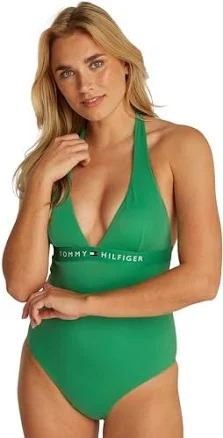
Tommy Hilfiger Women's One Piece Swimsuit
Contact Tommy Hilfiger about water-repellent coating chemistry before purchasing.
This nylon/polyester swimsuit likely has a water-repellent coating finish common in performance swimwear, historically using PFAS compounds. Tommy Hilfiger provides no testing or water-repellent coating treatment disclosure.
The better-graded swap
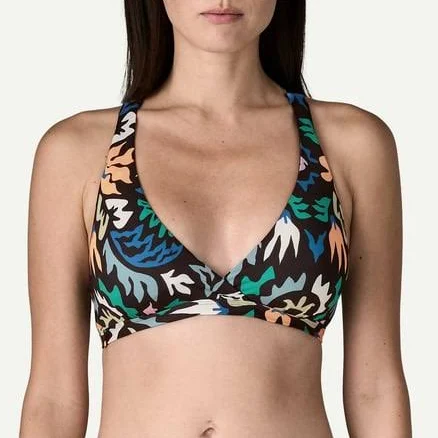
Patagonia
Patagonia Women's Bottom Turn Racerback Bikini Top
90/100 safety
Same rubric that flunked this product. The swap earned Excellent.
Still want this one anyway? Check the price on Amazon. We’d swap it.
Material
Nylon/polyester blend with likely water-repellent coating (water-repellent coating) finish
Brand disclosure
Brand is silent on PFAS
Lab data
No public lab test
What Tommy Hilfiger Women's One Piece Swimsuit is made of, ingredients and materials
This swimsuit is a nylon and polyester blend, both synthetic polymers chosen for stretch, durability, and quick-dry properties. The water-repellent coating (water-repellent coating) finish applied to swimwear typically enhances water shedding and reduces UV penetration, but most commercial water-repellent coating treatments have historically relied on PFAS chemistry, though newer alternatives exist. Nylon and polyester themselves are stable polymers at normal wear temperatures, but degradation from chlorine, salt, and UV exposure can accelerate breakdown over time, potentially releasing microplastics during washing or wear.
What’s concerning
Category baseline
The starting point for this type of product, before anything specific to this product is counted.
No PFAS disclosure
No public statement from the brand about PFAS in this product.
Waterproof / stain-resistant treatment
Water-repellent coating treatments have historically used PFAS.
Microplastic shedding from fiber degradation
Nylon and polyester fibers degrade under UV, chlorine, salt, and mechanical wear, releasing microplastics during washing and wear. Swimwear in particular is exposed to harsher conditions than apparel, increasing microfiber release over the product lifetime. Tommy Hilfiger does not publish mitigation data or fabric durability testing for this line.
water-repellent coating (water-repellent coating) finish composition
Water-repellent coating chemistry is not disclosed by Tommy Hilfiger. Historical industry reliance on PFAS for water-repellent coating is well-documented; whether this specific swimsuit uses PFAS or newer alternatives (such as polyether polyols or wax-based treatments) cannot be confirmed without brand communication. This is the primary unresolved safety gap.
What’s reassuring
Formaldehyde / VOCs
Formaldehyde-based resins are sometimes used in polyester wrinkle resistance or dye fixation. No reports or recalls document formaldehyde in this specific Tommy Hilfiger swimsuit, but nylon-polyester blends may carry low residual levels depending on dyeing and finishing processes.
Source, ATSDR ↗Heavy metals
Synthetic textiles are typically dyed with azo or reactive dyes; some azo dyes can break down into carcinogenic amines under sweat or UV exposure. No specific testing or recalls on record for Tommy Hilfiger swimwear, but this is a general risk in untested mass-market polyester colorwork.
Source, FDA ↗Antimony in polyester
Antimony trioxide is used as a catalyst in polyester production; trace residues may remain in finished fabric. No testing or recalls on this Tommy Hilfiger product; industry data suggests residual antimony in polyester apparel is typically very low and rarely detected above regulatory concern.
The full breakdown
The brand's record and disclosure
Tommy Hilfiger, owned by PVH Corp, has not publicly disclosed its water-repellent coating treatment chemistry or committed to PFAS-free water-repellent formulations in swimwear lines. The brand maintains limited transparency on chemical inputs in apparel and has no publicly available certifications (such as GOTS or Bluesign) that would restrict restricted substances in textile production. No major safety recalls specific to this swimsuit line have been documented, but the absence of disclosure does not indicate absence of risk.
How it compares in its category
Most mass-market nylon-polyester swimwear carries similar water-repellent coating opacity as Tommy Hilfiger; competitors like Speedo and Target store brands rarely disclose water-repellent coating chemistry either. Premium or eco-certified brands (Patagonia, Girlfriend Collective) tend to publish PFAS avoidance or use newer water-repellent coating alternatives, though at higher price points. Tommy Hilfiger positions as mid-premium fashion rather than performance or sustainability-focused, so chemical transparency lags behind specialty swimwear makers but is typical for the general fashion retail category.
If you buy it
Rinse the swimsuit in fresh water immediately after ocean or chlorinated pool use to reduce salt and chlorine buildup, which accelerates fiber degradation and potential microplastic shedding. Wash in cold water with mild detergent and air-dry away from direct heat or sunlight to extend water-repellent coating performance and fabric life; avoid hot water and dryer, which can damage the finish. Replace when elastic loses recovery, seams fray, or visible pilling increases, typically after 40-60 wears depending on use intensity. If PFAS sensitivity is a concern, contact Tommy Hilfiger's customer service to request water-repellent coating treatment details before purchasing.
What we don’t know
- Basis
- Model estimate, 45% confidence, not a lab result
- Lab test
- None on record for this exact product
- Brand statement
- Tommy Hilfiger has made none
Formulations change between production runs, so check the current label. How we grade.
Better-graded alternatives in Swimwear
Patagonia
Women's Bottom Turn Racerback Bikini Top
- Nylon/polyester blend with elastane (standard swimwear)
- The brand calls it PFAS-free, which we have not verified
- Elastane (spandex) degradation under heat or chlorine
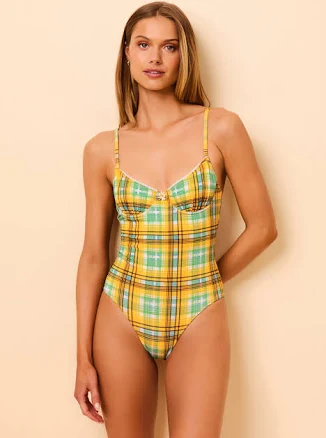
Solid & Striped
Taylor One Piece Seersucker Plaid
- Cotton/cotton-blend seersucker plaid
- We found no PFAS statement from the brand
- Azo dyes and colorfast stability
2 hazards checked on this product. See all of them.
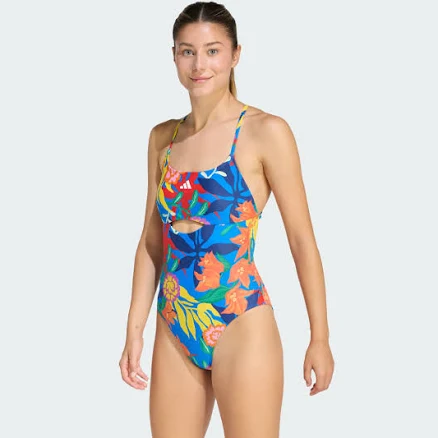
Adidas
Women's Mexicana Florals Tie-Back Swimsuit
- Polyester/nylon swimsuit fabric, likely uncoated or standard finish
- Azo dyes and synthetic colorants
4 hazards checked on this product. See all of them.
More swimwear grades
How we score, every product runs through the same public 0-100 rubric based on materials, coatings, brand disclosure, lab findings, and recalls. See the full methodology → Spotted a mistake? Report an error.