By PFAS Authority · Updated September 16, 2026
Top grades to buy
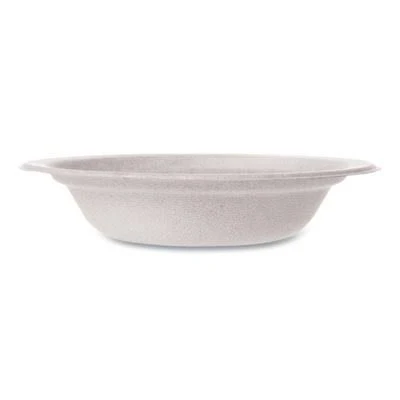
Bridge-Gate 12 oz. White Bagasse Bowl (1000 per Case)
ECO-SYSTEMS Kraft Molded Fiber Bowl
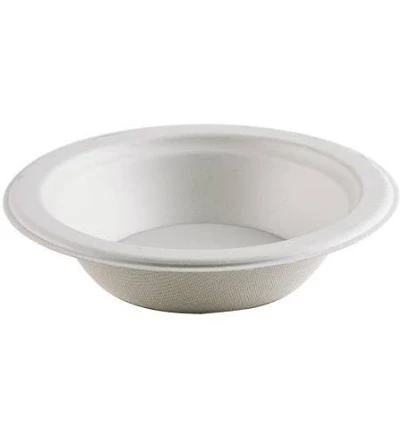
Eco-Products
EP-BL12 Renewable and Compostable Molded Fiber Bowl, 12 oz Capacity
Model-based grades, not lab tests. We flunk more than we pass. How grading works
PFAS in Compostable Bowls, Why Uncoated Bagasse Grades Best
Compostable foodware is the category where green marketing runs directly into the PFAS question, because the thing that makes a fiber bowl hold soup without going soft is often a barrier coating. In our data the pattern is clean. Certified fiber bowls grade at the top, plain fiber bowls and coated bowls backed by a certification or brand statement sit in the middle, and coated bowls with nothing else on record fall to 25 out of 100.
The Bridge-Gate 12 oz White Bagasse Bowl from Vegware leads at 100, described as uncoated sugarcane fiber and carrying BPI compostability certification in our record. Below we break down the graded bowls, including why a coated bowl with a PFAS-free brand statement still sits in the middle.
Summary comparison table
| Product | PFAS grade | Verdict |
|---|---|---|
| Bridge-Gate 12 oz White Bagasse Bowl | Excellent, 100/100 | Uncoated bagasse, BPI certified |
| ECO-SYSTEMS Kraft Molded Fiber Bowl | Excellent, 100/100 | Kraft molded fiber, uncoated or minimally treated, BPI certified |
| World Centric 11.5 oz Fiber Bowl | Good, 70/100 | Plant fiber with no coating described |
| Eco-Products EP-BL12 Molded Fiber Bowl | Good, 70/100 | Recycled paper pulp, no coating described |
| Footprint Fertile Ground Fiber Bowls | Good, 50/100 | Molded fiber with a water-based coating, Footprint says PFAS-free |
| Green Wave International OV-BL12 Bagasse Ovation Fiber Bowl | Good, 70/100 | Bagasse fiber with no fluoropolymer described |
| World Centric Compostable Fiber Round Bowls | Good, 70/100 | Unbleached plant pulp |
| Responsible Products 32 oz Compostable Bowl | Good, 70/100 | Sugarcane bagasse |
| Responsible Products Classic Bowls, Tree-Less | Good, 70/100 | Molded fiber, no coating described |
| Responsible Products Multipurpose Bowls, Tree-Less | Good, 70/100 | Molded fiber, no coating described |
| Eco-Products Molded Fiber Bowls | Good, 70/100 | Recycled paper pulp |
| Vegware Nourish Molded Fiber Tableware | Good, 70/100 | Molded fiber with an aqueous coating, BPI certified |
| Footprint Compostable 16 oz Molded Fiber Bowls Value Pack | Good, 50/100 | Molded fiber with a water-resistant coating |
| Footprint Farmers Fiber Compostable Round Bowl | Good, 50/100 | Wood pulp and plant-based fiber with a coating |
| Eco-Products Renewable & Compostable Salad Bowls with Lids | Poor, 25/100 | Plant fiber with a coating that is not described |
| Dart Compostable Molded Fiber Dinnerware, ProPlanet Seal | Poor, 25/100 | Our lowest grade here, kraft pulp with an unspecified coating |
How we graded these bowls
Every grade in this article is a model-based estimate built from publicly available materials disclosures, manufacturing descriptions and brand documentation, not a lab test performed by our team. A high score means lower concern based on reviewed sources, never PFAS-free and never safe. This category has more certification activity than most, so a word on how we treat it. We record a certification as a claim attached to a product, not as verification we repeated. BPI compostability certification matters here because BPI requires under 100 ppm total fluorine, so our model credits it as third-party verification. A compostable label without BPI certification earns no such credit. The recorded concerns here were PFAS in a grease-resistant coating, PFAS in a water or grease-resistant coating, greenwashing claims without verification, and separately two non-chemical issues, inadequate breakdown at compost facilities and thermal degradation. You can compare any specific bowl using our PFAS product finder.
Why the coated Footprint bowls sit at 50
An earlier version of this guide said the Footprint Fertile Ground Fiber Bowls carried Cradle to Cradle, FSC and MADE SAFE certifications. We could not confirm any of them, and MADE SAFE does not list Footprint, so we removed them on 17 September 2026. What we can confirm is a brand statement. Footprint says these bowls are PFAS-free, which we have not verified.
All three Footprint bowls grade 50. Each is described with a water-based or compostable coating, and our model counts a barrier coating on a fiber bowl as a water or grease-resistant treatment whatever it is called. The brand statement earns a credit and removes the penalty for saying nothing about PFAS, which is what lifts them above the coated bowls at 25.
The Excellent tier, 100 out of 100
Two bowls reach this tier, both described as fiber with no coating or minimal treatment, and both carry BPI certification in our record.
Bridge-Gate 12 oz White Bagasse Bowl is the clearest case in the category, uncoated sugarcane fiber with BPI certification. Pros include an uncoated material and a certification that caps total fluorine. Cons include that the cap is a limit rather than a lab non-detect, and it is sold by the case rather than in household quantities.
The ECO-SYSTEMS Kraft Molded Fiber Bowl grades 100 on the same signature as the Vegware bagasse bowl, a credit for the fiber plus BPI certification. A total fluorine limit is a ceiling rather than a non-detect result, and no published lab data for this bowl is in our record.
The middle, 50 to 70 out of 100
Eight bowls sit at 70 on plain molded fiber with no coating described, including three from Responsible Products, two each from World Centric and Eco-Products, and one from Green Wave International.
An earlier version of this guide put the World Centric 11.5 oz Fiber Bowl and the Eco-Products EP-BL12 Molded Fiber Bowl at 85. Their records had skipped the penalty for a brand saying nothing about PFAS, which every other silent brand carries. We corrected that on 16 September 2026, and both now grade 70 with the other plain fiber bowls.
The Vegware Nourish Molded Fiber Tableware also grades 70 but for a different reason. It is described with an aqueous coating, which our model counts as a water-resistant treatment, and that is offset by its BPI certification.
Three Footprint bowls sit lower at 50. As covered above, each has a coating counted as a treatment, and Footprint's PFAS-free statement, unverified, lifts them above the coated bowls at 25 that carry no such statement.
The Poor tier, 25 out of 100
Eleven bowls sit at the bottom, each with a coating or treatment our model counts and no PFAS credit in its record. Two pair eco-branding with an unnamed barrier. The Dart Compostable Molded Fiber Dinnerware carries a ProPlanet seal against kraft pulp with an unspecified coating, and the Eco-Products Renewable & Compostable Salad Bowls with Lids pairs plant fiber with a coating that is not described. There are no pros to highlight from a PFAS grading standpoint. The con in both cases is that the environmental branding is specific and the coating chemistry is not, and our model scores that eco language as a vague claim rather than a disclosure.
What to avoid
- Fiber bowls sold on grease resistance or liquid holding where the coating is not named. Most of the eleven bottom-tier bowls here are exactly that.
- Treating every compostable label as equal. BPI certification requires under 100 ppm total fluorine, while a compostable claim without it tells you nothing about fluorine. Several bowls at 25 are sold as compostable.
- Reading an eco seal as a disclosure. A proprietary environmental seal sits on our lowest-graded bowl here.
- Assuming uncoated fiber performs like coated fiber. It does not hold hot liquid or oil as long, which is the entire reason coatings exist in this category.
If you are comparing related disposables, our disposable plates and disposable food containers categories cover adjacent products, our deli and sandwich paper guide covers the paper side of foodservice, and the PFAS hazard page explains how grease-resistant coatings became common in food packaging.
Our pick
Based on available materials and data, the Bridge-Gate 12 oz White Bagasse Bowl is our top pick at 100 out of 100, as uncoated bagasse with BPI certification. The ECO-SYSTEMS Kraft Molded Fiber Bowl grades the same 100 if you want a kraft fiber bowl instead. If you need a bowl to hold hot oily food for a long sitting, understand that you are choosing a coating, and a coated bowl backed by a certification or brand statement grades higher here than one with nothing on record. These are estimates built from disclosed materials and recorded claims, not laboratory proof we performed, and no product here is being called PFAS-free or safe by us.
FAQ
Does compostable mean PFAS-free?
Not on its own. BPI certification requires under 100 ppm total fluorine, which is why the certified bowls here grade higher, but that is a limit rather than proof of zero PFAS. A compostable label without BPI certification tells you nothing about fluorine, and several bowls at 25 are sold as compostable.
Why do the Footprint bowls grade 50 if Footprint says they are PFAS-free?
Because a brand statement and a coating are scored separately. Footprint's statement earns a credit, but each of the three bowls is described with a coating that our model counts as a water or grease-resistant treatment. A brand statement is not third-party verification, so it does not offset the coating as much as BPI certification does for the Vegware Nourish bowl at 70.
Is an aqueous coating a concern?
Our model counts any water or grease barrier on a fiber bowl as a treatment, whether it is called aqueous, water-based or left unnamed. What separates the coated bowls is what else is on record. Vegware Nourish grades 70 because it carries BPI certification, the three Footprint bowls grade 50 on Footprint's unverified PFAS-free statement, and coated bowls with no statement or only vague eco language grade 25.
Should I be worried about health effects from a lower-graded bowl?
Any discussion of PFAS and health in our guides describes association, not proven causation, and grades measure estimated chemical concern based on materials and disclosure, not a medical risk assessment for any individual. If you want to reduce potential exposure from food packaging, cross-reference products using our PFAS product finder alongside categories like food packaging.
Now check your own stuff
See every product we’ve graded in this category, best-graded first.
Get the graded list, free.
The products we score each week, and the best-graded alternative in every category.
No spam. Unsubscribe anytime.