By PFAS Authority · Updated October 2, 2026
Top grades to buy

Aquasure
Premier Series 75 GPD Under Sink Reverse Osmosis Water Filtration System
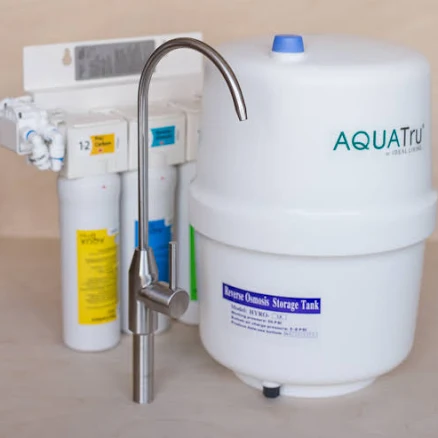
AquaTru
Under Sink Under Sink
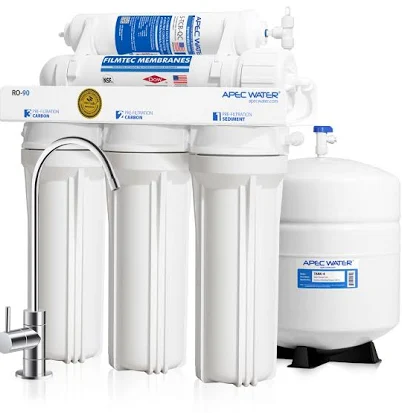
APEC Water Systems
RO-90 Reverse Osmosis Drinking Water Filter System
Model-based grades, not lab tests. We flunk more than we pass. How grading works
PFAS in Under-Sink RO Systems, Which Brands Grade Best and Worst
Based on available materials and data, the under-sink reverse osmosis category grades unusually well compared to other product types we track at PFAS Authority, and one name keeps landing at the very top of our model-based estimates, AquaTru AquaTru Under Sink Under Sink, which scores a 100 out of 100 "Excellent" rating in our system. A second product, the Aquasure Premier Series 75 GPD Under Sink Reverse Osmosis Water Filtration System, matches that perfect score. Both results reflect our model's reading of publicly disclosed materials and specifications, not an independent laboratory certification, and neither should be read as a claim that the unit is "PFAS-free" or inherently "safe."
The good news for shoppers is that almost every widely sold under-sink RO system we reviewed, including multiple models from APEC, iSpring, Waterdrop, and Hydro Guard, landed in the "Excellent" tier with scores of 95 or 100. That is a meaningfully different picture than categories like non-stick cookware or carpets and rugs, where PFAS-related construction choices are far more common. Still, "Excellent" is a relative grade built from reviewed product data, not a guarantee. If you want a fast, personalized comparison across your own shortlist, our product finder tool will cross-reference live grades for you.
Summary comparison table
| Product | PFAS grade (model estimate) | Verdict |
|---|---|---|
| AquaTru AquaTru Under Sink Under Sink | Excellent, 100/100 | Top-scoring unit in our dataset, lower concern based on disclosed materials |
| Aquasure Premier Series 75 GPD RO System | Excellent, 100/100 | Ties for top spot, strong documented component list |
| APEC RO-90 Reverse Osmosis Drinking Water Filter System | Excellent, 95/100 | Strong long-term reputation, solid materials disclosure |
| Waterdrop G2 Reverse Osmosis System | Excellent, 95/100 | Compact tankless design, well-documented filter stages |
| Waterdrop G3P600 Under Sink RO System | Excellent, 95/100 | Higher output tankless option, same grading tier as G2 |
| Waterdrop Restored G2 Tankless RO System | Excellent, 95/100 | Refurbished unit, identical grading to new G2 |
| iSpring RCC7AK 6-Stage RO System | Excellent, 95/100 | Alkaline remineralization stage, consistent brand disclosure |
| iSpring RCC7AK-UV 7-Stage RO System | Excellent, 95/100 | Adds UV stage, same materials base as RCC7AK |
| iSpring RCC7 5-Stage RO System | Excellent, 95/100 | Entry-level iSpring, still strong on disclosed materials |
| Hydro Guard Reverse Osmosis System | Excellent, 95/100 | Solid mid-tier option, limited independent verification |
| Aquaguard Ritz RO+UV Stainless Steel Copper Purifier | Excellent, 95/100 | Stainless and copper housing noted, strong material profile |
| HydroGuard HDGT Undersink RO System | Excellent, 95/100 | Consistent with other Hydro Guard entries |
| APEC Ultimate RO-PERM RO System | Excellent, 95/100 | Permeate pump upgrade, same tier as RO-90 |
| APEC WQA 5-Stage Under Sink Water Filter System | Excellent, 95/100 | WQA-referenced model, consistent with APEC lineup |
What "Excellent" actually means here
Every grade in this guide is a model-based estimate built from publicly available materials lists, component disclosures, and brand specification sheets, not a laboratory assay of the finished product's water output. A 95 or 100 score tells you that, based on available materials and data, the reviewed documentation does not surface obvious PFAS-linked components such as certain fluoropolymer seals or undisclosed "proprietary" membrane coatings. It does not mean the unit is certified "PFAS-free," and it does not mean the device is "safe" in an absolute sense. Treat these scores as a starting point for comparison, not a final verdict.
Product-by-product breakdown
AquaTru AquaTru Under Sink Under Sink
Materials, Four-stage filtration housed in a compact under-counter unit, with AquaTru's published specifications emphasizing NSF-tested components and food-grade housing materials. Brand claims, AquaTru markets the system as removing a long list of contaminants and states its filters are built without several categories of concern, though this is a brand claim rather than an independent third-party lab confirmation specific to PFAS. Pros, Top score in our dataset, tankless compact footprint, strong documented certifications. Cons, Premium price point relative to basic sediment-and-carbon RO units, and like all scores here, the 100 reflects disclosed materials rather than a direct PFAS lab test of this exact unit.
Aquasure Premier Series 75 GPD Under Sink Reverse Osmosis Water Filtration System
Materials, A five-stage RO system with a conventional pressurized tank, higher-output 75 GPD membrane, and standard housing. Brand claims, Aquasure states the system uses food-grade components and multi-stage filtration to reduce a wide contaminant list. Pros, Matches the top grade in our table, solid output for larger households, widely available replacement filters. Cons, Tank-based design takes more under-sink space than tankless competitors, and brand language around "food-grade" materials has not been independently lab-verified for PFAS specifically in the records we reviewed.
APEC Water Systems RO-90 Reverse Osmosis Drinking Water Filter System
Materials, Five-stage system built in the USA with a steel-reinforced tank and WQA-referenced components. Brand claims, APEC advertises "premium quality" filters and points to its US-based manufacturing as a quality signal. Pros, Long track record in the category, consistent 95/100 grade, strong aftermarket filter support. Cons, Higher upfront cost than entry-level kits, and the brand's "premium" marketing language is not the same as a certified PFAS-free claim.
Waterdrop G2 Reverse Osmosis System for Home
Materials, Tankless design with a compact composite housing and multi-stage filtration cartridge. Brand claims, Waterdrop states the G2 reduces hundreds of contaminants and uses NSF/ANSI-referenced testing for some claims. Pros, Small footprint, fast installation, consistent 95/100 grade shared across the Waterdrop under-sink lineup. Cons, Replacement filters are proprietary to Waterdrop's cartridge format, which limits third-party filter options.
Waterdrop G3P600 Under Sink Reverse Osmosis System
Materials, Similar tankless architecture to the G2 with a higher-capacity membrane rated for greater daily output. Brand claims, Waterdrop positions this as a higher-throughput option for larger households, with the same contaminant-reduction language used across its product family. Pros, Higher output than the G2 at the same grade tier, compact design. Cons, Larger membrane means a higher price, and as with the G2, PFAS-specific third-party verification was not found in the materials we reviewed.
Waterdrop Restored G2 Tankless Reverse Osmosis System
Materials, A certified-restored version of the standard G2 unit, same internal filtration stages. Brand claims, Sold as a refurbished unit meeting the same specification as new, with Waterdrop's standard contaminant-reduction claims carried over. Pros, Lower price point for the same 95/100 grade as the new G2. Cons, Refurbished units may carry shorter warranty terms, and buyers should confirm filter freshness at time of purchase.
iSpring RCC7AK 6-Stage Under Sink Reverse Osmosis Drinking Water Filter System
Materials, Six-stage system adding an alkaline remineralization cartridge after the RO membrane, standard tank-based design. Brand claims, iSpring states the alkaline stage restores healthy minerals removed during filtration and reduces a broad contaminant list. Pros, Mineral remineralization is a notable differentiator, consistent 95/100 grade, well-documented filter replacement schedule. Cons, Added alkaline stage increases long-term filter costs, and mineral-claim marketing is separate from any PFAS-specific verification.
iSpring RCC7AK-UV 7-Stage Under Sink Reverse Osmosis Water Filtration System
Materials, Same base as the RCC7AK with an added ultraviolet sterilization stage. Brand claims, iSpring markets the UV stage as added protection against bacteria and viruses, separate from the RO membrane's contaminant reduction. Pros, Extra disinfection stage for well-water or less-trusted municipal sources, same strong grade as other iSpring models. Cons, UV lamp is a consumable requiring periodic replacement, adding to maintenance cost.
iSpring RCC7 5-Stage Under Sink Reverse Osmosis Drinking Water Filtration System
Materials, The baseline five-stage iSpring system without the alkaline or UV add-ons. Brand claims, iSpring describes it as a budget-friendly entry point with the same core membrane technology as its higher-tier models. Pros, Lower price while keeping the same 95/100 grade, simple maintenance. Cons, No remineralization or UV stage, so buyers wanting those features need to step up to the RCC7AK line.
Hydro Guard Reverse Osmosis System
Materials, Standard multi-stage tank-based RO configuration with Hydro Guard's own branded cartridges. Brand claims, The brand states broad contaminant reduction but publishes fewer third-party certification documents than APEC or iSpring in the materials we reviewed. Pros, Competitive pricing, same 95/100 grade tier as larger brands. Cons, Thinner public documentation trail than more established competitors, which is reflected in less brand transparency, even though the model-based score remains strong.
Aquaguard Ritz RO+UV Taste Adjuster Stainless Steel Copper Water Purifier
Materials, Distinctive stainless steel and copper housing combined with RO and UV purification stages plus a "taste adjuster" mineral cartridge. Brand claims, Aquaguard markets the copper infusion as a wellness feature in addition to standard contaminant reduction claims. Pros, Unusual metal housing construction may appeal to buyers wary of certain plastics, consistent 95/100 grade. Cons, Copper and mineral-infusion marketing claims are brand-stated wellness positioning, not contaminant-removal certifications, and should be read as such.
HydroGuard HDGT Undersink Reverse Osmosis Water Purification System
Materials, Comparable tank-based configuration to the standard Hydro Guard system, with HDGT-specific cartridge stages. Brand claims, Similar broad contaminant-reduction language to its sibling product. Pros, Same strong 95/100 grade, straightforward installation. Cons, Overlaps heavily with the standard Hydro Guard model, so buyers should compare specs closely before choosing between the two.
APEC Ultimate RO-PERM Reverse Osmosis Drinking Water Filter System
Materials, Adds a permeate pump to APEC's standard configuration, improving water efficiency and reducing waste water ratio. Brand claims, APEC states the RO-PERM reduces wastewater by boosting pressure to the membrane, in addition to its standard filtration claims. Pros, More efficient than standard gravity-fed tank systems, same 95/100 grade as the RO-90. Cons, Permeate pump is an added mechanical part that can eventually need replacement, increasing long-term complexity.
APEC WQA 5-Stage Under Sink Water Filter System
Materials, Five-stage configuration referencing Water Quality Association testing standards in its documentation. Brand claims, APEC cites WQA-related testing language for several contaminant categories. Pros, Documentation references a recognized industry testing body, consistent 95/100 grade. Cons, WQA references in brand materials are not the same as an independent PFAS-specific lab report, and buyers should not conflate the two.
What to avoid
Across the under-sink RO category, a few patterns are worth watching for when a product is not in our graded database. First, be cautious of listings that use the phrase "PFAS-free" as an unqualified marketing claim without citing any underlying test or certification body. That phrasing alone does not meet the bar of third-party verification. Second, watch for systems that disclose little or nothing about internal tubing, O-ring, and gasket materials, since fluoropolymer seals are a common, legitimate reason a product might carry trace PFAS-related compounds even in an otherwise well-built RO system. Third, be skeptical of extremely low-cost membranes and housings with no published component sourcing at all. Our model can only grade what is disclosed, so "no data" is different from "no concern." If you are also shopping for whole-house protection rather than a single under-sink unit, our whole-house filters roundup covers that category with the same grading approach.
Our pick
Based on available materials and data AquaTru AquaTru Under Sink Under Sink and the Aquasure Premier Series 75 GPD system currently represent the strongest model-based estimates in this category, each scoring 100 out of 100 in our review. That said, a long list of close competitors, including the APEC RO-90, the Waterdrop G2, and the full iSpring RCC7 family, all land at 95 out of 100, a difference that is unlikely to be meaningful for most households when weighed against price, output, and footprint. We'd treat any of the "Excellent" tier products here as reasonable starting points for further comparison, not as a declaration that any single unit is definitively free of PFAS or absolutely risk-free. Use our product finder to filter by household size, budget, and installation type before you commit.
Frequently asked questions
Does a high PFAS grade mean an under-sink RO system is completely PFAS-free?
No. A high grade in our system reflects a model-based estimate built from publicly disclosed materials and specifications, not an independent laboratory test confirming zero PFAS presence. Treat these grades as a comparative tool showing lower concern relative to other reviewed products, not as a certification of being PFAS-free.
Are brand claims about contaminant removal the same as third-party verification?
Not automatically. Many manufacturers cite NSF or WQA standards in their marketing materials, but citing a standard is different from presenting a specific, independently conducted lab report for that exact product and lot. Always distinguish what the brand states from what has actually been third-party verified in the documentation you can review yourself.
Can PFAS exposure from a water filtration system actually affect health?
Research has found associations between certain PFAS compounds and various health outcomes, but association is not the same as proven causation, and individual risk varies widely. If you have specific health concerns related to water quality, speak with a medical provider or environmental health specialist rather than relying solely on product grades, and consider pairing your research with other resources such as our whole-house filters guide for a fuller picture of your home's water treatment options.
Now check your own stuff
See every product we’ve graded in this category, best-graded first.
Get the graded list, free.
The products we score each week, and the best-graded alternative in every category.
No spam. Unsubscribe anytime.