By PFAS Authority · Updated October 5, 2026
Top grades to buy
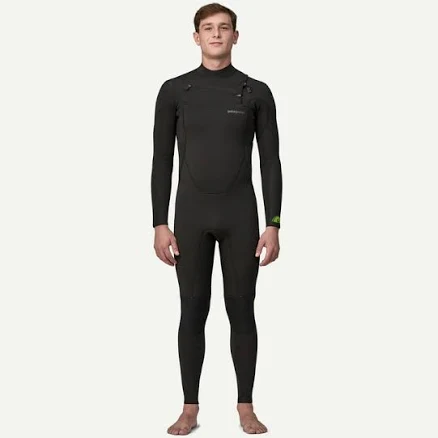
Patagonia
Men's R2 Yulex Regulator Front-Zip Full Wetsuit
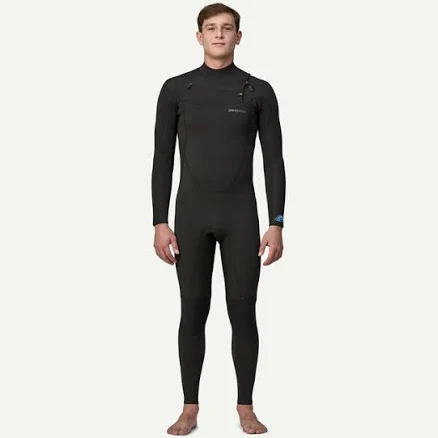
Patagonia
Men's Yulex Regulator Lite Front-Zip Full Wetsuit
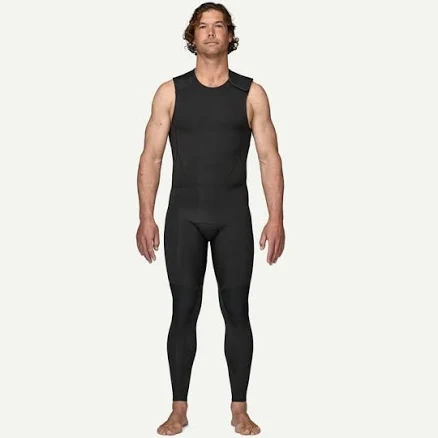
Patagonia
Men's Yulex Regulator Lite Long John Wetsuit
Model-based grades, not lab tests. We flunk more than we pass. How grading works
PFAS in Wetsuits, Which Brands Grade Best and Worst
Based on available materials and data, Patagonia's Yulex-based wetsuits currently grade highest among the products in our database, each landing an Excellent rating with a model-based estimate of 90 out of 100 for lower chemical concern. Most mainstream neoprene wetsuits from Rip Curl, Xcel, and O'Neill in our database grade Bad, scoring around 20 out of 100, largely because standard wetsuit neoprene and its durable water repellent (DWR) coatings have historically relied on fluorochemical treatments to resist water absorption and odor.
That gap, 90 versus 20, is not a rounding error. It reflects a real divergence in how brands source rubber and finish fabric. This guide breaks down what we found, product by product, so you can compare wetsuits the same way you'd compare any other gear category on PFAS Authority's clothing and swimwear roundups. As always, these are model-based estimates built from materials and public disclosure, not laboratory certainty, and nothing here should be read as a guarantee that any product is entirely free of PFAS.
Summary comparison table
| Product | PFAS grade (model estimate) | Verdict |
|---|---|---|
| Patagonia Yulex Regulator Lite Front-Zip Full Wetsuit | Excellent, 90/100 | Lower concern, our top-rated pick in this category |
| Patagonia Yulex Regulator Lite Long John Wetsuit | Excellent, 90/100 | Lower concern, strong alternative cut |
| Patagonia R2 Yulex Regulator Front-Zip Full Wetsuit | Excellent, 90/100 | Lower concern, warmer winter option |
| Rip Curl E-Bomb 4/3 Zip Free Wetsuit | Bad, 20/100 | High concern, avoid if minimizing PFAS exposure |
| Rip Curl Dawn Patrol Chest Zip Wetsuit | Bad, 20/100 | High concern, entry-level suit with same flag |
| Rip Curl Flashbomb Chest Zip Fullsuit Wetsuit | Bad, 20/100 | High concern, premium price does not change the grade |
| Xcel Men's Axis Full Wetsuit | Bad, 20/100 | High concern, typical of the Xcel line |
| Xcel IconX Full Wetsuit | Bad, 20/100 | High concern, flagship model, same flag |
| Xcel Men's Comp Full Wetsuit | Bad, 20/100 | High concern, budget tier does not improve the picture |
| Xcel Axis Flatlock Back Zip Full Wetsuit | Bad, 20/100 | High concern, seam construction doesn't offset materials |
| Xcel Men's Axis Back Zip Full Wetsuit | Bad, 20/100 | High concern, consistent with rest of Xcel range |
| O'Neill Epic Back Zip Full Wetsuit | Bad, 20/100 | High concern, long-running model, unchanged grade |
| O'Neill Reactor 3/2mm Back Zip Full Wetsuit | Bad, 20/100 | High concern, entry suit shares brand-wide finish |
| O'Neill Hyperfreak Fire 4/3 Chest Zip Wetsuit | Bad, 20/100 | High concern, high-performance line still flagged |
Why wetsuits are a PFAS blind spot
Wetsuits sit in an odd category. Shoppers worry about PFAS in cookware and carpets, but neoprene suits spend hours pressed against skin in the ocean, repeatedly stretched, heated by body warmth, and washed. Many wetsuit brands apply fluorinated durable water repellent finishes to the exterior jersey fabric to help the suit resist waterlogging and speed up dry time between sessions. Historically, these DWR treatments have been PFAS-based, the same chemistry family scrutinized in waterproof boots and outdoor clothing. Based on available materials and data, this is the most likely explanation for why conventional neoprene suits in our database cluster at the Bad end of the scale.
It's worth being precise about what a grade does and does not mean. A score is a model-based estimate built from publicly available material disclosures, brand documentation, and known industry patterns, not a chemical assay. We have not tested these suits in a laboratory, and a Bad grade is not proof that a specific suit will shed measurable PFAS onto skin or into water. It is a signal of elevated likelihood based on materials and category norms, intended to help you ask better questions before buying.
The winner, Patagonia's Yulex line
All three Patagonia products in our database land in the same Excellent tier with a 90 out of 100 estimate, the Yulex Regulator Lite Front-Zip Full Wetsuit, the Yulex Regulator Lite Long John Wetsuit, and the warmer R2 Yulex Regulator Front-Zip Full Wetsuit.
Materials
Patagonia's Yulex suits use a natural rubber blend developed to reduce reliance on petroleum-based neoprene, paired with a jersey lining the brand states is designed without intentionally added PFAS-based water repellents. The company has talked publicly about years of R&D to replace conventional neoprene chemistry, including sourcing rubber from FSC-certified plantations.
Brand claims versus third-party verification
Patagonia has stated for years that it avoids PFAS-based DWR finishes on these suits as part of a broader company commitment to phase out fluorochemicals across its product line. That is a brand claim, and it lines up with the materials profile that drives the 90/100 estimate in our model. We have not independently lab-tested these specific suits, so this should be read as a strong, consistent brand disclosure plus favorable materials data, not an independently verified zero-PFAS certification. Based on available materials and data, this is best described as lower concern, not as a guarantee the suits contain no PFAS whatsoever.
Pros
- Highest grade of any wetsuit in our database, with a consistent materials story across three different cuts and thicknesses
- Brand has published sourcing details about its natural rubber supply chain, which supports transparency scoring
- Suitable for users specifically trying to reduce fluorochemical exposure in water sports gear, alongside choices in swimwear
Cons
Natural rubber wetsuits can feel different underfoot and in flexibility compared with conventional neoprene, and some surfers report a break-in period. Pricing tends to run at the premium end of the market. And again, Excellent here means lower modeled concern, not a certified absence of PFAS.
Rip Curl, three suits, one flag
The Rip Curl E-Bomb 4/3 Zip Free Wetsuit Dawn Patrol Chest Zip Wetsuit, and Flashbomb Chest Zip Fullsuit Wetsuit all score Bad at 20/100 in our model.
Materials and claims
Rip Curl markets these suits around thermal performance, stretch, and durability, using proprietary neoprene formulations and taped or glued seams. The brand's marketing materials emphasize warmth and flexibility rather than chemical-free construction, and we found no third-party verified disclosure in reviewed sources confirming a fluorochemical-free exterior treatment across this range.
Pros
These suits are widely available, backed by a large dealer network, and generally well regarded for fit and flex, with the Flashbomb line specifically known for competition-level thermal insulation.
Cons
Based on available materials and data, the modeled concern here is high relative to the Patagonia line. None of the three suits carry a stated PFAS-free claim in the materials we reviewed, and the lack of disclosure itself is part of why the grade lands where it does. Shoppers prioritizing PFAS reduction may want to compare against the Yulex options above or browse the broader clothing category for alternatives.
Xcel, five suits, consistent grade
Xcel is the most heavily represented brand in our database at Bad, with five suits all scoring 20/100, the Men's Axis Full Wetsuit, the IconX Full Wetsuit, the Men's Comp Full Wetsuit, the Axis Flatlock Back Zip Full Wetsuit, and the Men's Axis Back Zip Full Wetsuit.
Materials and claims
Xcel promotes its own limestone-based neoprene technology and highlights flexibility, seam taping, and thermal lining. These are performance claims, not chemical disclosures. Across the five models, the consistency of the Bad grade suggests the issue is likely tied to a brand-wide finishing process rather than any single product line, based on available materials and data.
Pros
Strong reputation among surfers for flexibility and warmth-to-weight ratio, with the IconX positioned as the brand's flagship and the Comp as a lower-cost entry point. Wide range of thicknesses and cuts to fit different water temperatures.
Cons
No product in the Xcel lineup we reviewed carries a verified or even brand-stated PFAS-free claim. From a materials and disclosure standpoint, that places the entire range at the same elevated modeled concern level, regardless of price tier or performance positioning.
O'Neill, three suits, same story
O'Neill's Epic Back Zip Full Wetsuit Reactor 3/2mm Back Zip Full Wetsuit, and Hyperfreak Fire 4/3 Chest Zip Wetsuit each land at Bad, 20/100.
Materials and claims
O'Neill, one of the original wetsuit innovators, markets these suits around flex panels, thermal fire linings, and sealed seams. As with Rip Curl and Xcel, the brand's public materials emphasize performance rather than fluorochemical-free manufacturing, and we found no reviewed source confirming PFAS-free treatment on these specific models.
Pros
Long track record, broad size range, and the Hyperfreak Fire line is well known for cold-water thermal retention through its internal lining technology.
Cons
Same modeled concern level as Rip Curl and Xcel. The Epic, being O'Neill's entry-level full suit, and the Hyperfreak Fire, its higher-end thermal suit, both carry the identical grade, reinforcing that price point does not appear to correlate with lower modeled PFAS concern in this dataset.
What to avoid
- Suits with no stated water-repellent ingredient list. If a brand markets "quick-dry" or "water-repellent" exterior jersey fabric without naming the chemistry, treat that as a yellow flag, not a cleared one.
- Marketing language that substitutes for disclosure. Terms like "advanced DWR" or "proprietary finish" describe performance, not ingredients. None of the Bad-graded suits above made a specific PFAS-free claim in the materials we reviewed.
- Assuming price equals lower concern. Premium suits like the Flashbomb and Hyperfreak Fire graded identically to entry-level suits from the same brands. Cost is not a reliable proxy for chemical content.
- Overgeneralizing across a brand's full catalog. We graded the specific models listed here based on available materials and data. A brand with one Bad-graded suit does not guarantee every product it sells scores the same, and a brand with one Excellent-graded suit should not be assumed to apply the same formulation across unrelated products.
- Ignoring care and washing habits. Even a lower-concern suit should be rinsed in fresh water and air dried rather than machine washed with fabric softeners, which can interact with synthetic coatings in unpredictable ways.
A note on health framing
Research on PFAS exposure through skin contact with treated textiles is still developing, and most of the stronger evidence in the scientific literature concerns ingestion and long-term bioaccumulation rather than brief topical contact during surfing or diving. Any association between PFAS-treated wetsuit fabric and health outcomes should be understood as an area of ongoing study, not a settled causal link. We are not making a medical claim here, only flagging that this is a live area of research worth watching, in the same way it's worth watching for cosmetics and body wash that sit on skin for extended periods.
Our pick
Based on available materials and data, Patagonia's Yulex Regulator line is the strongest option among the wetsuits in our database for anyone trying to minimize fluorochemical exposure. The Yulex Regulator Lite Front-Zip Full Wetsuit is the most versatile of the three for moderate water temperatures, the Long John version suits warmer conditions or layering, and the R2 Yulex Regulator adds thickness for colder water. All three share the same 90/100 Excellent estimate, so the choice between them should come down to climate and fit rather than chemical profile.
If you already own a suit from Rip Curl, Xcel, or O'Neill, that does not mean you need to replace it immediately. It means that, based on the materials and disclosure data available to us, those specific suits carry a higher modeled concern level than the Patagonia alternatives, and that's worth weighing against fit, budget, and how the suit is used and cared for. For a wider view of how fluorochemical treatments show up across apparel generally, our clothing roundup and the PFAS Authority product finder are good next stops.
FAQ
Does a high PFAS grade mean a wetsuit is completely free of PFAS?
No. A high grade, like the 90/100 Excellent estimate on Patagonia's Yulex suits, reflects a model-based assessment built from materials disclosure and brand statements, not a laboratory test result. Patagonia has stated it avoids intentionally added PFAS-based water repellents on these suits, which is a brand claim that aligns with the materials data we reviewed, but we have not seen independent third-party lab verification confirming zero PFAS content. The accurate way to describe this grade is lower concern based on available materials and data, not PFAS-free or safe.
Why do Rip Curl, Xcel, and O'Neill suits all score the same low grade?
Across the eleven products from these three brands in our database, the Bad, 20/100 grade repeats consistently. Based on available materials and data, this pattern most likely reflects standard industry use of fluorochemical-based durable water repellent finishes on wetsuit exterior fabric, combined with a lack of specific PFAS-free disclosure from these brands for these models. It is a modeled estimate of elevated likelihood, not confirmation that any single suit was tested and found to contain PFAS.
Should I worry about PFAS exposure from wearing a wetsuit in the ocean?
Current research on skin-contact exposure to PFAS-treated textiles during activities like surfing is still developing, and much of the stronger existing evidence concerns ingestion or prolonged exposure rather than periodic water sports use. Any potential association between treated wetsuit fabric and health effects should be treated as an area of ongoing study, not a proven causal relationship. If minimizing exposure matters to you, choosing suits with transparent, lower-concern materials profiles, like the Patagonia Yulex line, and rinsing gear thoroughly after use are reasonable precautions rather than medical necessities.
Now check your own stuff
See every product we’ve graded in this category, best-graded first.
Get the graded list, free.
The products we score each week, and the best-graded alternative in every category.
No spam. Unsubscribe anytime.