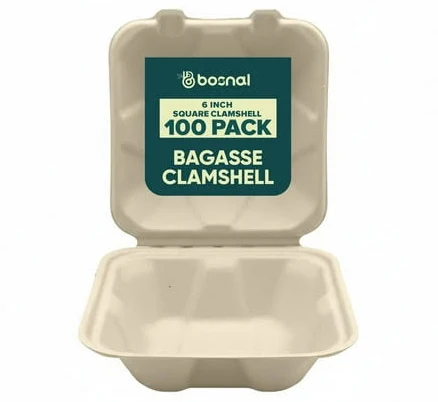
6 Inch Square Compostable Clamshell Containers
The brand typically skips fluorinated coatings, but no brand verification exists.
Sugarcane fiber clamshells biodegrade and don't normally require PFAS water barriers. The brand gives no PFAS statement or testing details.
We flunk more products than we pass. This one earned its grade. How we grade
Material
The brand, compostable coating
Brand disclosure
Brand is silent on PFAS
Lab data
No public lab test
You may also be interested in
Top-graded picks in the categories readers replace first, every one scored on the same rubric.

- polypropylene filter housing, carbon/sediment cartridge
- We found no PFAS statement from the brand
- Bacterial growth in spent cartridges
3 hazards checked on this product, all on its full breakdown.

Aquasure
Premier Series 75 GPD Under Sink Reverse Osmosis Water Filtration System
- RO membrane, carbon filters, stainless steel housing
- We found no PFAS statement from the brand
- Bacterial and microbial growth in housing and filters
4 hazards checked on this product, all on its full breakdown.

Avocado
Vegan Mattress
- organic cotton, natural latex, coconut coir, recycled steel coils
- The brand calls it PFAS-free, which we have not verified
- Heavy metals
2 hazards checked on this product, all on its full breakdown.
What 6 Inch Square Compostable Containers is made of, ingredients and materials
The brand is the fibrous residue left after sugarcane juice extraction. These containers use pulp molded into a clamshell shape with a compostable coating (typically starch-based or polyhydroxyalkanoate/PHA) rather than plastic resin. The base material itself is inherently inert; hazard risk comes entirely from the coating layer and any post-processing chemicals applied during molding and bleaching.
What’s concerning
Category baseline
The starting point for this type of product, before anything specific to this product is counted.
No PFAS disclosure
No public statement from the brand about PFAS in this product.
Compostable coating breakdown and microparticle release
Starch-based and PHA coatings are designed to degrade in industrial compost but may shed particles if damaged or exposed to prolonged moisture during storage or use. No specific testing data available for brand; risk is material-class dependent, not brand-specific.
Formaldehyde / VOCs
Pulp is often chlorine-bleached and may contain residual aldehydes or cross-linking resins used in molding. No published analysis of brand containers available; industry standard is to verify bleach-free or reduced-bleach processing, which this brand does not disclose.
Source, ATSDR ↗Moisture-induced coating failure and food contamination
Compostable coatings are not as water-resistant as plastic or fluorinated paperboard. Prolonged exposure to moisture or grease may cause coating separation, allowing fibers to contact food. Practical risk is low for short-term food storage but increases with time.
What’s reassuring
Base material not linked to PFAS
The main material recorded for this product is not one associated with PFAS.
BPA & bisphenols
Clamshells do not use conventional plastic resins (PET, polystyrene), so BPA and phthalate contamination is not a mechanism for this product class. Risk is eliminated by material choice.
Source, FDA ↗Heavy metals
Fiber and compostable polymers do not accumulate lead, cadmium, or antimony in the same manner as ceramic glazes or textile dyes. No published reports of metal leaching from the brand-based foodware exist.
Source, FDA ↗How is this PFAS grade calculated?
The brand's record and disclosure
The brand as a brand has not published detailed chemical composition or independent testing data for coatings on its public materials. No major recalls or contamination incidents are documented in public sources for this specific product line. The brand's silence on PFAS, BPA, and coating composition is typical for smaller compostable-packaging vendors but limits verification of safety claims.
How it compares in its category
Clamshells avoid the PFAS-coated paperboard and plastic-lined containers common in conventional food service packaging. Compared to polystyrene foam and plastic clamshells, eliminates BPA and phthalate leaching risk. Trade-off, compostable coatings may be less moisture-resistant than fluorinated alternatives, so performance with greasy or wet foods is lower.
If you buy it
Use for room-temperature and chilled foods only; avoid microwave heating or contact with hot liquids above 60C, as polymer coatings may degrade and release constituents. Inspect containers for visible damage or delamination before reuse; discard if coating is peeling or flaking. Store in a dry place to prevent premature breakdown of the compostable coating. Dispose in industrial compost, not home compost or landfill, to realize the environmental benefit.
What is not known about PFAS in this product?
- Basis
- Model estimate, 72% confidence, not a lab result
- Lab test
- None on record for this exact product
- Brand statement
- has made none
Formulations change between production runs, so check the current label. How we grade.
What are the PFAS-free alternatives to 6 Inch Square Compostable Clamshell Containers?
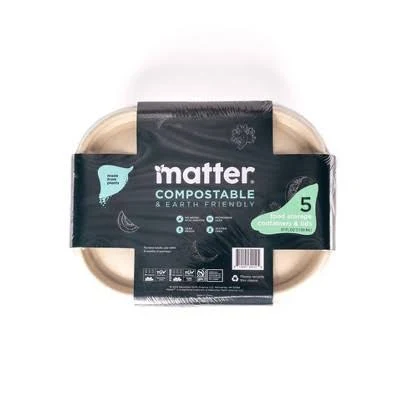
- Plant-based fiber pulp (compostable)
- A third party reports verifying it as PFAS-free
- Microbe/mold growth if stored damp
2 hazards checked on this product, all on its full breakdown.
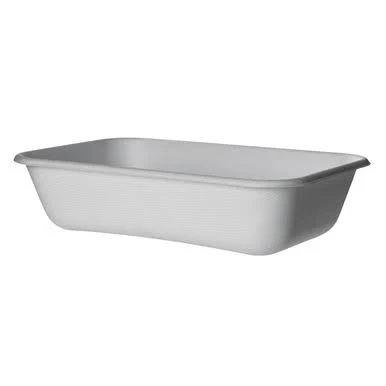
Eco-Products
Eco Products WorldView Compostable Take-Out Containers EP-SCRC32
- Plant-based fiber (compostable sugarcane bagasse)
- A third party reports verifying it as PFAS-free
- Bleaching agents and processing residues
3 hazards checked on this product, all on its full breakdown.
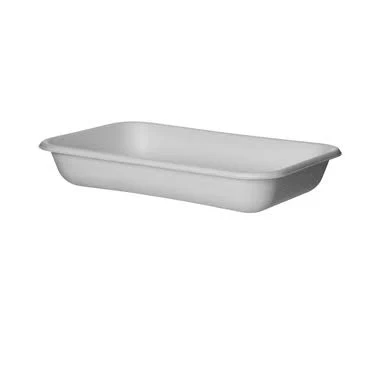
Eco-Products
WorldView Sugarcane Take-Out Containers
- Sugarcane bagasse (post-consumer fiber)
- A third party reports verifying it as PFAS-free
- Cellulose fiber degradation and food contact
2 hazards checked on this product, all on its full breakdown.
More food packaging grades
How we score, every product runs through the same public 0-100 rubric based on materials, coatings, brand disclosure, lab findings, and recalls. See the full methodology → Spotted a mistake? Report an error.