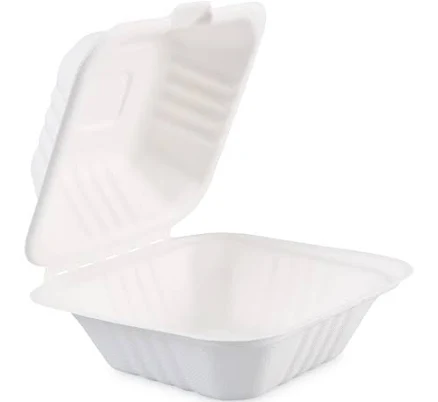
Bagasse Food Containers Hinged-Lid 1-Compartment
Lower risk material, but the brand doesn't address chemical treatments used.
Sugarcane fiber pulp requires no Teflon-family coating treatments due to its natural structure. The brand makes no statements about PFAS or how the fiber was processed.
We flunk more products than we pass. This one earned its grade. How we grade
Material
Bagasse (sugarcane fiber pulp), uncoated or minimal processing
Brand disclosure
Brand is silent on PFAS
Lab data
No public lab test
You may also be interested in
Top-graded picks in the categories readers replace first, every one scored on the same rubric.

- polypropylene filter housing, carbon/sediment cartridge
- We found no PFAS statement from the brand
- Bacterial growth in spent cartridges
3 hazards checked on this product, all on its full breakdown.

Aquasure
Premier Series 75 GPD Under Sink Reverse Osmosis Water Filtration System
- RO membrane, carbon filters, stainless steel housing
- We found no PFAS statement from the brand
- Bacterial and microbial growth in housing and filters
4 hazards checked on this product, all on its full breakdown.

Avocado
Vegan Mattress
- organic cotton, natural latex, coconut coir, recycled steel coils
- The brand calls it PFAS-free, which we have not verified
- Heavy metals
2 hazards checked on this product, all on its full breakdown.
What Bagasse Food Containers 1-Compartment is made of, ingredients and materials
Bagasse is the fibrous residue left after sugarcane juice extraction, processed into a pulp and molded into food containers. The material is inherently free of synthetic polymers (no BPA, phthalates, or polystyrene) and requires minimal chemical treatment to form and stabilize. Hinged-lid designs for this material are typically produced by pressing and drying rather than coating with plastics or resins, which keeps chemical exposure low.
What’s concerning
Category baseline
The starting point for this type of product, before anything specific to this product is counted.
No PFAS disclosure
No public statement from the brand about PFAS in this product.
Microbial growth (mold, bacterial colonization)
Bagasse is an organic fiber that absorbs moisture and can support mold and bacterial growth if stored damp or reused without proper drying. No antimicrobial or fungicidal treatment is standard in uncoated bagasse, making regular inspection critical.
Chlorine residues from bleaching
Some bagasse products are bleached using chlorine or chlorine dioxide during pulping to achieve white or pale appearance. No brand testing data available to confirm residue levels or whether they migrate into food, but fiber pulp bleaching is a known step in some manufacturing.
Structural degradation and fiber shedding
Uncoated bagasse loses structural integrity when exposed to heat, prolonged moisture, or oily foods. Fiber fragments may break off and contaminate food, particularly with repeated microwave use or storage of wet contents.
What’s reassuring
Base material not linked to PFAS
The main material recorded for this product is not one associated with PFAS.
BPA & bisphenols
Bagasse hinged lids may incorporate plastic hinges or clips for closure. If those components are polycarbonate or vinyl, BPA or phthalates could be present, but no specific testing or brand disclosure confirms this for this product line.
Source, FDA ↗Heavy metals
If bagasse containers are dyed or treated with mineral fillers for durability, trace elements (lead, cadmium, antimony) could theoretically be present, but uncoated natural bagasse typically uses no pigments or additives. No recalls or test reports establish this as a concern for this material class.
Source, FDA ↗How is this PFAS grade calculated?
The brand's record and disclosure
The brand name "Bagasse" is generic and does not correspond to a single manufacturer with a traceable public safety disclosure record. No recalls, certifications, or formal PFAS pledges are documented for products under this label. Without brand-specific documentation of processing chemicals, bleaching agents, or mold inhibitors, assessment relies on material class properties rather than company transparency.
How it compares in its category
Bagasse containers rank lower in chemical hazard risk than polystyrene foam, polyethylene terephthalate (PET), or polypropylene food packaging, which can leach additives. They also avoid the PFAS risk associated with grease-resistant coated paper or plastic-lined alternatives. However, they lack the durability and temperature tolerance of glass or ceramic and may degrade faster in moist or hot conditions.
If you buy it
Use for room-temperature or lukewarm foods; avoid microwave heating or contact with hot liquids above 70 degrees Celsius to prevent fiber softening and breakdown. Inspect containers before each use for visible mold, discoloration, or material flaking, and discard if compromised. Store in a cool, dry place to prevent moisture absorption and microbial growth. Replace every 6-12 months depending on frequency of use and storage conditions.
What is not known about PFAS in this product?
- Basis
- Model estimate, 78% confidence, not a lab result
- Lab test
- None on record for this exact product
- Brand statement
- Bagasse has made none
Formulations change between production runs, so check the current label. How we grade.
What are the PFAS-free alternatives to Bagasse Food Containers Hinged-Lid 1-Compartment?
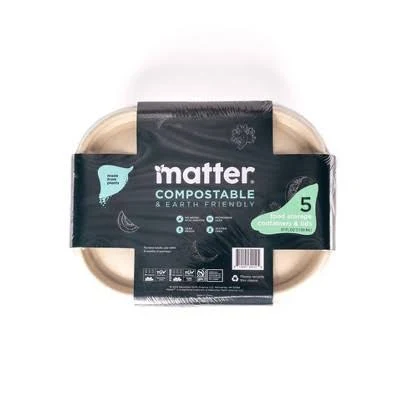
- Plant-based fiber pulp (compostable)
- A third party reports verifying it as PFAS-free
- Microbe/mold growth if stored damp
2 hazards checked on this product, all on its full breakdown.
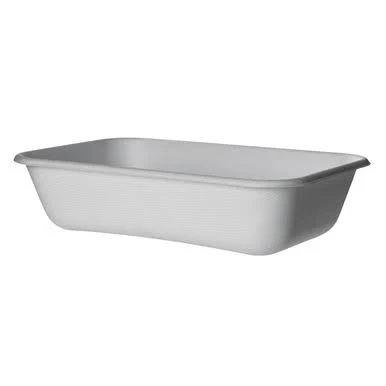
Eco-Products
Eco Products WorldView Compostable Take-Out Containers EP-SCRC32
- Plant-based fiber (compostable sugarcane bagasse)
- A third party reports verifying it as PFAS-free
- Bleaching agents and processing residues
3 hazards checked on this product, all on its full breakdown.
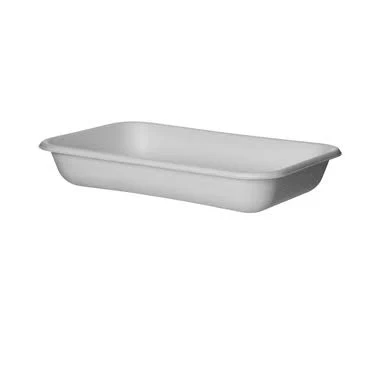
Eco-Products
WorldView Sugarcane Take-Out Containers
- Sugarcane bagasse (post-consumer fiber)
- A third party reports verifying it as PFAS-free
- Cellulose fiber degradation and food contact
2 hazards checked on this product, all on its full breakdown.
More food packaging grades
How we score, every product runs through the same public 0-100 rubric based on materials, coatings, brand disclosure, lab findings, and recalls. See the full methodology → Spotted a mistake? Report an error.