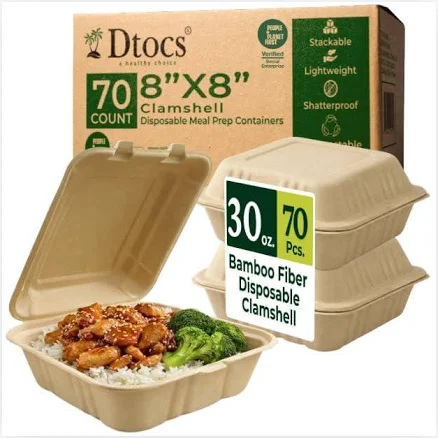
Dtocs Compostable 8-Inch Bamboo Fiber Clamshell To Go Containers
Lower PFAS concern since plant-based clamshells rarely need fluorinated treatments.
Bamboo fiber clamshells don't typically require water or grease-resistant fluorinated coatings for short-term food contact. The brand makes no public PFAS claim or third-party certification.
We flunk more products than we pass. This one earned its grade. How we grade
Material
Bamboo fiber, compostable/plant-based binder
Brand disclosure
Brand is silent on PFAS
Lab data
No public lab test
You may also be interested in
Top-graded picks in the categories readers replace first, every one scored on the same rubric.

- polypropylene filter housing, carbon/sediment cartridge
- We found no PFAS statement from the brand
- Bacterial growth in spent cartridges
3 hazards checked on this product, all on its full breakdown.

Aquasure
Premier Series 75 GPD Under Sink Reverse Osmosis Water Filtration System
- RO membrane, carbon filters, stainless steel housing
- We found no PFAS statement from the brand
- Bacterial and microbial growth in housing and filters
4 hazards checked on this product, all on its full breakdown.

Avocado
Vegan Mattress
- organic cotton, natural latex, coconut coir, recycled steel coils
- The brand calls it PFAS-free, which we have not verified
- Heavy metals
2 hazards checked on this product, all on its full breakdown.
What Dtocs Compostable 8-Inch Go Containers is made of, ingredients and materials
Dtocs/Bambu clamshells are molded from bamboo fiber (cellulose) bonded with plant-based resin, typically polylactic acid (PLA) or similar biopolymers. Unlike petroleum-based polystyrene foam or polyethylene terephthalate (PET) containers, plant-derived fiber composites avoid accumulation of synthetic polymers in landfills and are designed to break down in industrial composting. The binder chemistry is less prone to leaching than traditional plastic coatings because the resin does not require fluorinated water or grease repellents.
What’s concerning
Category baseline
The starting point for this type of product, before anything specific to this product is counted.
No PFAS disclosure
No public statement from the brand about PFAS in this product.
Phthalate plasticizers in fiber coating or adhesive
Bamboo fiber clamshells may contain minor phthalate residues if conventional adhesives are used; compostable-certified products generally minimize plasticizers, but Bambu does not explicitly disclose this restriction.
Microbial contamination and mold growth if stored damp
Porous bamboo fiber structure can harbor bacteria or mold if stored in high humidity or after use with wet food; proper drying and ventilation before composting reduces risk but is not inherent to the material.
What’s reassuring
Base material not linked to PFAS
The main material recorded for this product is not one associated with PFAS.
BPA & bisphenols
Plant-based PLA and polyester binders used in compostable clamshells do not typically contain bisphenols, but no independent analysis of this specific product is publicly available to rule out trace cross-contamination.
Source, FDA ↗Formaldehyde / VOCs
Plant-derived polyester and PLA binders do not rely on formaldehyde-releasing chemistry like some urea-formaldehyde adhesives; no incidents reported for this product line.
Source, ATSDR ↗Degradation and fiber shedding into food during use
Well-manufactured clamshells remain stable at food-contact temperatures; however, damaged or poorly cured molding can cause small fiber particles to shed, particularly with acidic or oily foods. No widespread complaints on record for Dtocs brand.
How is this PFAS grade calculated?
The brand's record and disclosure
Bambu (parent brand for Dtocs line) markets sustainability and compostability as core claims but does not publish third-party safety certifications or detailed material safety data sheets readily available to consumers. No recalls or contamination incidents are on record for this specific product line. The brand's silence on PFAS or chemical composition testing is typical for small compostable-packaging producers; absence of explicit PFAS commitment does not indicate presence of fluorinated additives, but transparency is limited.
How it compares in its category
Bamboo fiber clamshells occupy a middle ground between conventional polystyrene (known PFOA/PFOS risks in some cases) and heavy cardboard (minimal leaching but poor moisture resistance). They perform similarly to molded-pulp or bagasse containers in terms of chemical safety, though bamboo is faster-growing and less resource-intensive. Compostability certification (if present) is a stronger signal of chemical safety than unregulated 'eco-friendly' claims, so verification of third-party composting standards is worthwhile.
If you buy it
These containers have lower concern for ambient and moderately warm foods (up to 140-160°F/60-70°C); avoid prolonged contact with hot greasy foods or microwave use, as plant-based resin can soften under heat and moisture. Inspect for visible cracks or delamination before use; degraded coating exposes fiber and may allow mold growth if stored damp. Compost in certified industrial facilities (home compost may not reach required temperatures); standard landfill or curbside recycling will not break down these materials efficiently.
What is not known about PFAS in this product?
- Basis
- Model estimate, 72% confidence, not a lab result
- Lab test
- None on record for this exact product
- Brand statement
- Dtocs has made none
Formulations change between production runs, so check the current label. How we grade.
What are the PFAS-free alternatives to Dtocs Compostable 8-Inch Bamboo Fiber Clamshell To Go Containers?
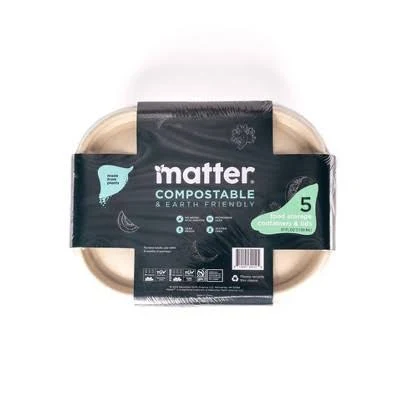
- Plant-based fiber pulp (compostable)
- A third party reports verifying it as PFAS-free
- Microbe/mold growth if stored damp
2 hazards checked on this product, all on its full breakdown.
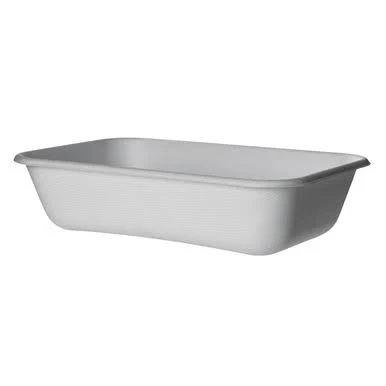
Eco-Products
Eco Products WorldView Compostable Take-Out Containers EP-SCRC32
- Plant-based fiber (compostable sugarcane bagasse)
- A third party reports verifying it as PFAS-free
- Bleaching agents and processing residues
3 hazards checked on this product, all on its full breakdown.
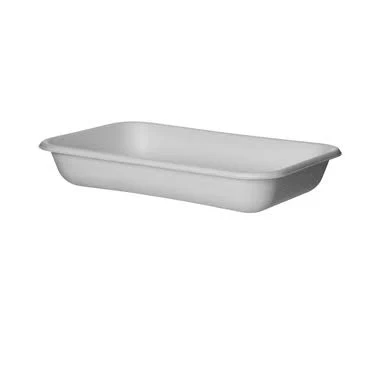
Eco-Products
WorldView Sugarcane Take-Out Containers
- Sugarcane bagasse (post-consumer fiber)
- A third party reports verifying it as PFAS-free
- Cellulose fiber degradation and food contact
2 hazards checked on this product, all on its full breakdown.
More food packaging grades
How we score, every product runs through the same public 0-100 rubric based on materials, coatings, brand disclosure, lab findings, and recalls. See the full methodology → Spotted a mistake? Report an error.