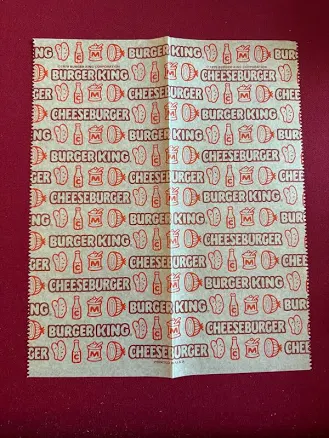
Burger King · Fast-Casual Food Packaging
1979, Burger King Paper Cheeseburger Wrapper (Scarce / Vintage)
Vintage 1979 wrapper. PFAS history in packaging remains unclear.
No public data reveals 1979 Burger King wrapper coating chemistry. Early fast-food packaging frequently used fluorochemical grease treatments, but specifics are lost.
Still want this one anyway? Check the price on Amazon. We’d swap it.
Material
paper with grease-resistant coating (composition unknown)
Brand disclosure
Brand is silent on PFAS
Lab data
No public lab test
You may also be interested in
Top-graded picks in the categories readers replace first, every one scored on the same rubric.

- polypropylene filter housing, carbon/sediment cartridge
- We found no PFAS statement from the brand
- Bacterial growth in spent cartridges
3 hazards checked on this product, all on its full breakdown.

Aquasure
Premier Series 75 GPD Under Sink Reverse Osmosis Water Filtration System
- RO membrane, carbon filters, stainless steel housing
- We found no PFAS statement from the brand
- Bacterial and microbial growth in housing and filters
4 hazards checked on this product, all on its full breakdown.

Avocado
Vegan Mattress
- organic cotton, natural latex, coconut coir, recycled steel coils
- The brand calls it PFAS-free, which we have not verified
- Heavy metals
2 hazards checked on this product, all on its full breakdown.
What 1979, Burger King Paper / Vintage) is made of, ingredients and materials
This 1979 Burger King wrapper is paper substrate with a grease-resistant coating of unknown chemical composition, typical of fast-food packaging from that era. Before stricter FDA guidelines and voluntary industry PFAS phase-outs (mostly post-2010), food packaging coatings often relied on fluorinated compounds to repel oils and moisture. The specific formulation of this wrapper's coating is not publicly documented, making exact hazard assessment difficult. Paper itself is inert, but the coating's stability and leachability over 45 years of aging is uncharted.
What’s concerning
Category baseline
The starting point for this type of product, before anything specific to this product is counted.
No PFAS disclosure
No public statement from the brand about PFAS in this product.
Waterproof / stain-resistant treatment
Water-repellent coating treatments have historically used PFAS.
Unknown grease-resistant coating leachates
1979 wrapper coating composition is not publicly documented. Fluorinated or other synthetic compounds used for grease resistance in that era may leach if wrapper contacts food or is heated, but specific compounds and migration rates are unknown.
Coating degradation and particulate release
After 45 years of storage, the coating bond to paper fibers may be compromised, risking flaking or powder contamination if the wrapper is flexed, heated, or exposed to moisture. No data exists on this specific wrapper's current structural integrity.
Microbial or mold growth
Vintage paper can develop mold or bacterial colonies if stored in humid conditions, especially if any food residue remains. Grease-resistant coatings do not prevent biological colonization of the paper substrate beneath.
Volatile organic compounds (VOCs) from aged coating
Plastic or synthetic coatings can off-gas or degrade into volatile compounds over decades. If this wrapper is stored in an enclosed space with poor ventilation, minor off-gassing could occur, but risk is low if stored as a dry collectible.
What’s reassuring
Heavy metals
Burger King's 1979 packaging inks have not been tested publicly for lead, cadmium, or other metals. Vintage packaging inks may contain higher heavy metal levels than modern alternatives, but no specific recall or advisory exists for this wrapper.
Source, FDA ↗How is this PFAS grade calculated?
The brand's record and disclosure
Burger King has not publicly disclosed detailed information about historical packaging chemistry from the 1970s-80s. The brand has made some recent sustainability commitments but has not issued specific retrospective safety data or recalls for vintage wrappers. No independent testing of this product's coating composition appears in published safety literature. As a collectible artifact rather than an active food-contact item, regulatory oversight does not apply.
How it compares in its category
1979 fast-food wrappers represent a category largely replaced by modern coated papers and films, many now marketed as PFAS-free or reduced-fluorine alternatives. Contemporary burger wrappers undergo FDA compliance testing; this vintage item predates such routine verification. Compared to modern packaging, the 1979 version offers no safety advantages and lacks transparency on composition. If purchased as a collectible rather than functional wrapper, comparative safety is moot.
If you buy it
Do not use this wrapper for food contact or storage; treat it as a collectible artifact only. If you acquire it for vintage value, store in a cool, dry place away from moisture and direct sunlight to prevent coating degradation and potential dust contamination. Do not attempt to eat food from or heat anything in this wrapper; coating breakdown from age may release particles or unknown leachates. Preservation as a display item eliminates food-safety risk entirely.
What is not known about PFAS in this product?
- Basis
- Model estimate, 35% confidence, not a lab result
- Lab test
- None on record for this exact product
- Brand statement
- Burger King has made none
Formulations change between production runs, so check the current label. How we grade.
More fast-casual food packaging grades
How we score, every product runs through the same public 0-100 rubric based on materials, coatings, brand disclosure, lab findings, and recalls. See the full methodology → Spotted a mistake? Report an error.