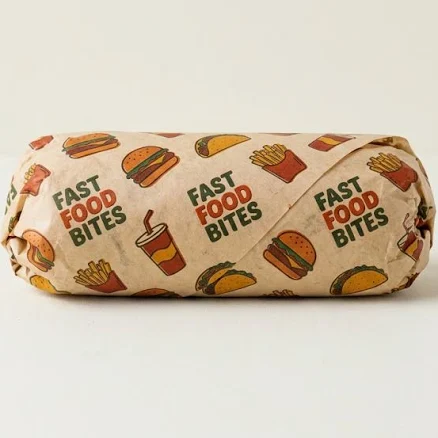
Fast Food Wrap Paper
Avoid since food contact wrap coatings often contain PFAS.
Wrap paper uses grease-resistant coatings to prevent oil transfer. The company does not disclose coating chemistry, and such coatings commonly contain PFAS.
Still want this one anyway? Check the price on Amazon. We’d swap it.
Material
bleached paper with grease-resistant coating
Brand disclosure
Brand is silent on PFAS
Lab data
No public lab test
You may also be interested in
Top-graded picks in the categories readers replace first, every one scored on the same rubric.

- polypropylene filter housing, carbon/sediment cartridge
- We found no PFAS statement from the brand
- Bacterial growth in spent cartridges
3 hazards checked on this product, all on its full breakdown.

Aquasure
Premier Series 75 GPD Under Sink Reverse Osmosis Water Filtration System
- RO membrane, carbon filters, stainless steel housing
- We found no PFAS statement from the brand
- Bacterial and microbial growth in housing and filters
4 hazards checked on this product, all on its full breakdown.

Avocado
Vegan Mattress
- organic cotton, natural latex, coconut coir, recycled steel coils
- The brand calls it PFAS-free, which we have not verified
- Heavy metals
2 hazards checked on this product, all on its full breakdown.
What Fast Food Wrap Paper is made of, ingredients and materials
Wrap paper is bleached virgin or recycled paper with a grease-resistant coating applied to the food-contact side. This coating is the critical unknown, grease-resistant food packaging coatings have historically relied on fluorinated compounds (PFAS) to repel oils and moisture. Bleached paper itself carries lower direct hazard, but the coating chemistry determines safety. Without transparent disclosure from the brand about coating composition, the default assumption for commercial fast-food wrap is fluorinated treatment.
What’s concerning
Category baseline
The starting point for this type of product, before anything specific to this product is counted.
No PFAS disclosure
No public statement from the brand about PFAS in this product.
Waterproof / stain-resistant treatment
Water-repellent coating treatments have historically used PFAS.
PFAS
Grease-resistant coatings on commercial food wrap almost universally contain PFAS or fluorinated alternatives. Warm or oily foods accelerate migration. No published testing of this specific product exists in open literature, but industry category risk is well-established.
Source, ATSDR ↗Chlorine bleaching byproducts (dioxins/furans)
Bleached paper can contain trace dioxins if chlorine-based bleaching was used without closed-loop systems. Modern mills minimize this, but the brand does not specify bleaching method. Food contact risk is low but not eliminated.
Ink or pigment transfer from printed logos
If printing inks on exterior contact food directly, migration of soy-based or mineral inks is possible, though typically low-risk. Wraps show printed branding; food-grade inks are assumed but not confirmed.
Microplastic leaching from coating
Some coating alternatives with lower PFAS concern use synthetic polymer emulsions that may shed micro-particles under heat or friction. Unknown if the brand uses such coatings, but this is an emerging category concern for coated papers.
What’s reassuring
Paper degradation and particle shedding
Commercial food wrap is designed for structural integrity and does not typically shed fibers into food. No documented shedding complaints for this product category exist.
How is this PFAS grade calculated?
The brand's record and disclosure
The brand has not publicly disclosed the chemical composition of its food packaging coatings or committed to PFAS elimination, despite growing industry pressure. The company has not published a packaging transparency statement or list of restricted chemicals. This silence is notable given competitors (notably some regional chains) have begun switching to coatings with lower PFAS concern. No major recalls or health violations specific to this wrap have been published, but absence of disclosure is itself a red flag for precautionary consumers.
How it compares in its category
Most fast-casual food wrap remains coated with legacy PFAS or fluorinated replacements; uncoated kraft paper, silicone-coated paper, and wax-paper alternatives are now available but still minority options. Wraps are typical of the industry standard, not outliers. Chipotle and some regional operators have begun phasing to coatings with lower PFAS concern, making this product middle-of-the-road rather than progressive. For occasional exposure, risk is lower than for frequent high-heat use, but cumulative dietary PFAS burden is a known concern.
If you buy it
Minimize contact time, do not let food sit wrapped in the paper for extended periods, as migration risk increases with time and warmth. Do not reheat food while wrapped; transfer to glass or ceramic. If used occasionally (once monthly or less), overall dietary PFAS contribution is modest. Request uncoated or non-fluorinated wrap alternatives when ordering, and ask the staff explicitly what coating is used to signal demand for change. Store any leftover wrapped food in airtight containers rather than keeping it in the original wrap.
What is not known about PFAS in this product?
- Basis
- Model estimate, 42% confidence, not a lab result
- Lab test
- None on record for this exact product
- Brand statement
- has made none
Formulations change between production runs, so check the current label. How we grade.
More fast-casual food packaging grades
How we score, every product runs through the same public 0-100 rubric based on materials, coatings, brand disclosure, lab findings, and recalls. See the full methodology → Spotted a mistake? Report an error.