Burger King · Fast-Casual Food Packaging
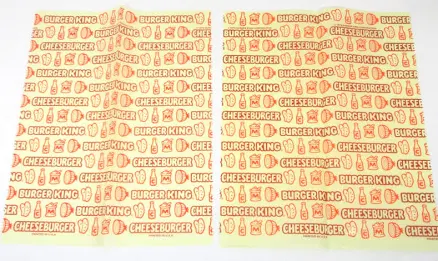
Burger King Sandwich Wrapper Cheeseburger Lot Of 2 Vtg 70s Food
Skip. Vintage 1970s wrapper likely PFAS-coated for grease protection.
1970s fast-food wrappers used grease-resistant coatings that were typically PFAS-based. No composition data exists for this vintage wrapper.
Still want this one anyway? Check the price on Amazon. We’d swap it.
Material
Paper with grease-resistant coating (unspecified)
Brand disclosure
Brand is silent on PFAS
Lab data
No public lab test
You may also be interested in
Top-graded picks in the categories readers replace first, every one scored on the same rubric.

- polypropylene filter housing, carbon/sediment cartridge
- We found no PFAS statement from the brand
- Bacterial growth in spent cartridges
3 hazards checked on this product, all on its full breakdown.

Aquasure
Premier Series 75 GPD Under Sink Reverse Osmosis Water Filtration System
- RO membrane, carbon filters, stainless steel housing
- We found no PFAS statement from the brand
- Bacterial and microbial growth in housing and filters
4 hazards checked on this product, all on its full breakdown.

Avocado
Vegan Mattress
- organic cotton, natural latex, coconut coir, recycled steel coils
- The brand calls it PFAS-free, which we have not verified
- Heavy metals
2 hazards checked on this product, all on its full breakdown.
What Burger King Sandwich Wrapper Vtg 70s Food is made of, ingredients and materials
This is a paper-based food wrapper from the 1970s with a grease-resistant coating applied to the food-contact surface. Fast-food chains of that era used fluorochemical coatings, typically PFOA-class compounds, to prevent oil and moisture from soaking through and degrading the paper structure. The exact formulation is not disclosed on vintage packaging, and Burger King has not publicly documented the composition of wrappers from this period. Paper itself is inert, but the coating's chemistry and migration potential under food contact conditions are unknowable without manufacturer testing.
What’s concerning
Category baseline
The starting point for this type of product, before anything specific to this product is counted.
No PFAS disclosure
No public statement from the brand about PFAS in this product.
Waterproof / stain-resistant treatment
Water-repellent coating treatments have historically used PFAS.
PFAS
Even if the coating contains PFAS, secondary chemicals in the coating formulation (plasticizers, binders, processing aids) may also migrate to food contact under certain conditions. No testing data exists for this specific wrapper lot.
Source, ATSDR ↗Unknown additive content in vintage coating
1970s food packaging coatings often included heavy metal catalysts, formaldehyde resins, and other now-restricted substances as stabilizers. Burger King did not disclose these formulations, and degradation of 50+ year old coating over time may increase leaching risk.
Paper substrate degradation over decades
Vintage paper is brittle and may shed micro-fragments if flexed or handled. If the coating has partially separated from the substrate, exposure to coating particles becomes a concern, particularly if the wrapper touches food.
Formaldehyde / VOCs
Paper coatings and laminates of the 1970s commonly used formaldehyde-based resins to bond coating layers. Off-gassing is unlikely at room temperature after 50 years, but mechanical stress or heat could mobilize residual compounds.
Source, ATSDR ↗How is this PFAS grade calculated?
The brand's record and disclosure
Burger King has not made public statements about the specific PFAS content of historical food packaging from the 1970s. The brand did not adopt comprehensive PFAS phase-out commitments until decades later, and vintage wrappers predate modern safety labeling and reformulation standards. No recalls or safety alerts have been issued specifically for 1970s Burger King wrapper batches, but absence of a recall does not indicate safety testing was performed. The lack of transparency about historical formulations is typical of fast-food packaging from that era.
How it compares in its category
Modern fast-food wrappers have shifted toward coatings with lower PFAS concern or reduced PFAS following regulatory pressure and corporate commitments beginning in the 2010s. Vintage 1970s wrappers represent the peak era of unregulated fluorochemical use in food contact papers before any scrutiny existed. Today's alternatives use wax, silicone, or synthetic polymer coatings with known safety profiles. This product presents different risk considerations than current fast-food packaging and was not designed with contemporary food safety expectations in mind.
If you buy it
This is a collectible vintage item, not functional food packaging. If kept for historical or sentimental purposes, store it in a dry, cool environment away from direct contact with food. Do not allow the wrapper to contact fresh food, especially fatty or acidic items that would accelerate migration of any residual coating compounds. If used for any food purpose, assume complete unknown chemical exposure and accept that risk consciously. Washing hands after handling is advisable, particularly before eating.
What is not known about PFAS in this product?
- Basis
- Model estimate, 35% confidence, not a lab result
- Lab test
- None on record for this exact product
- Brand statement
- Burger King has made none
Formulations change between production runs, so check the current label. How we grade.
More fast-casual food packaging grades
How we score, every product runs through the same public 0-100 rubric based on materials, coatings, brand disclosure, lab findings, and recalls. See the full methodology → Spotted a mistake? Report an error.