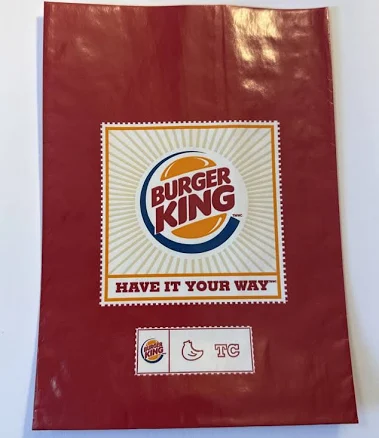
Burger King · Fast-Casual Food Packaging
( 5 pack Vintage Burger King Thick Sleeves Wrappers Collectible Advertising
Vintage collectible with unknown PFAS coating status.
These decades-old collectible wrappers are no longer in food use. Burger King never disclosed if vintage burger wrappers contained PFAS-based grease barriers, and no testing or certifications exist.
Still want this one anyway? Check the price on Amazon. We’d swap it.
Material
paper or cardboard with unknown grease-resistant coating
Brand disclosure
Brand is silent on PFAS
Lab data
No public lab test
You may also be interested in
Top-graded picks in the categories readers replace first, every one scored on the same rubric.

- polypropylene filter housing, carbon/sediment cartridge
- We found no PFAS statement from the brand
- Bacterial growth in spent cartridges
3 hazards checked on this product, all on its full breakdown.

Aquasure
Premier Series 75 GPD Under Sink Reverse Osmosis Water Filtration System
- RO membrane, carbon filters, stainless steel housing
- We found no PFAS statement from the brand
- Bacterial and microbial growth in housing and filters
4 hazards checked on this product, all on its full breakdown.

Avocado
Vegan Mattress
- organic cotton, natural latex, coconut coir, recycled steel coils
- The brand calls it PFAS-free, which we have not verified
- Heavy metals
2 hazards checked on this product, all on its full breakdown.
What ( 5 pack Vintage Burger King Advertising is made of, ingredients and materials
These are vintage paper or cardboard burger wrappers, likely from the 1970s-1990s based on "thick sleeves" description and collectible status. Fast-food wrappers of that era commonly used kraft paper or bleached paperboard with applied grease-resistant coatings to prevent oil and moisture penetration. The specific coating chemistry is unknown for this vintage product, but era-typical formulations often included wax, silicone, or fluorochemical treatments to achieve water and grease repellency.
What’s concerning
Category baseline
The starting point for this type of product, before anything specific to this product is counted.
No PFAS disclosure
No public statement from the brand about PFAS in this product.
Waterproof / stain-resistant treatment
Water-repellent coating treatments have historically used PFAS.
Grease-resistant coating (unknown chemistry)
Vintage wrappers likely contain fluorochemical or wax-based coatings applied for food contact; exact formulation unknown and may include legacy PFAS or other lipophobic compounds not labeled on collectible product.
Ink and print contamination
Vintage food packaging inks may contain heavy metals (lead, cadmium) or azo dyes not restricted in older manufacturing standards; direct skin contact or hand-to-mouth transfer after handling carries low but unquantified risk.
Paper degradation and fragmentation
Decades-old cardboard or paper becomes brittle and prone to breaking down into microparticles; inhalation or accidental ingestion of fragments is possible during handling, especially with young children or pets.
Mold or microbial growth
If stored in humid or damp conditions, vintage wrappers can develop mold colonization, particularly if they retain any residual food material or moisture; spore exposure during handling can occur.
What’s reassuring
Bleach and processing residues
Vintage bleached paperboard may retain trace chlorine or chlorine dioxide residues from pulp processing; no specific hazard data for this product exists, but aged paper can off-gas volatile organics over decades.
How is this PFAS grade calculated?
The brand's record and disclosure
Burger King has not made public disclosures about historical packaging coatings or PFAS use in vintage wrapper formulations. Modern Burger King packaging statements focus on sustainability but do not address legacy products. No recalls or regulatory actions specific to vintage Burger King wrappers have been established in public records.
How it compares in its category
Vintage fast-food packaging is inherently higher-risk than modern alternatives because coating formulations predate contemporary scrutiny and PFAS phase-out initiatives. Modern burger wrappers increasingly use coatings without PFAS according to manufacturers, making vintage collectibles a known pain point for preservationists concerned with legacy chemical exposure. This product's age is both its appeal and its uncertainty.
If you buy it
Store these wrappers in a dry, cool place away from direct sunlight to prevent degradation and ink transfer. Do not use for food contact or heat exposure; treat as display-only collectibles. Wash hands after handling to avoid contact with aged inks or coating residue. If you are a collector with young children in the home, store securely and supervise handling to prevent ingestion of paper fragments or coating particles.
What is not known about PFAS in this product?
- Basis
- Model estimate, 35% confidence, not a lab result
- Lab test
- None on record for this exact product
- Brand statement
- Burger King has made none
Formulations change between production runs, so check the current label. How we grade.
More fast-casual food packaging grades
How we score, every product runs through the same public 0-100 rubric based on materials, coatings, brand disclosure, lab findings, and recalls. See the full methodology → Spotted a mistake? Report an error.