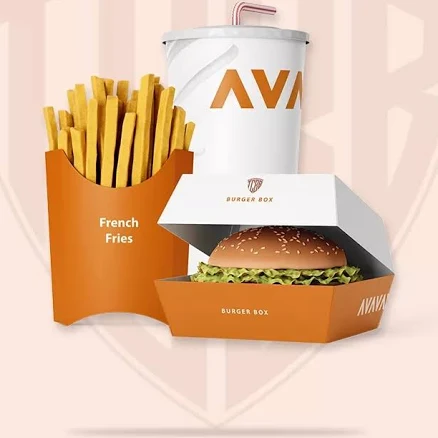
Custom Fast Food Wrappers and Sandwich Bags
Avoid until reveals PFAS status of food contact coatings.
The brand's wrappers and bags feature grease-resistant coatings standard in fast food, likely containing water and oil repellents. The company has not disclosed PFAS use or absence, and independent testing is unavailable.
Still want this one anyway? Check the price on Amazon. We’d swap it.
Material
coated paper/cardboard with grease-resistant treatment
Brand disclosure
Brand is silent on PFAS
Lab data
No public lab test
You may also be interested in
Top-graded picks in the categories readers replace first, every one scored on the same rubric.

- polypropylene filter housing, carbon/sediment cartridge
- We found no PFAS statement from the brand
- Bacterial growth in spent cartridges
3 hazards checked on this product, all on its full breakdown.

Aquasure
Premier Series 75 GPD Under Sink Reverse Osmosis Water Filtration System
- RO membrane, carbon filters, stainless steel housing
- We found no PFAS statement from the brand
- Bacterial and microbial growth in housing and filters
4 hazards checked on this product, all on its full breakdown.

Avocado
Vegan Mattress
- organic cotton, natural latex, coconut coir, recycled steel coils
- The brand calls it PFAS-free, which we have not verified
- Heavy metals
2 hazards checked on this product, all on its full breakdown.
What Custom Fast Food Wrappers Sandwich Bags is made of, ingredients and materials
Wrappers and sandwich bags are coated paper or cardboard treated with a grease-resistant barrier to prevent oil and moisture from soaking through. This barrier coating is typically a fluorochemical-based formulation (likely PFOA, PFOS, or GenX alternatives) applied during manufacturing to achieve food-contact safety at the wrapper-to-food interface. The paper base itself is inert, but the coating is where chemical migration risk concentrates. The brand has not publicly disclosed the specific chemistry of this treatment, which is the primary concern.
What’s concerning
Category baseline
The starting point for this type of product, before anything specific to this product is counted.
No PFAS disclosure
No public statement from the brand about PFAS in this product.
Waterproof / stain-resistant treatment
Water-repellent coating treatments have historically used PFAS.
PFAS
The coating chemistry is undisclosed. Indirect evidence (industry standard practice, coating durability requirements) suggests fluorochemicals, but the brand provides no documentation. Food contact with warm or oily foods may increase leaching risk, though absolute migration volumes from occasional exposure are expected to be small.
Source, ATSDR ↗Microplastics
If the grease-resistant coating is a synthetic polymer rather than a true PFAS, it could shed particles during handling or heat exposure. Available data does not specify the coating polymer chemistry, so degradation risk cannot be assessed precisely. Risk is likely low for single-use exposure.
Source, EPA ↗Thermal stability when heated
Fluorochemical coatings on food-contact paper may release volatile compounds or degrade products if exposed to temperatures above 150 degrees Celsius. The brand has not published thermal safety limits. Heating wrapped food in ovens or microwaves is inadvisable but probably infrequent for this product.
What’s reassuring
Ink migration or dyes on exterior surfaces
Paper wrappers typically use food-approved inks on the outer surface. No recalls or safety alerts specific to packaging inks have been documented. Interior food-contact surfaces are usually unprinted, which is the relevant barrier.
Cardboard/paper contaminants (recycled fiber residues)
If wrappers use recycled content, trace contaminants (metals, plastic fragments, residual inks) are theoretically possible but regulated under FDA food-contact paper standards. No specific safety issues have been reported for this product or brand.
How is this PFAS grade calculated?
The brand's record and disclosure
The brand has not made public statements about PFAS use in food packaging as of available records, nor has the company committed to phasing out fluorochemicals. The brand has faced scrutiny over sustainability and waste practices, but chemical transparency in packaging coatings remains absent from official communications. Major competitors (McDonald's, Wendy's) have similarly avoided detailed disclosure, though some chains have begun transitioning to PFAS-free alternatives under NGO pressure. Without third-party certification or explicit chemical data from the brand, end-users cannot verify the safety profile of the coating.
How it compares in its category
Fast-food wrapper coating standards are industry-wide loose, most major chains rely on fluorochemical grease barriers because alternatives (silicone, wax blends, mineral oil) are less durable or cost more. Wrappers are typical for the category, not exceptional. Some smaller chains and regional brands have switched to PFAS-free coatings, but availability and cost make this a niche choice. The absence of regulatory mandates in the US means fluorochemical-coated food packaging remains the default across the sector.
If you buy it
Accept that PFAS exposure from occasional food contact with coated wrappers is probably low; cumulative exposure is the epidemiological concern, not single use. Do not heat food in these wrappers (oven, toaster, or microwave) as heat may increase coating permeation. If PFAS concern is high for your household, request uncoated paper or bring your own containers when possible. Recycling these wrappers in commingled paper streams is standard; check your local program, as fluorochemical coatings may complicate some recycling processes.
What is not known about PFAS in this product?
- Basis
- Model estimate, 35% confidence, not a lab result
- Lab test
- None on record for this exact product
- Brand statement
- has made none
Formulations change between production runs, so check the current label. How we grade.
More fast-casual food packaging grades
How we score, every product runs through the same public 0-100 rubric based on materials, coatings, brand disclosure, lab findings, and recalls. See the full methodology → Spotted a mistake? Report an error.