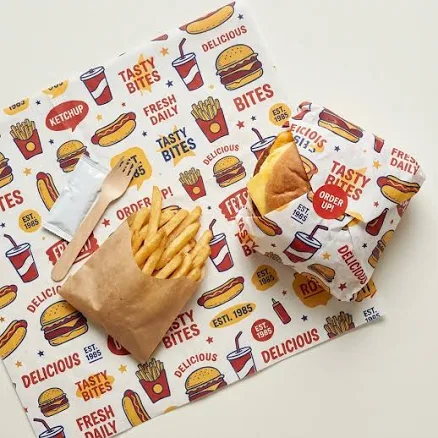
Fast Food Wrapping Paper
Skip. Grease-resistant coatings often contain PFAS without transparency.
Fast-food wrappers commonly rely on PFAS-containing grease barriers for performance. The brand provides no ingredient disclosure or PFAS reassurance.
Still want this one anyway? Check the price on Amazon. We’d swap it.
Material
paper with grease-resistant coating, composition unspecified
Brand disclosure
Brand is silent on PFAS
Lab data
No public lab test
You may also be interested in
Top-graded picks in the categories readers replace first, every one scored on the same rubric.

- polypropylene filter housing, carbon/sediment cartridge
- We found no PFAS statement from the brand
- Bacterial growth in spent cartridges
3 hazards checked on this product, all on its full breakdown.

Aquasure
Premier Series 75 GPD Under Sink Reverse Osmosis Water Filtration System
- RO membrane, carbon filters, stainless steel housing
- We found no PFAS statement from the brand
- Bacterial and microbial growth in housing and filters
4 hazards checked on this product, all on its full breakdown.

Avocado
Vegan Mattress
- organic cotton, natural latex, coconut coir, recycled steel coils
- The brand calls it PFAS-free, which we have not verified
- Heavy metals
2 hazards checked on this product, all on its full breakdown.
What Fast Food Wrapping Paper is made of, ingredients and materials
Wrapping paper is paper substrate with an unspecified grease-resistant coating formulation. Grease-resistant coatings on food contact papers historically rely on fluorochemical compounds (PFAS family) to repel oils; the exact chemistry here is not publicly disclosed by the brand. Without transparency on whether the coating contains PFAS alternatives like silicone, wax, or other non-fluorinated barriers, the material's long-term migration into food and environmental fate cannot be reliably assessed by consumers.
What’s concerning
Category baseline
The starting point for this type of product, before anything specific to this product is counted.
No PFAS disclosure
No public statement from the brand about PFAS in this product.
Waterproof / stain-resistant treatment
Water-repellent coating treatments have historically used PFAS.
PFAS
Unspecified grease-resistant formulation on food-contact paper is strongly associated with PFAS chemistry in this product category. No alternative coating confirmation from brand; coating migration into fatty foods (burger, fries) is a documented route of human exposure.
Source, ATSDR ↗Coating migration into food
Grease-resistant paper coatings are designed to contact food directly. Heat, fatty sauces, and acidic condiments can increase desorption of coating components into food; quantitative migration data for this specific product is not publicly available.
What’s reassuring
Ink or dye toxicity
No documented recalls or warnings for inks or dyes on wrapping paper. Food-contact paper is regulated under FDA guidelines; if printed areas contact food directly, inks should meet food-safe standards, though brand verification is absent.
Chlorine bleaching residues
Paper pulp may be chlorine-bleached during manufacture, potentially leaving trace chlorinated organics. No specific testing for this product is on record; this is a minor concern relative to coating hazards and applies broadly to most commercial food-wrapping papers.
Microplastic or particulate shedding
No reports of visible disintegration, peeling, or particulate contamination from wrapping paper during normal use. Coating integrity is not documented as degrading under typical burger-holding and transport conditions.
How is this PFAS grade calculated?
The brand's record and disclosure
The brand has not published commitments to phase out PFAS in food packaging or disclose coating chemistry for this product. The brand maintains silence on grease-barrier material sourcing despite growing industry scrutiny of PFAS in quick-service restaurant packaging. No third-party certification (e.g., FDA functional barriers, compostability standards) is documented for this wrapping paper, limiting independent verification of safety claims.
How it compares in its category
Most major quick-service restaurants still use PFAS-coated paper for wrapping, making this product typical rather than a leader in the category. Some competitors (e.g., select chains in California post-legislation) have begun transitioning to PFAS-free coatings, though widespread adoption remains rare. Consumer-facing alternatives like parchment paper or wax-paper wraps at home offer more transparent chemistry, though commercial operations depend on coatings for food-contact durability.
If you buy it
Exposure is difficult to control because wrapping is single-use at point of sale. Do not heat food in the wrapper (oven, microwave, or steam table) as this may increase coating migration into food. Transfer food to uncoated surfaces immediately upon receipt. If regularly consuming products, consider this one route of PFAS intake among many fast-food packaging sources; cumulative exposure compounds over time.
What is not known about PFAS in this product?
- Basis
- Model estimate, 35% confidence, not a lab result
- Lab test
- None on record for this exact product
- Brand statement
- has made none
Formulations change between production runs, so check the current label. How we grade.
More fast-casual food packaging grades
How we score, every product runs through the same public 0-100 rubric based on materials, coatings, brand disclosure, lab findings, and recalls. See the full methodology → Spotted a mistake? Report an error.