
COS Women's Bonded-Scuba V-Neck Swimsuit in Red
Lower PFAS concern; bonded scuba usually stays untreated but COS stays silent.
This bonded scuba swimsuit uses synthetic rubber and synthetic blends without water-repellent coatings, which typically lowers PFAS risk. COS shares no public information about PFAS testing, supply management, or water-resistant treatments.
The better-graded swap
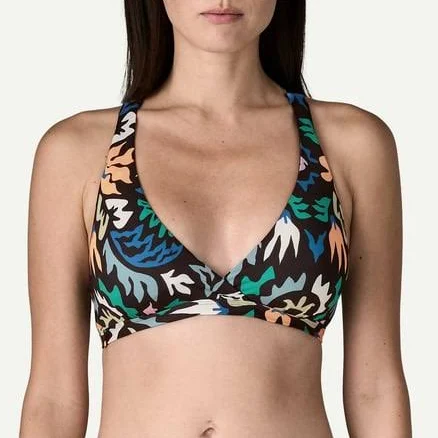
Patagonia
Patagonia Women's Bottom Turn Racerback Bikini Top
90/100 safety
Same rubric that flunked this product. The swap earned Excellent.
Still want this one anyway? Check the price on Amazon. We’d swap it.
Material
Bonded scuba neoprene/polyester blend
Brand disclosure
Brand is silent on PFAS
Lab data
No public lab test
What COS Women's Bonded-Scuba V-Neck Swimsuit is made of, ingredients and materials
This swimsuit uses bonded-scuba neoprene (closed-cell rubber) laminated to polyester, a construction method that creates durability and stretch without relying on chemical coatings. Neoprene itself is inert synthetic rubber; the polyester backing is the primary chemical exposure surface. Bonded construction means the materials are fused rather than printed or treated, reducing the need for water-repellent finishes or adhesive residues that might otherwise leach into skin or water.
What’s concerning
Category baseline
The starting point for this type of product, before anything specific to this product is counted.
No PFAS disclosure
No public statement from the brand about PFAS in this product.
Azo dyes in polyester backing
Red polyester swimsuit backing may contain azo dyes; while restricted in EU and under REACH, compliance varies by manufacturing origin. No specific testing on record for COS swimwear, but red colorants in budget-tier polyester sometimes use problematic azo chemistry. Risk is dermal contact and potential photo-degradation.
Microplastic shedding from neoprene degradation
Bonded neoprene, like all foam rubber, gradually sheds microparticles with age and mechanical stress (washing, chlorine exposure). This is a known property of the material class, not a COS-specific defect. Magnitude increases sharply after 3+ years or with heavy use.
Polyester fiber shedding and skin irritation
Loose polyester fibers from the backing can shed into skin, particularly when wet and flexed. This is especially relevant for sensitive skin or eczema-prone individuals. Proper rinsing after production reduces but does not eliminate this risk.
What’s reassuring
Base material not linked to PFAS
The main material recorded for this product is not one associated with PFAS.
Formaldehyde / VOCs
No formal reports of formaldehyde-releasing finishes in COS swimwear. Bonded scuba construction typically requires fewer finish treatments than woven swimwear, reducing exposure likelihood. However, COS does not disclose finishing chemistry, so residual risk cannot be ruled out.
Source, ATSDR ↗Glue or adhesive residues in lamination
Bonding neoprene to polyester requires adhesives; if not properly cured or if low-quality formulations are used, residual isocyanates or volatile organic compounds (VOCs) may off-gas. No specific data on COS manufacturing standards; bonded construction inherently carries lower chemical load than printed alternatives.
The full breakdown
The brand's record and disclosure
COS maintains no public sustainability or chemical disclosure statements specific to swimwear or PFAS. The brand is owned by H&M Group, which has committed to phase-out of some hazardous chemicals in apparel but does not provide product-level transparency for individual items. No recalls or safety incidents have been established for COS swimwear. Lack of transparency is the main limitation; absence of evidence of harm is not the same as evidence of absence.
How it compares in its category
Standard polyester-nylon swimwear often relies on water-repellent coatings (frequently PFAS-based); bonded neoprene construction avoids this by design. COS's approach is closer to athletic/performance swimwear standards than to fast-fashion printed swimwear. Most mainstream brands in this price tier offer comparable material profiles without stronger chemical disclosures, making COS neither an outlier nor a leader in transparency.
If you buy it
Rinse thoroughly with fresh water after each use to remove chlorine or salt, which can degrade neoprene over time and potentially release breakdown particles. Machine wash cold with mild detergent; avoid chlorine bleach and fabric softeners, which degrade rubber. Hang dry away from direct sunlight and heat (sunlight can cause neoprene to harden and crack). Replace after 2-3 years of regular use or when elasticity visibly diminishes; degraded neoprene may shed microparticles.
What we don’t know
- Basis
- Model estimate, 72% confidence, not a lab result
- Lab test
- None on record for this exact product
- Brand statement
- COS has made none
Formulations change between production runs, so check the current label. How we grade.
Better-graded alternatives in Swimwear
Patagonia
Women's Bottom Turn Racerback Bikini Top
- Nylon/polyester blend with elastane (standard swimwear)
- The brand calls it PFAS-free, which we have not verified
- Elastane (spandex) degradation under heat or chlorine
More swimwear grades
How we score, every product runs through the same public 0-100 rubric based on materials, coatings, brand disclosure, lab findings, and recalls. See the full methodology → Spotted a mistake? Report an error.