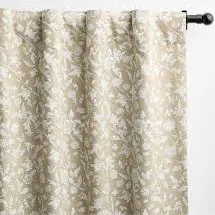
Crate & Barrel Floral Blackout Window Curtain Panel
Avoid until Crate & Barrel names the blackout coating or certifies PFAS-free.
Crate & Barrel's blackout curtain uses a water-repellent coating or opaque coating of unknown composition on polyester. Blackout treatments historically contained PFAS, but Crate & Barrel provides no disclosure or testing.
The better-graded swap
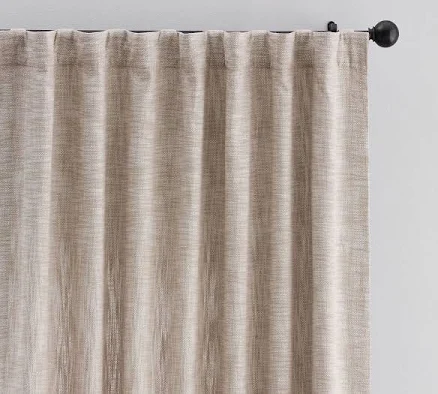
Pottery Barn
Pottery Barn Custom Seaton Textured Cotton Curtain
75/100 safety
Same rubric that flunked this product. The swap earned Excellent.
Still want this one anyway? Check the price on Amazon. We’d swap it.
Material
Polyester with blackout coating (composition unspecified)
Brand disclosure
Brand is silent on PFAS
Lab data
No public lab test
You may also be interested in
Top-graded picks in the categories readers replace first, every one scored on the same rubric.

- polypropylene filter housing, carbon/sediment cartridge
- We found no PFAS statement from the brand
- Bacterial growth in spent cartridges
3 hazards checked on this product, all on its full breakdown.

Aquasure
Premier Series 75 GPD Under Sink Reverse Osmosis Water Filtration System
- RO membrane, carbon filters, stainless steel housing
- We found no PFAS statement from the brand
- Bacterial and microbial growth in housing and filters
4 hazards checked on this product, all on its full breakdown.

Avocado
Vegan Mattress
- organic cotton, natural latex, coconut coir, recycled steel coils
- The brand calls it PFAS-free, which we have not verified
- Heavy metals
2 hazards checked on this product, all on its full breakdown.
What Crate & Barrel Floral Curtain Panel is made of, ingredients and materials
This product is polyester fabric with an applied blackout coating of undisclosed composition. Blackout coatings typically use synthetic polymers and additives to block light transmission; the specific chemistry here is not publicly detailed by Crate & Barrel. Polyester itself is a stable plastic, but the coating and any finishing treatments applied to the fabric are the primary concern for off-gassing or leachable compounds, especially in new textiles stored in warm spaces.
What’s concerning
Category baseline
The starting point for this type of product, before anything specific to this product is counted.
No PFAS disclosure
No public statement from the brand about PFAS in this product.
Waterproof / stain-resistant treatment
Water-repellent coating treatments have historically used PFAS.
Flame retardants
Blackout-coated textiles are often treated with flame retardants to meet building codes; Crate & Barrel does not disclose whether this panel contains brominated, chlorinated, or phosphorus-based FR compounds. If present and worn, these can off-gas or shed as dust.
Source, EPA ↗Volatile organic compounds (VOC) and odor from blackout coating
New synthetic blackout coatings commonly release chemical odor in the first days to weeks, particularly in warm or humid conditions. This indicates off-gassing of solvents or unreacted monomers and typically diminishes but is a real exposure during initial use.
Microplastic and coating particle shedding over time
Polyester textiles with synthetic coatings can shed fine particles as the coating degrades with age, washing, and UV exposure. Inhalation or ingestion risk is low for typical indoor curtain use, but deteriorating panels should be replaced to prevent dust accumulation.
Formaldehyde / VOCs
Polyester fabrics may be finished with formaldehyde-releasing resins (urea-formaldehyde or melamine-formaldehyde) for wrinkle resistance or color-fastening. Crate & Barrel provides no test data confirming absence of these additives in this product line.
Source, ATSDR ↗What’s reassuring
Heavy metals
No recalls or warnings specific to this curtain product for lead or cadmium in dyes. Crate & Barrel uses commercial dyes and is subject to general textile regulation, but no third-party testing of this item is on record.
Source, FDA ↗How is this PFAS grade calculated?
The brand's record and disclosure
Crate & Barrel does not publicly name the blackout-coating formulation or provide third-party testing data for chemical composition of this curtain line. The brand has not issued PFAS-free certifications for window treatments and maintains silence on whether the coating or fabric finishes contain flame retardants or other regulated additives. This lack of transparency is typical for mainstream home furnishings retailers but limits consumer ability to assess full hazard profile.
How it compares in its category
Blackout curtains from major retailers (West Elm, Target, Wayfair) generally share the same disclosure gap regarding coating composition. Some specialty retailers now offer products without detected PFAS or flame-retardant chemical treatments, though at higher price. Crate & Barrel's product sits in the middle of the market, mid-range pricing with design appeal but minimal chemical transparency, a common trade-off in the category.
If you buy it
Ventilate the room for 24-48 hours after installation to allow any volatile off-gassing from the coating to dissipate. Avoid machine washing in hot water; use cool or lukewarm gentle cycles only, as heat can accelerate breakdown of the coating layer. Replace panels if visible cracking, peeling, or deterioration of the blackout backing occurs, as this signals potential shedding of coating particles. Keep curtains away from direct heat sources (radiators, heat vents) to minimize thermal stress on the synthetic coating.
What is not known about PFAS in this product?
- Basis
- Model estimate, 45% confidence, not a lab result
- Lab test
- None on record for this exact product
- Brand statement
- Crate and Barrel has made none
Formulations change between production runs, so check the current label. How we grade.
What are the PFAS-free alternatives to Crate & Barrel Floral Blackout Window Curtain Panel?
- 100% cotton textile, no stated coating
- Formaldehyde / VOCs
3 hazards checked on this product, all on its full breakdown.
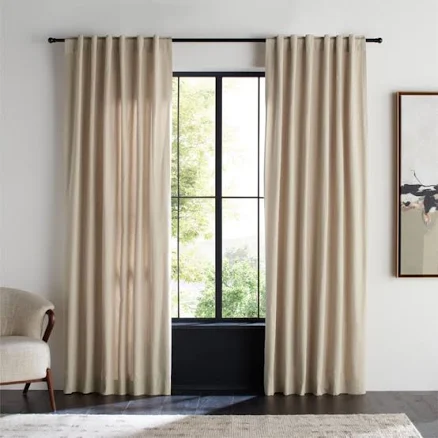
Crate and Barrel
Crate & Barrel Organic Cotton Natural Taupe Window Curtain Panel
- organic cotton, no applied coating mentioned
- We found no PFAS statement from the brand
- Heavy metals
2 hazards checked on this product, all on its full breakdown.
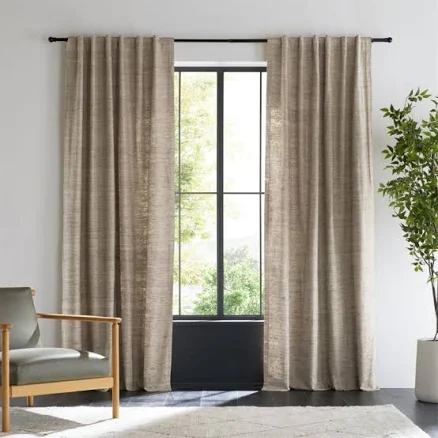
- Cotton-silk blend, no known finishes applied
- We found no PFAS statement from the brand
- Azo dyes and synthetic colorants
2 hazards checked on this product, all on its full breakdown.
More curtains grades
How we score, every product runs through the same public 0-100 rubric based on materials, coatings, brand disclosure, lab findings, and recalls. See the full methodology → Spotted a mistake? Report an error.