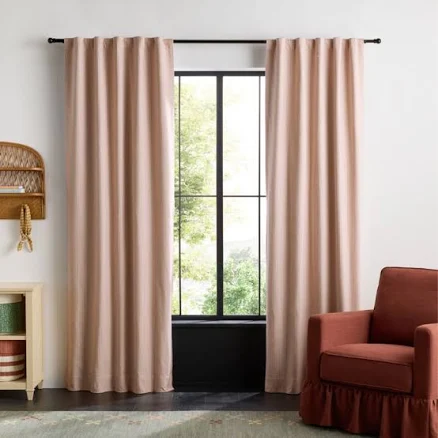
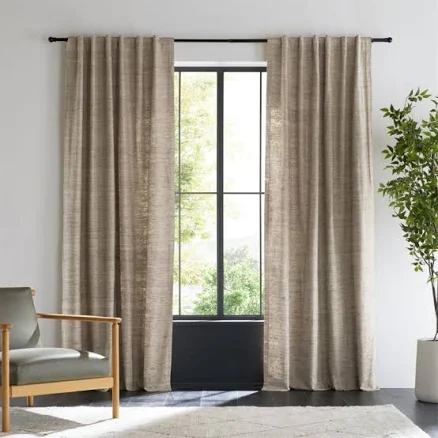
Sharland England French Ticking Stripe Blackout Curtain Panel
High uncertainty due to silent stance on blackout finish chemistry; avoid unless Crate & Barrel clarifies.
Blackout curtains typically require water and stain-resistant coatings that historically contained PFAS. Crate & Barrel provides no public disclosure of coating chemistry or PFAS status for this product.
The better-graded swap
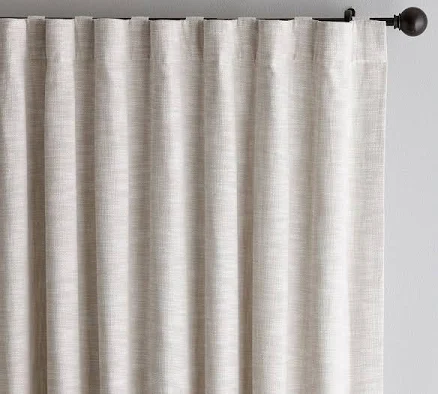
Pottery Barn
Pottery Barn Seaton Textured Cotton Light Filtering Curtain
75/100 safety
Same rubric that flunked this product. The swap earned Excellent.
Still want this one anyway? Check the price on Amazon. We’d swap it.
Material
cotton/cotton-blend fabric with blackout lining, water-repellent coating treatment unspecified
Brand disclosure
Brand is silent on PFAS
Lab data
No public lab test
You may also be interested in
Top-graded picks in the categories readers replace first, every one scored on the same rubric.

- polypropylene filter housing, carbon/sediment cartridge
- We found no PFAS statement from the brand
- Bacterial growth in spent cartridges
3 hazards checked on this product, all on its full breakdown.

Aquasure
Premier Series 75 GPD Under Sink Reverse Osmosis Water Filtration System
- RO membrane, carbon filters, stainless steel housing
- We found no PFAS statement from the brand
- Bacterial and microbial growth in housing and filters
4 hazards checked on this product, all on its full breakdown.

Avocado
Vegan Mattress
- organic cotton, natural latex, coconut coir, recycled steel coils
- The brand calls it PFAS-free, which we have not verified
- Heavy metals
2 hazards checked on this product, all on its full breakdown.
What Sharland England French Curtain Panel is made of, ingredients and materials
This product combines a cotton or cotton-blend face fabric with a blackout lining, likely polyester or a poly-cotton blend. Blackout linings typically receive water-repellent coating (water-repellent coating) or flame retardant treatments to achieve their light-blocking and functional properties. The chemistry of these finishing treatments is not disclosed by Crate & Barrel, which is the core concern; many blackout fabrics historically relied on PFAS-based chemistry, though some manufacturers have shifted to alternatives. Without specific product documentation, the composition of the lining treatment cannot be verified.
What’s concerning
Category baseline
The starting point for this type of product, before anything specific to this product is counted.
No PFAS disclosure
No public statement from the brand about PFAS in this product.
Waterproof / stain-resistant treatment
Water-repellent coating treatments have historically used PFAS.
PFAS
Blackout linings commonly use fluorinated water-repellent coating or brominated flame retardants. Sharland England product data does not specify the chemistry, making PFAS presence unconfirmed but historically common in this fabric class. Crate & Barrel's silence on this issue prevents downgrading to 'likely' without evidence.
Source, ATSDR ↗Formaldehyde / VOCs
Cotton-blend textiles treated with water-repellent or flame-retardant resins may employ formaldehyde-based cross-linking agents. No product-specific information or disclosures confirm or exclude this. Off-gassing risk is typically low in curtains due to limited skin contact and high air circulation, but sensitive individuals may notice odor.
Source, ATSDR ↗Coating degradation and microfiber shedding
Blackout linings can degrade over 3-5 years of use, especially with sun exposure or washing. Peeling or flaking lining may release synthetic microfibers and any chemical residues trapped in the coating. No recalls or complaints specific to this product are on record, but this is a general risk of laminated or coated textiles.
Volatile organic compound (VOC) off-gassing
Polyester-based blackout linings can release low levels of VOCs during the first weeks after purchase, though concentrations are typically below health concern thresholds in well-ventilated rooms. Smell and headaches in sealed spaces are the main reported symptoms. No specific VOC profiles for Sharland England are available.
What’s reassuring
Azo dyes in fabric coloring
Cotton and cotton-blend textiles may use azo dyes, some of which can degrade into aromatic amines under stress. No product-specific safety data, complaints, or certifications are on record for this Sharland England line. Risk is low unless fabric is repeatedly exposed to strong sunlight, heat, or abrasion.
How is this PFAS grade calculated?
The brand's record and disclosure
Crate & Barrel has not published a public commitment to eliminate PFAS from home textiles or clarified the chemistry of finishes used in blackout curtains. The brand does not appear to prominently disclose water-repellent coating or flame retardant treatment specifications on product pages. No major recalls or safety controversies specific to this product line are on record. The silence itself is the issue, transparency about blackout lining chemistry is a baseline expectation, and its absence suggests either lack of internal vetting or willingness to use conventional (potentially PFAS-containing) formulations.
How it compares in its category
Blackout curtains from mainstream retailers (West Elm, Restoration Hardware, Amazon brands) typically show similar or worse disclosure practices regarding finishing chemistry. Premium or eco-certified brands (Parachute, Organic Modernist) often provide explicit PFAS-free or safer-chemical certifications. This Sharland England product sits in the middle market, where water-repellent coating transparency is inconsistently applied. If you prioritize low chemical risk, certified organic or explicitly PFAS-free alternatives exist but at higher price points.
If you buy it
Before purchase, contact Crate & Barrel directly and request written confirmation that the blackout lining does not contain PFAS-based water-repellent coating or ask for the supplier's safety data sheet. Wash new curtains before hanging to reduce potential off-gassing, though blackout linings do not typically require frequent washing. Do not expose the lining to heat sources or dry-clean, as heat can accelerate any finish degradation. Replace if the blackout lining begins to peel, separate, or show visible wear, as this may allow any residual chemicals to shed.
What is not known about PFAS in this product?
- Basis
- Model estimate, 35% confidence, not a lab result
- Lab test
- None on record for this exact product
- Brand statement
- Crate and Barrel has made none
Formulations change between production runs, so check the current label. How we grade.
What are the PFAS-free alternatives to Sharland England French Ticking Stripe Blackout Curtain Panel?
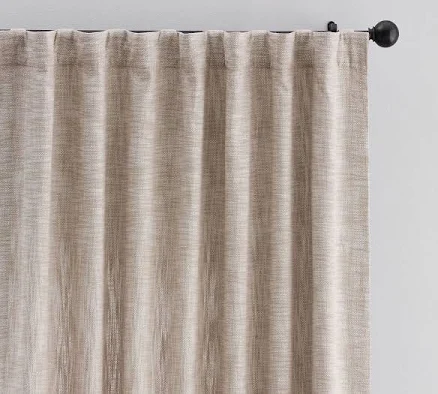
- 100% cotton textile, no stated coating
- Formaldehyde / VOCs
3 hazards checked on this product, all on its full breakdown.
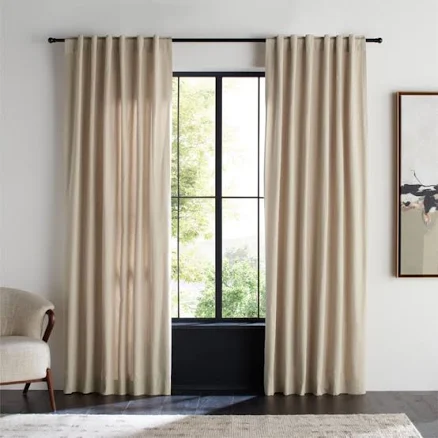
Crate and Barrel
Crate & Barrel Organic Cotton Natural Taupe Window Curtain Panel
- organic cotton, no applied coating mentioned
- We found no PFAS statement from the brand
- Heavy metals
2 hazards checked on this product, all on its full breakdown.
- Cotton-silk blend, no known finishes applied
- We found no PFAS statement from the brand
- Azo dyes and synthetic colorants
2 hazards checked on this product, all on its full breakdown.
More curtains grades
How we score, every product runs through the same public 0-100 rubric based on materials, coatings, brand disclosure, lab findings, and recalls. See the full methodology → Spotted a mistake? Report an error.