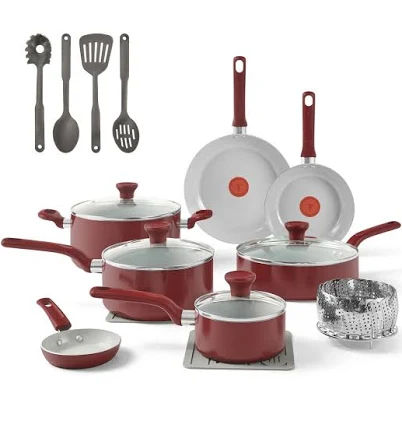
T-fal 18 Piece Ceramic Nonstick Cookware Set, Is It Non-Toxic?
Ceramic nonstick reduces PFAS risk versus Teflon-type coating; T-fal's formula is undisclosed, proceed with caution.
T-fal's ceramic nonstick line typically uses ceramic-based coatings rather than Teflon-type coating, suggesting lower PFAS risk. However, the brand does not publicly disclose composition or PFAS status.
The better-graded swap
Granitestone
Ceraluxe 20pc Kitchen In A Box Ceramic Cookware Set
85/100 safety
Same rubric that flunked this product. The swap earned Excellent.
Still want this one anyway? Check the price on Amazon. We’d swap it.
Material
Ceramic nonstick coating (proprietary formula not disclosed)
Lab data
No public lab test
You may also be interested in
Top-graded picks in the categories readers replace first, every one scored on the same rubric.

- polypropylene filter housing, carbon/sediment cartridge
- We found no PFAS statement from the brand
- Bacterial growth in spent cartridges
3 hazards checked on this product, all on its full breakdown.

Aquasure
Premier Series 75 GPD Under Sink Reverse Osmosis Water Filtration System
- RO membrane, carbon filters, stainless steel housing
- We found no PFAS statement from the brand
- Bacterial and microbial growth in housing and filters
4 hazards checked on this product, all on its full breakdown.

Avocado
Vegan Mattress
- organic cotton, natural latex, coconut coir, recycled steel coils
- The brand calls it PFAS-free, which we have not verified
- Heavy metals
2 hazards checked on this product, all on its full breakdown.
Is T-fal 18 Piece Ceramic Cookware Set non-toxic? What it is made of
This set uses a ceramic nonstick coating applied over an aluminum core, which T-fal markets as Teflon-type coating-free. The exact ceramic formulation is proprietary and not publicly disclosed, making independent verification of coating composition impossible. Ceramic coatings can be durable but are prone to chipping and degradation with metal utensils or thermal shock, potentially exposing the aluminum substrate underneath. The undisclosed formula means you cannot verify whether the coating contains heavy metal binders (such as lead or cadmium) commonly used in some ceramic enamels, though modern commercial cookware brands generally avoid these.
What’s concerning
Category baseline
The starting point for this type of product, before anything specific to this product is counted.
No PFAS disclosure
No public statement from the brand about PFAS in this product.
Non-stick, chemistry undisclosed
Marketed as non-stick without stating the coating chemistry.
Aluminum leaching (substrate exposure)
Ceramic coating degradation from metal utensils or thermal shock may expose the aluminum base layer. Uncoated aluminum contact with acidic foods (tomato sauce, vinegar, citrus) can leach aluminum into food. Risk is low if coating remains intact but increases over time with normal wear.
Coating degradation and particulate release
Ceramic nonstick coatings are inherently fragile compared to Teflon-type coating or hard-anodized alternatives. Chipping and flaking are common with metal utensil use or thermal stress, potentially introducing ceramic particles into food. T-fal does not disclose whether its ceramic formula includes lead, cadmium, or other heavy metals as binding agents.
Thermal stress and handle durability
Users report handle loosening and base warping with this set after extended use, particularly in dishwashers. Structural failure of handles or lids poses burn risk and may prompt premature replacement, increasing total cost of ownership relative to better-constructed alternatives.
What’s reassuring
Lead
No recalls or test results for T-fal ceramic cookware indicating lead or cadmium contamination are on record. However, T-fal's refusal to disclose coating composition prevents independent verification. Modern commercial ceramic coatings typically avoid these metals, but absence of transparency creates uncertainty.
Source, ATSDR ↗How is this PFAS grade calculated?
The brand's record and disclosure
T-fal (Groupe SEB subsidiary) has not publicly disclosed the specific chemical composition of its ceramic nonstick coating or commissioned third-party safety testing results for this set. The brand holds no known eco-certifications specific to cookware safety and has remained silent on PFAS use in its coating formula. T-fal does not appear on lists of brands formally pledging to eliminate PFAS from cookware. This lack of transparency is typical for cookware manufacturers but represents a meaningful gap when evaluating safety relative to competitors who provide coating material specifications.
How it compares in its category
Ceramic nonstick cookware occupies a middle position, it eliminates the Teflon-type coating off-gassing hazard present in traditional Teflon but sacrifices durability compared to hard-anodized aluminum or stainless steel. Many competitor ceramic sets (GreenPan, Our Place, Caraway) publicly disclose coating materials and certifications; T-fal's silence places it behind these alternatives in transparency. Price-wise, T-fal's 18-piece set is budget-friendly, but the coating's susceptibility to chipping may reduce actual lifespan relative to premium ceramic or non-coated options.
If you buy it
Avoid metal utensils, scouring pads, and high-heat cooking (keep below 400F to prevent coating breakdown). Hand wash rather than dishwasher to extend coating life. Replace cookware immediately if coating chips reveal the aluminum substrate, as unprotected aluminum can leach into acidic foods. Pre-season lightly with oil before first use and reapply occasionally. Monitor the coating visually at each use; ceramic nonstick typically lasts 2 to 5 years with careful handling before replacement becomes advisable.
What is not known about PFAS in this product?
- Basis
- Model estimate, 62% confidence, not a lab result
- Lab test
- None on record for this exact product
- Brand statement
- T-fal has made a specific claim
Formulations change between production runs, so check the current label. How we grade.
What are the PFAS-free alternatives to T-fal 18 Piece Ceramic Nonstick Cookware Set?
- Ceramic nonstick coating
- The brand calls it PFAS-free, which we have not verified
- Aluminum leaching
3 hazards checked on this product, all on its full breakdown.
- ceramic-coated aluminum cookware
- We found no PFAS statement from the brand
- Aluminum leaching
3 hazards checked on this product, all on its full breakdown.
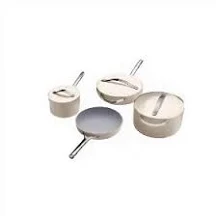
- ceramic nonstick coating (proprietary, PFAS-free)
- The brand calls it PFAS-free, which we have not verified
- Aluminum leaching (from core if coating fails)
3 hazards checked on this product, all on its full breakdown.
More ceramic cookware grades
How we score, every product runs through the same public 0-100 rubric based on materials, coatings, brand disclosure, lab findings, and recalls. See the full methodology → Spotted a mistake? Report an error.