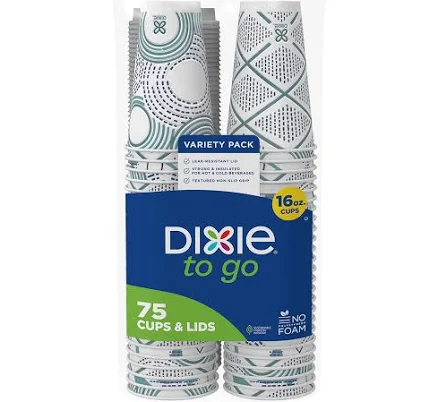
Dixie To Go 12 oz. Paper Cup with Leak-Resistant Lid
Water-resistant coating chemistry not disclosed, material linked to historical PFAS use.
This paper cup has a water and grease-resistant coating with unspecified chemistry. Water-repellent treatments on food-contact paper have historically used fluorinated compounds. Dixie has no PFAS statement on record.
The better-graded swap
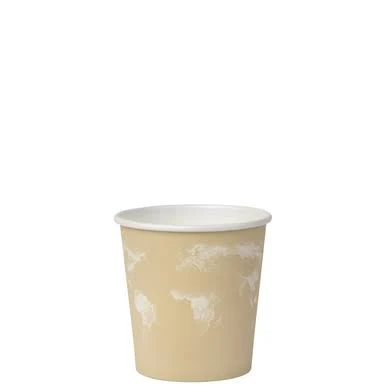
Eco-Products
Eco-Products World Art Hot Cups 4oz
70/100 safety
Same rubric that flunked this product. The swap earned Good.
Still want this one anyway? Check the price on Amazon. We’d swap it.
Material
Paper cup with water/grease-resistant coating (unspecified chemistry)
Brand disclosure
Brand is silent on PFAS
Lab data
No public lab test
You may also be interested in
Top-graded picks in the categories readers replace first, every one scored on the same rubric.

- polypropylene filter housing, carbon/sediment cartridge
- We found no PFAS statement from the brand
- Bacterial growth in spent cartridges
3 hazards checked on this product, all on its full breakdown.

Aquasure
Premier Series 75 GPD Under Sink Reverse Osmosis Water Filtration System
- RO membrane, carbon filters, stainless steel housing
- We found no PFAS statement from the brand
- Bacterial and microbial growth in housing and filters
4 hazards checked on this product, all on its full breakdown.

Avocado
Vegan Mattress
- organic cotton, natural latex, coconut coir, recycled steel coils
- The brand calls it PFAS-free, which we have not verified
- Heavy metals
2 hazards checked on this product, all on its full breakdown.
What Dixie To Go 12 oz. Paper Cup Lid is made of, ingredients and materials
Dixie To Go cups are paper-based with a water and grease-resistant coating applied to the interior. The coating chemistry is not disclosed by the brand, but industry standard for such products is a fluorinated barrier (likely PFAS-based) or, less commonly, polyethylene. The coating prevents liquid seepage and grease penetration but introduces uncertainty around PFAS migration, especially with hot beverages. Paper itself is benign; the coating is the functional, and safety, question.
What’s concerning
Category baseline
The starting point for this type of product, before anything specific to this product is counted.
No PFAS disclosure
No public statement from the brand about PFAS in this product.
Waterproof / stain-resistant treatment
Water-repellent coating treatments have historically used PFAS.
PFAS
Coating chemistry undisclosed; industry default for leak-resistant paper cups is fluorinated compounds. Migration risk increases with heat and liquid acidity (coffee, citrus drinks).
Source, ATSDR ↗Thermal degradation of coating
Repeated hot-liquid contact or heating may compromise coating integrity, potentially increasing particulate or compound release. No public testing of this specific product available.
Microplastic or coating fragments
Wear or damage to the interior coating can shed particles into beverages. More likely after repeated or high-heat use, though single-use cups mitigate this risk.
What’s reassuring
Ink/dyes in printed branding
Exterior printing on Dixie cups uses food-contact-approved inks; no heavy-metal contamination or formaldehyde issues documented for this brand's cup line.
Bleach residue or processing chemicals
Paper pulp processing may leave trace chlorine or other bleaching agents, but concentrations in food-contact paper are regulated and not a documented hazard for Dixie cups.
How is this PFAS grade calculated?
The brand's record and disclosure
Dixie (owned by Georgia-Pacific) does not publicly disclose the specific chemistry of its cup coatings or commit to PFAS-free alternatives on this product line. The brand has not faced major public recalls tied to coating leachates, but transparency about fluorinated compounds remains absent. Dixie has not published phase-out timelines or reformulation plans for PFAS-containing coatings in food contact products, unlike some competitors (e.g., Footprint, some store brands).
How it compares in its category
Single-use paper cups with leak-resistant coatings dominate the market and nearly all major brands (Dixie, Solo, Dart) rely on fluorinated coatings for performance. PFAS-free alternatives exist (e.g., Notpla, World Centric compostable cups with non-fluorinated barriers) but are less common and more expensive. Dixie's product is typical in its hazard profile, neither worse nor better than competitor equivalents, making it a category-wide concern rather than a brand-specific failure.
If you buy it
Use for room-temperature or warm (not boiling) liquids to minimize any potential coating migration. Avoid microwaving or prolonged contact with hot beverages above 60°C (140°F). Do not reuse cups; they are single-use and degradation of the coating increases with thermal stress. For daily coffee use, consider switching to a reusable ceramic or stainless-steel mug to reduce cumulative PFAS and plastic waste exposure.
What is not known about PFAS in this product?
- Basis
- Model estimate, 42% confidence, not a lab result
- Lab test
- None on record for this exact product
- Brand statement
- Dixie has made none
Formulations change between production runs, so check the current label. How we grade.
What are the PFAS-free alternatives to Dixie To Go 12 oz. Paper Cup with Leak-Resistant Lid?
- Plant-based compostable PLA coating
- A third party reports verifying it as PFAS-free
- Leachables from undisclosed grease-resistant coating
3 hazards checked on this product, all on its full breakdown.
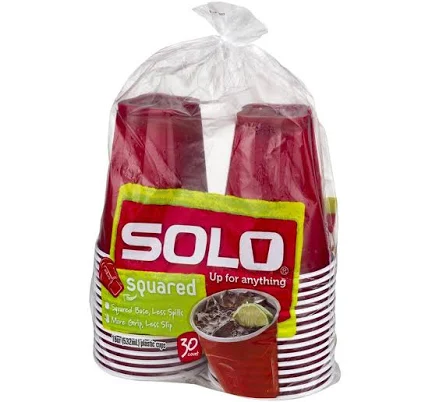
- polystyrene plastic (PS) with grip coating
- We found no PFAS statement from the brand
- Polystyrene monomer and oligomer leaching
4 hazards checked on this product, all on its full breakdown.
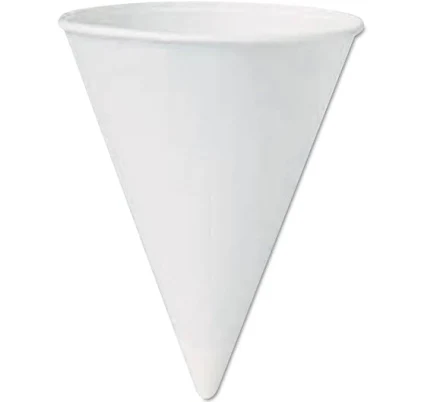
- Expanded polystyrene foam
- We found no PFAS statement from the brand
- Styrene monomer leaching
3 hazards checked on this product, all on its full breakdown.
Find an alternative on AmazonMore coffee cups grades
How we score, every product runs through the same public 0-100 rubric based on materials, coatings, brand disclosure, lab findings, and recalls. See the full methodology → Spotted a mistake? Report an error.