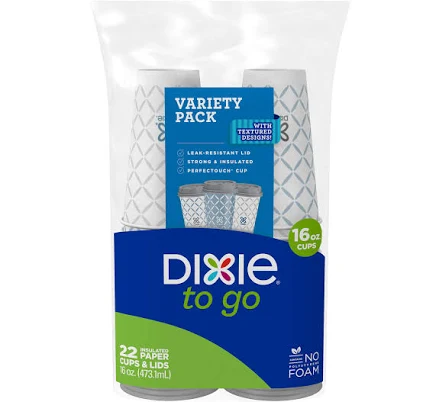
Dixie To Go Paper Cups & Lids
Coating chemistry not stated. Water-resistant treatment used without PFAS disclosure.
These paperboard cups have a grease-resistant and water-resistant coating, but the chemistry is not stated. Water-resistant coatings on food service products have historically used PFAS. The brand has no PFAS statement on record.
The better-graded swap
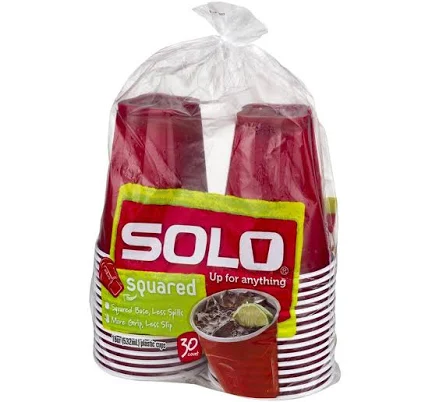
Solo
Solo Cup Company Grips Plastic Cups SQ1830
70/100 safety
Same rubric that flunked this product. The swap earned Good.
Still want this one anyway? Check the price on Amazon. We’d swap it.
Material
paperboard with grease-resistant/water-resistant coating (unspecified)
Brand disclosure
Brand is silent on PFAS
Lab data
No public lab test
You may also be interested in
Top-graded picks in the categories readers replace first, every one scored on the same rubric.

- polypropylene filter housing, carbon/sediment cartridge
- We found no PFAS statement from the brand
- Bacterial growth in spent cartridges
3 hazards checked on this product, all on its full breakdown.

Aquasure
Premier Series 75 GPD Under Sink Reverse Osmosis Water Filtration System
- RO membrane, carbon filters, stainless steel housing
- We found no PFAS statement from the brand
- Bacterial and microbial growth in housing and filters
4 hazards checked on this product, all on its full breakdown.

Avocado
Vegan Mattress
- organic cotton, natural latex, coconut coir, recycled steel coils
- The brand calls it PFAS-free, which we have not verified
- Heavy metals
2 hazards checked on this product, all on its full breakdown.
What Dixie To Go Paper Cups & Lids is made of, ingredients and materials
Dixie To Go cups are paperboard lined with a grease-resistant and water-resistant coating whose chemical composition is not publicly disclosed by the brand. Paperboard itself is cellulose-based and low-concern, but the internal coating is the critical component. Water and grease resistance in paper food service products has historically relied on fluorinated compounds (PFAS) or polyethylene; Dixie has not stated which chemistry is used here, leaving the coating's safety profile opaque.
What’s concerning
Category baseline
The starting point for this type of product, before anything specific to this product is counted.
No PFAS disclosure
No public statement from the brand about PFAS in this product.
Waterproof / stain-resistant treatment
Water-repellent coating treatments have historically used PFAS.
PFAS
Coating chemistry not disclosed; water-resistant linings in paper cups have historically used PFAS. Dixie provides no test data or PFAS-free certification, so presence cannot be ruled out.
Source, ATSDR ↗Coating integrity degradation over time and with heat
Paper cup linings can crack or peel with age or exposure to hot liquids. Degraded coating may release particulates or increase migration of coating components into beverages.
Microplastics
If this product uses polyethylene as the water-resistant layer (an alternative to PFAS), heating or mechanical wear could theoretically shed microplastics; no data specific to Dixie To Go liners is publicly available.
Source, EPA ↗Bacterial or mold growth on lid seals
Paper cup lids can harbor moisture and microorganisms if not cleaned promptly after use; not specific to Dixie brand but a practical concern with all single-use paper cups and lids.
What’s reassuring
Ink or adhesive residues on exterior
Exterior printing and adhesives on paper cups are not documented as a concern for Dixie To Go, and no recalls or complaints on record for this specific hazard in this product line.
How is this PFAS grade calculated?
The brand's record and disclosure
Dixie (Huhtamaki-owned) has not published ingredient lists, material safety data, or PFAS testing results for this product line. The brand remains silent on fluorinated chemistry use despite industry-wide PFAS scrutiny in food packaging since the mid-2010s. No third-party certifications (such as PFAS-free claims or environmental labels) are advertised on this product. This lack of transparency is material given the known persistence of PFAS in similar coated-paper foodware.
How it compares in its category
Paper cup linings vary widely; some competitors (e.g., Footprint, some Vegware lines) explicitly market PFAS-free or plant-based coatings and publish third-party test results, while others remain silent like Dixie. Standard polyethylene-lined cups sidestep PFAS but present microplastic concerns if composted improperly. Dixie To Go falls into the middle, a major brand with no PFAS commitment and no public testing, making it harder to distinguish from higher-concern peers.
If you buy it
Use cups for hot and cold beverages up to typical serving temperatures (not boiling water poured directly into the cup immediately after filling). Do not microwave or use in ovens, as heat may stress the coating and increase leaching. Replace cups if the interior coating visibly cracks, peels, or degrades. For frequent users (e.g., daily coffee drinkers), consider switching to a reusable alternative or a PFAS-tested paper cup brand to reduce cumulative exposure.
What is not known about PFAS in this product?
- Basis
- Model estimate, 45% confidence, not a lab result
- Lab test
- None on record for this exact product
- Brand statement
- Dixie has made none
Formulations change between production runs, so check the current label. How we grade.
What are the PFAS-free alternatives to Dixie To Go Paper Cups & Lids?
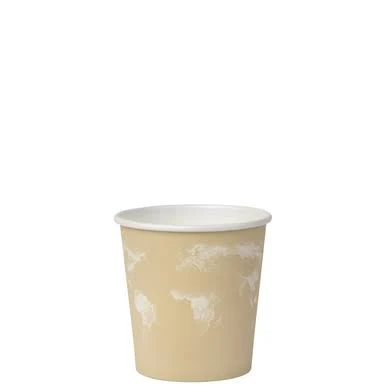
- Plant-based compostable PLA coating
- A third party reports verifying it as PFAS-free
- Leachables from undisclosed grease-resistant coating
3 hazards checked on this product, all on its full breakdown.
- polystyrene plastic (PS) with grip coating
- We found no PFAS statement from the brand
- Polystyrene monomer and oligomer leaching
4 hazards checked on this product, all on its full breakdown.
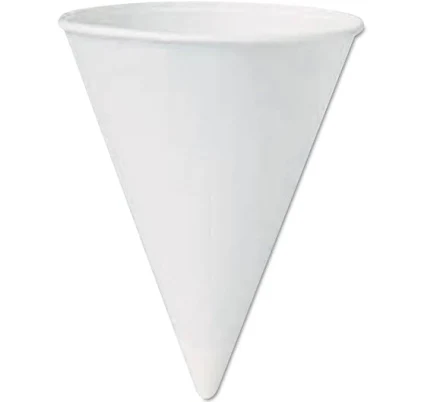
- Expanded polystyrene foam
- We found no PFAS statement from the brand
- Styrene monomer leaching
3 hazards checked on this product, all on its full breakdown.
Find an alternative on AmazonMore coffee cups grades
How we score, every product runs through the same public 0-100 rubric based on materials, coatings, brand disclosure, lab findings, and recalls. See the full methodology → Spotted a mistake? Report an error.