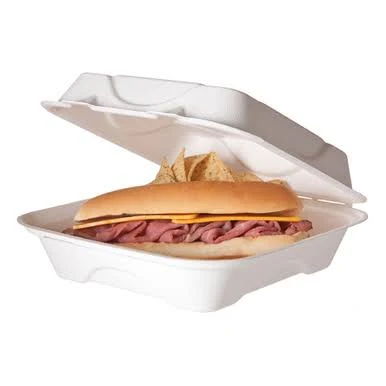
Eco-Products Hinged Clamshell Containers
BPI Certified Compostable certification on record, alongside a water-repellent or grease-resistant treatment of unstated chemistry.
This product carries BPI Certified Compostable certification, whose criteria restrict PFAS, which we record as third-party verification. Eco-Products says its Vanguard molded fiber achieves grease resistance without added PFAS.
Brand says: “Eco-Products says its Vanguard molded fiber achieves grease resistance without added PFAS.”
We flunk more products than we pass. This one earned its grade. How we grade
Material
Compostable fiber (plant-based pulp) with water-resistant coating
Brand disclosure
Third-party verified PFAS-free
Lab data
No public lab test
You may also be interested in
Top-graded picks in the categories readers replace first, every one scored on the same rubric.

- polypropylene filter housing, carbon/sediment cartridge
- We found no PFAS statement from the brand
- Bacterial growth in spent cartridges
3 hazards checked on this product, all on its full breakdown.

Aquasure
Premier Series 75 GPD Under Sink Reverse Osmosis Water Filtration System
- RO membrane, carbon filters, stainless steel housing
- We found no PFAS statement from the brand
- Bacterial and microbial growth in housing and filters
4 hazards checked on this product, all on its full breakdown.

Avocado
Vegan Mattress
- organic cotton, natural latex, coconut coir, recycled steel coils
- The brand calls it PFAS-free, which we have not verified
- Heavy metals
2 hazards checked on this product, all on its full breakdown.
What Eco-Products Hinged Clamshell Containers is made of, ingredients and materials
Eco-Products clamshells are made from plant-based pulp (typically sugarcane bagasse or wood fiber), which is inherently compostable and does not leach BPA, BPS, or phthalates common in plastic food packaging. The water-resistant coating chemistry is not fully disclosed by the brand, but the product holds BPI Certified Compostable status, meaning the entire assembly, including the coating, breaks down in industrial composting within 180 days without leaving toxic residue. This material class avoids the microplastics and estrogen-mimicking compounds associated with conventional plastics.
What’s concerning
Category baseline
The starting point for this type of product, before anything specific to this product is counted.
Waterproof / stain-resistant treatment
Water-repellent coating treatments have historically used PFAS.
PFAS
The water-resistant coating composition is not publicly disclosed by Eco-Products. While BPI certification implies food-contact safety, the specific chemical identity of the repellent treatment is unknown; this remains a minor transparency limitation, though no contamination has been reported.
Source, ATSDR ↗Mold and bacterial growth (maintenance-dependent)
If stored in humid conditions or reused without proper drying, the porous fiber structure can support mold growth. Proper storage in dry environments and disposal after single use minimizes this risk; these are not designed for reuse.
Thermal degradation and coating failure
Sustained exposure to temperatures above 160-170°F can weaken fiber structure and compromise the water-resistant coating, potentially allowing moisture ingress and food contact with degraded pulp; microwave use and very hot liquids should be limited.
What’s reassuring
Third-party PFAS-free verification
A third party reports verifying this product as PFAS-free.
BPA & bisphenols
Plant-based pulp does not contain or leach BPA, BPS, or phthalates. No regulatory or testing records indicate the presence of these endocrine disruptors in Eco-Products fiber clamshells.
Source, FDA ↗Microplastics
Fiber-based containers do not shed microplastics during normal food contact, unlike degrading plastics. Compostable certification ensures the material fully breaks down rather than fragmenting into microparticles in food or the environment.
Source, EPA ↗How is this PFAS grade calculated?
The brand's record and disclosure
Eco-Products has a transparent third-party verification track record on PFAS, achieving a 70/100 safety grade and maintaining BPI Certified Compostable certification across their food-service line. The company does not fully disclose the chemical identity of its water-repellent coating, which is a minor transparency gap; however, no recalls, contamination reports, or regulatory violations are on record for this product line. Their commitment to compostability suggests avoidance of persistent synthetic polymers, though consumers cannot independently verify coating composition.
How it compares in its category
Plant-based clamshells like this one have lower concern for plastic-leaching risks compared to polystyrene (EPS) or polypropylene alternatives. They perform similarly to paper-based takeout containers but offer better grease resistance without relying on legacy PFOA-based coatings that older brands still use. Compared to compostable bioplastics (PHA, PLA), fiber-based containers have a longer track record of industrial composting success and lower risk of incomplete degradation.
If you buy it
Use these containers for room-temperature and warm foods (up to approximately 160-170°F); avoid prolonged microwave exposure or direct contact with very hot liquids, which can weaken fiber structure and coating integrity. Do not place in home compost, they require industrial composting facilities to break down fully; home disposal risks incomplete degradation. Replace immediately if you notice visible fiber separation, mold, or moisture penetration into the base, as degraded coating compromises the water-resistant function. Store in a dry location to extend shelf life.
What is not known about PFAS in this product?
- Basis
- Model estimate, 78% confidence, not a lab result
- Lab test
- None on record for this exact product
- Brand statement
- Eco-Products has made a specific claim
Formulations change between production runs, so check the current label. How we grade.
What are the PFAS-free alternatives to Eco-Products Hinged Clamshell Containers?
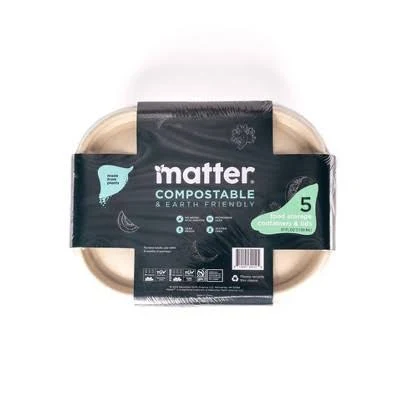
- Plant-based fiber pulp (compostable)
- A third party reports verifying it as PFAS-free
- Microbe/mold growth if stored damp
2 hazards checked on this product, all on its full breakdown.
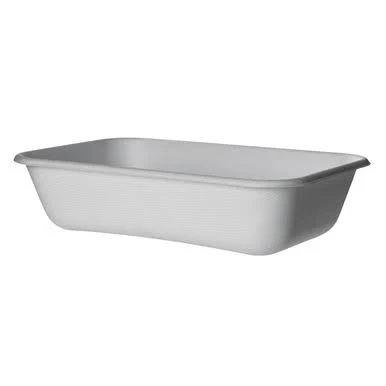
Eco-Products
Eco Products WorldView Compostable Take-Out Containers EP-SCRC32
- Plant-based fiber (compostable sugarcane bagasse)
- A third party reports verifying it as PFAS-free
- Bleaching agents and processing residues
3 hazards checked on this product, all on its full breakdown.
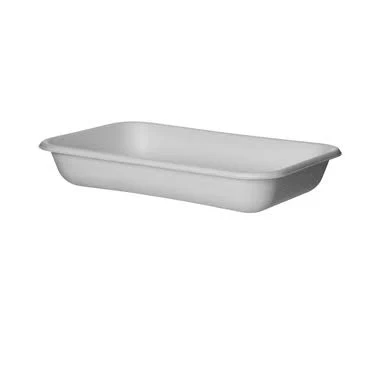
Eco-Products
WorldView Sugarcane Take-Out Containers
- Sugarcane bagasse (post-consumer fiber)
- A third party reports verifying it as PFAS-free
- Cellulose fiber degradation and food contact
2 hazards checked on this product, all on its full breakdown.
More food packaging grades
How we score, every product runs through the same public 0-100 rubric based on materials, coatings, brand disclosure, lab findings, and recalls. See the full methodology → Spotted a mistake? Report an error.