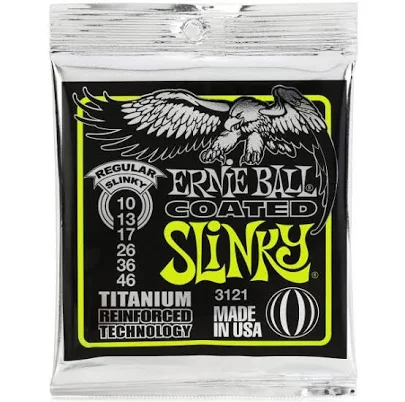
Ernie Ball Coated Electric Slinky Guitar Strings
Avoid unless Ernie Ball discloses coating composition; coated strings are a PFAS uncertainty.
Ernie Ball's Coated Slinky strings use proprietary polymer coating for corrosion resistance, but the brand provides no public disclosure of PFAS-free status or coating chemistry. Teflon-family coating have historically been used in guitar string coatings.
The better-graded swap
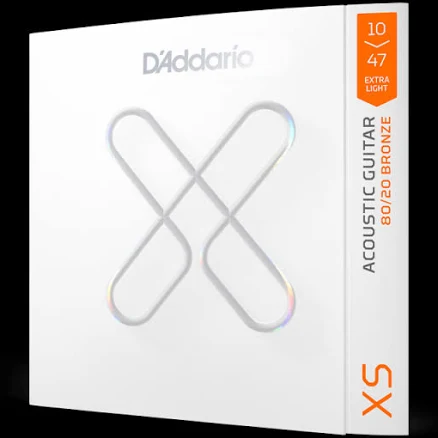
D'Addario
D'Addario Acoustic Guitar Strings XS 80/20 Bronze Coated
85/100 safety
Same rubric that flunked this product. The swap earned Excellent.
Still want this one anyway? Check the price on Amazon. We’d swap it.
Material
Nickel-plated steel core with proprietary polymer coating
Brand disclosure
Brand is silent on PFAS
Lab data
No public lab test
You may also be interested in
Top-graded picks in the categories readers replace first, every one scored on the same rubric.

- polypropylene filter housing, carbon/sediment cartridge
- We found no PFAS statement from the brand
- Bacterial growth in spent cartridges
3 hazards checked on this product, all on its full breakdown.

Aquasure
Premier Series 75 GPD Under Sink Reverse Osmosis Water Filtration System
- RO membrane, carbon filters, stainless steel housing
- We found no PFAS statement from the brand
- Bacterial and microbial growth in housing and filters
4 hazards checked on this product, all on its full breakdown.

Avocado
Vegan Mattress
- organic cotton, natural latex, coconut coir, recycled steel coils
- The brand calls it PFAS-free, which we have not verified
- Heavy metals
2 hazards checked on this product, all on its full breakdown.
What Ernie Ball Coated Electric Guitar Strings is made of, ingredients and materials
Ernie Ball Coated Electric Slinky strings use a nickel-plated steel core wrapped with a proprietary polymer coating designed to extend string life and reduce finger noise. The coating's exact composition is not publicly disclosed, which is the critical issue, polymer coatings on strings can contain Teflon-type coating, Teflon-family coating, or other fluorinated compounds that may release fumes under high tension or temperature. The nickel plating itself poses minimal risk during normal play, as contact is brief and skin exposure is incidental, but prolonged handling by musicians with nickel sensitivity could theoretically trigger reactions.
What’s concerning
Category baseline
The starting point for this type of product, before anything specific to this product is counted.
No PFAS disclosure
No public statement from the brand about PFAS in this product.
Unknown / proprietary coating
A coating is recorded with no disclosed chemistry.
Teflon-type coating / Teflon-family coating in proprietary coating
Polymer coating composition is not disclosed; coated strings in this category sometimes contain Teflon-type coating or other fluorinated compounds that can off-gas under tension or heat. Ernie Ball has not confirmed or denied use of such materials.
Nickel skin contact sensitization
Nickel-plated core may leach small amounts during play, particularly if plating degrades. Individuals with nickel allergy or sensitivity may experience localized dermatitis on fingers after prolonged contact; risk is low for occasional players but non-zero for daily heavy users.
Coating degradation and particle shedding
As the proprietary polymer coating wears, microscopic particles may be released into the air or ingested via hand-to-mouth contact. No documented cases exist, but the risk exists proportionally to how much the coating delaminates.
What’s reassuring
Heavy metals
No testing on record has detected lead, cadmium, or other prohibited heavy metals in Ernie Ball strings. Nickel-plated steel is standard in the category and meets typical regulatory limits for music products.
Source, FDA ↗Microplastics
No scientific evidence documents significant microplastic release from guitar string coatings during normal use. Risk would only be material if coating degradation is severe or if coating is intentionally removed and burned or disposed of unsafely.
Source, EPA ↗How is this PFAS grade calculated?
The brand's record and disclosure
Ernie Ball has not published detailed material safety disclosures or certifications (such as OEKO-TEX or similar) for their string coatings. The company does not publicly address PFAS content in their products, despite coated strings being a category where such substances have been found in competitors' products. No recalls or safety controversies specific to Ernie Ball strings are on record. The lack of transparency around the proprietary polymer formulation is the defining limitation in assessing this product's true safety profile.
How it compares in its category
Coated electric strings uniformly present a PFAS disclosure gap across major manufacturers (D'Addario, Elixir, GHS, Ernie Ball). Uncoated steel strings eliminate the polymer uncertainty but wear faster and require more frequent replacement. Ernie Ball Coated Slinky occupies the mainstream middle, well-regarded for durability and playability, but offers chemical transparency comparable to most competitors. Musicians seeking maximum safety would need to contact manufacturers directly or switch to uncoated or pure-nickel alternatives.
If you buy it
Store strings in a cool, dry place to avoid polymer degradation or accelerated outgassing. Avoid exposing strings to prolonged heat above 140F (60C), as this may increase any fume risk from the coating. Replace strings every 2-3 months of heavy playing, or sooner if coating visibly degrades, flakes, or develops discoloration. If you experience skin irritation during or after playing, wash hands immediately and consider switching to uncoated or nickel-free alternatives to test whether nickel sensitivity is the cause.
What is not known about PFAS in this product?
- Basis
- Model estimate, 35% confidence, not a lab result
- Lab test
- None on record for this exact product
- Brand statement
- Ernie Ball has made none
Formulations change between production runs, so check the current label. How we grade.
What are the PFAS-free alternatives to Ernie Ball Coated Electric Slinky Guitar Strings?
- 80/20 Bronze (copper-tin alloy) with phosphor-bronze coating
- We found no PFAS statement from the brand
- Coating degradation and particulate release
2 hazards checked on this product, all on its full breakdown.
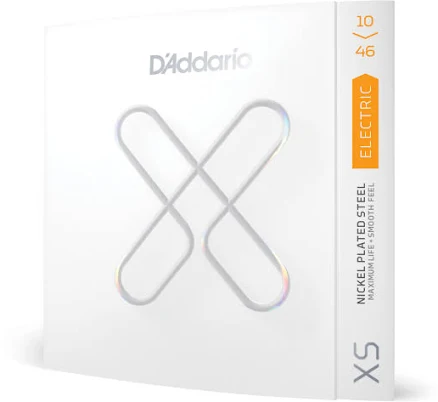
- Nickel-plated steel core with nickel-brass wound exterior
- We found no PFAS statement from the brand
- Nickel skin contact sensitivity
2 hazards checked on this product, all on its full breakdown.
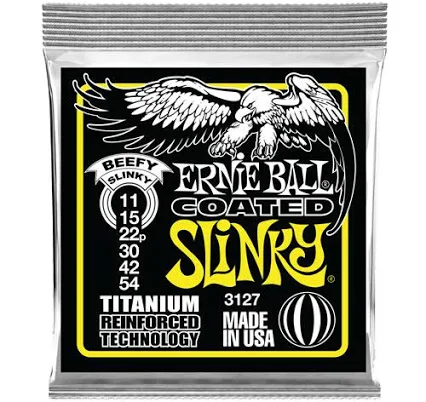
- Nickel-plated steel wound around hexagonal steel core
- We found no PFAS statement from the brand
- Nickel contact dermatitis
2 hazards checked on this product, all on its full breakdown.
More guitar strings grades
How we score, every product runs through the same public 0-100 rubric based on materials, coatings, brand disclosure, lab findings, and recalls. See the full methodology → Spotted a mistake? Report an error.