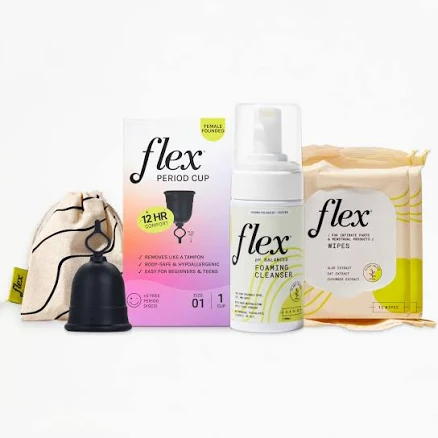
Flex Cup Starter Bundle
Lower concern, silicone menstrual cups have minimal PFAS exposure pathways, but Flex hasn't publicly disclosed testing.
Flex cups are medical-grade silicone not typically formulated with PFAS for their function. The brand doesn't publicly discuss PFAS in period-care products or provide third-party testing. While silicone itself carries lower risk than coated cookware or treated textiles, no disclosure leaves uncertainty.
We flunk more products than we pass. This one earned its grade. How we grade
Material
Medical-grade silicone, no added Teflon-family coating
Brand disclosure
Brand is silent on PFAS
Lab data
No public lab test
You may also be interested in
Top-graded picks in the categories readers replace first, every one scored on the same rubric.

- polypropylene filter housing, carbon/sediment cartridge
- We found no PFAS statement from the brand
- Bacterial growth in spent cartridges
3 hazards checked on this product, all on its full breakdown.

Aquasure
Premier Series 75 GPD Under Sink Reverse Osmosis Water Filtration System
- RO membrane, carbon filters, stainless steel housing
- We found no PFAS statement from the brand
- Bacterial and microbial growth in housing and filters
4 hazards checked on this product, all on its full breakdown.

Avocado
Vegan Mattress
- organic cotton, natural latex, coconut coir, recycled steel coils
- The brand calls it PFAS-free, which we have not verified
- Heavy metals
2 hazards checked on this product, all on its full breakdown.
What Flex Cup Starter Bundle is made of, ingredients and materials
Flex Cup is manufactured from medical-grade silicone, a synthetic polymer that does not contain BPA, phthalates, or latex. Medical-grade silicone is specifically formulated to meet biocompatibility standards (typically ISO 10993 for materials in prolonged skin contact) and is chemically stable at body temperature. Unlike rigid plastics or rubber, silicone does not leach estrogen-mimicking compounds or degrade into microplastics under normal use conditions.
What’s concerning
Category baseline
The starting point for this type of product, before anything specific to this product is counted.
No PFAS disclosure
No public statement from the brand about PFAS in this product.
Residual manufacturing compounds / silicone impurities
Medical-grade silicone undergoes purification, but trace volatile organic compounds or catalyst residues may persist if manufacturing controls are inadequate. Flex does not disclose manufacturing audits or purity testing results, so baseline quality assurance cannot be independently verified.
Mold or bacterial colonization from improper storage
This is a user-maintenance issue, not a product defect. Storing the cup in an airtight container or damp pouch can promote fungal growth; silicone itself does not inherently support bacterial adhesion more than other menstrual products.
What’s reassuring
Base material not linked to PFAS
The main material recorded for this product is not one associated with PFAS.
Vaginal microbiome disruption from cup material or coatings
No reported cases of adverse microbiome effects specific to Flex or other medical-grade silicone cups. The material itself is biologically inert and does not shed particles or leach antimicrobial agents under normal conditions.
Silicone degradation under heat or repeated sterilization
Medical-grade silicone is rated for boiling water and repeated thermal cycles. Flex does not publish degradation timelines, but no documented cases of premature silicone breakdown in normal use exist for this product category.
Allergic sensitization to silicone or unrevealed additives
True silicone allergies are exceptionally rare. Flex markets its cup as hypoallergenic, and no documented allergic reactions specific to this brand are on public record, though individual sensitivity to unrevealed minor components cannot be ruled out without full ingredient transparency.
How is this PFAS grade calculated?
The brand's record and disclosure
Flex does not publicly disclose third-party testing results or PFAS-specific certifications on their website or product materials. The company has not faced documented recalls related to chemical contamination or material safety. Flex markets its cups as hypoallergenic and FDA-cleared, which confirms basic safety compliance but does not address PFAS testing transparency. The lack of proactive disclosure about manufacturing contaminants is a transparency weakness, though not uncommon in the menstrual-cup industry.
How it compares in its category
Menstrual cups made from medical-grade silicone (including Flex, Diva Cup, Saalt, and others) have lower concern within period products, with significantly lower chemical hazard profiles than disposable pads, tampons, or cheaper silicone alternatives. Unlike some budget-brand silicone cups, Flex explicitly uses medical-grade material, which implies higher purity standards. Most major silicone cup manufacturers are equally opaque about PFAS testing, making Flex typical rather than exceptional in disclosure practices.
If you buy it
Boil the cup in water for 5-10 minutes before first use and monthly to sterilize; do not use bleach or harsh detergents, which can degrade silicone over time. Store in a breathable cotton pouch (not airtight plastic) to prevent mold growth. Replace the cup if the silicone develops persistent cracks, discoloration, or loss of flexibility (typically every 5-10 years with proper care). If you experience irritation or vaginal infections, consider allergic reaction to residual manufacturing compounds, though this is rare with medical-grade material.
What is not known about PFAS in this product?
- Basis
- Model estimate, 78% confidence, not a lab result
- Lab test
- None on record for this exact product
- Brand statement
- Flex has made none
Formulations change between production runs, so check the current label. How we grade.
What are the PFAS-free alternatives to Flex Cup Starter Bundle?
- medical-grade silicone
- A third party reports verifying it as PFAS-free
- Silicone degradation or leaching from improper cleaning agents
3 hazards checked on this product, all on its full breakdown.
More menstrual cups grades
How we score, every product runs through the same public 0-100 rubric based on materials, coatings, brand disclosure, lab findings, and recalls. See the full methodology → Spotted a mistake? Report an error.