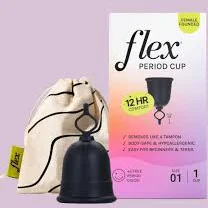
Reusable Menstrual Cup
Lower PFAS concern, medical-grade silicone has no known PFAS need, but Flex doesn't publicly address it.
Flex Cup is medical-grade silicone, not typically associated with intentional PFAS use. Menstrual cups have no functional reason to include Teflon-family coating or water-repellent coatings. Flex hasn't published PFAS testing or claims, but the material presents lower concern than coated products.
We flunk more products than we pass. This one earned its grade. How we grade
Material
Medical-grade silicone
Brand disclosure
Brand is silent on PFAS
Lab data
No public lab test
You may also be interested in
Top-graded picks in the categories readers replace first, every one scored on the same rubric.

- polypropylene filter housing, carbon/sediment cartridge
- We found no PFAS statement from the brand
- Bacterial growth in spent cartridges
3 hazards checked on this product, all on its full breakdown.

Aquasure
Premier Series 75 GPD Under Sink Reverse Osmosis Water Filtration System
- RO membrane, carbon filters, stainless steel housing
- We found no PFAS statement from the brand
- Bacterial and microbial growth in housing and filters
4 hazards checked on this product, all on its full breakdown.

Avocado
Vegan Mattress
- organic cotton, natural latex, coconut coir, recycled steel coils
- The brand calls it PFAS-free, which we have not verified
- Heavy metals
2 hazards checked on this product, all on its full breakdown.
What Reusable Menstrual Cup is made of, ingredients and materials
The Flex Cup is constructed from medical-grade silicone, a synthetic polymer selected specifically for internal menstrual use because it resists degradation, does not leach endocrine-active chemicals, and tolerates repeated autoclaving and boiling. Medical-grade silicone (typically platinum-cured or peroxide-cured) is inert once polymerized and has no known affinity for PFAS or traditional plasticizers like BPA or phthalates. The material's stability under body temperature and acidic menstrual fluid conditions is well-documented in clinical literature.
What’s concerning
Category baseline
The starting point for this type of product, before anything specific to this product is counted.
No PFAS disclosure
No public statement from the brand about PFAS in this product.
Bacterial or fungal colonization
Any reusable menstrual cup can harbor bacteria or fungi if inadequately cleaned or stored damp. This is a user-maintenance issue, not a material defect; proper boiling and air-drying mitigates risk.
Allergic contact dermatitis or sensitization
Rare reports of irritation or allergy to silicone cups exist in medical literature, though incidence is very low. Individuals with known silicone sensitivity should perform a patch test or consult a gynecologist before use.
What’s reassuring
Base material not linked to PFAS
The main material recorded for this product is not one associated with PFAS.
Silicone degradation and leaching
Medical-grade silicone used in the Flex Cup is chemically stable under body pH and temperature. No published studies document leaching of siloxanes or other degradation products from properly manufactured medical-grade silicone cups during normal use.
Dyes or colorant migration
The Flex Cup Size 01 is available in solid colors (typically opaque silicone). No evidence of synthetic dye leaching from medical-grade silicone colorants into menstrual fluid has been published; pigments are typically bonded within the polymer matrix.
Residual volatile organic compounds (VOCs)
Manufacturing off-gassing is minimal with medical-grade silicone if cured properly. Flex does not disclose curing protocols, but medical-grade products are typically post-cured to remove volatile residues before sale.
How is this PFAS grade calculated?
The brand's record and disclosure
Flex provides transparent ingredient labeling and material sourcing on product pages and safety documentation. The company does not publicly address PFAS testing or position, which is notable but not unusual for small menstrual-product makers; no recalls or safety violations are on record for this product. Third-party certifications are absent from publicly available materials, though medical-grade silicone is a regulated material under FDA guidance for intimate-contact devices in some jurisdictions.
How it compares in its category
Menstrual cups (silicone, rubber, or elastomer-based) are generally lower-risk than tampons or pads because they avoid absorbent fiber degradation, synthetic fragrances, and dyes. Silicone cups like Flex occupy the safety mainstream of the category; latex alternatives carry latex-allergy risk; plastic hybrid designs (cup body plus rigid stem) may introduce coating or adhesive unknowns. Flex's material transparency is above-average for the category.
If you buy it
Boil or steam-sterilize between cycles; silicone tolerates high heat well. Replace if the cup becomes sticky, stained beyond cleaning, or shows visible cracks, typically after 5-10 years of use. Avoid prolonged storage in direct sunlight or extreme heat, as silicone can harden over decades. Clean with mild soap and water or fragrance-free cleanser; do not use bleach or harsh solvents.
What is not known about PFAS in this product?
- Basis
- Model estimate, 78% confidence, not a lab result
- Lab test
- None on record for this exact product
- Brand statement
- Flex has made none
Formulations change between production runs, so check the current label. How we grade.
What are the PFAS-free alternatives to Reusable Menstrual Cup?
- medical-grade silicone
- A third party reports verifying it as PFAS-free
- Silicone degradation or leaching from improper cleaning agents
3 hazards checked on this product, all on its full breakdown.
More menstrual cups grades
How we score, every product runs through the same public 0-100 rubric based on materials, coatings, brand disclosure, lab findings, and recalls. See the full methodology → Spotted a mistake? Report an error.