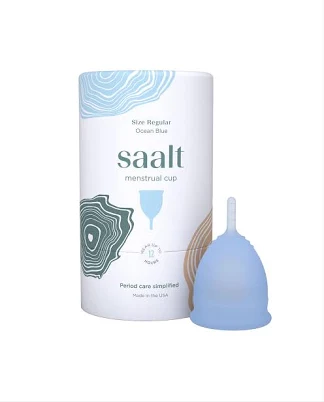
Menstrual Cup Saalt
Lower PFAS concern since silicone menstrual cups aren't typical PFAS carriers, but Saalt doesn't disclose.
Saalt cups are medical-grade silicone, which is not typically formulated with PFAS. Menstrual cups need no water-repellent, non-stick, or stain-resistant coatings that commonly harbor forever chemicals. Saalt gives no PFAS statement and no independent lab testing exists.
We flunk more products than we pass. This one earned its grade. How we grade
Material
Medical-grade silicone
Brand disclosure
Brand is silent on PFAS
Lab data
No public lab test
You may also be interested in
Top-graded picks in the categories readers replace first, every one scored on the same rubric.

- polypropylene filter housing, carbon/sediment cartridge
- We found no PFAS statement from the brand
- Bacterial growth in spent cartridges
3 hazards checked on this product, all on its full breakdown.

Aquasure
Premier Series 75 GPD Under Sink Reverse Osmosis Water Filtration System
- RO membrane, carbon filters, stainless steel housing
- We found no PFAS statement from the brand
- Bacterial and microbial growth in housing and filters
4 hazards checked on this product, all on its full breakdown.

Avocado
Vegan Mattress
- organic cotton, natural latex, coconut coir, recycled steel coils
- The brand calls it PFAS-free, which we have not verified
- Heavy metals
2 hazards checked on this product, all on its full breakdown.
What Menstrual Cup Saalt is made of, ingredients and materials
Saalt cups are manufactured from medical-grade silicone, a synthetic polymer engineered for biocompatibility and durability in implants and medical devices. Medical-grade silicone does not contain BPA, phthalates, or other endocrine disruptors, and does not degrade or leach into vaginal tissue during typical use. Silicone is inert at body temperature and resists microbial colonization better than porous elastomers, reducing infection risk over the cup's lifespan.
What’s concerning
Category baseline
The starting point for this type of product, before anything specific to this product is counted.
No PFAS disclosure
No public statement from the brand about PFAS in this product.
Bacterial and fungal growth
Silicone surface can harbor microbes if not cleaned properly or stored in sealed, moist environments. Risk is user-dependent and applies to all silicone cups equally, not specific to Saalt manufacturing.
Allergic reaction to silicone
True silicone allergy is rare but documented in medical literature; individuals with prior silicone implant reactions should patch-test. Saalt does not disclose whether medical-grade silicone is additive-free or if colorants/curing agents may trigger sensitivity.
What’s reassuring
Base material not linked to PFAS
The main material recorded for this product is not one associated with PFAS.
Silicone leaching
Medical-grade silicone is cross-linked and non-migratory under normal physiological conditions. No established reports of Saalt cups leaching oligomers or additives into users.
Irritation from residual manufacturing residues
No recalls or user reports of irritation from Saalt cups. Medical-grade certification typically requires biocompatibility limits, but Saalt does not publicly confirm ISO 10993 compliance.
Packaging and storage leachables
Saalt ships in cardboard and cloth pouch; no PVC, BPA plastics, or problematic inks reported. Standard eco-conscious packaging practice.
How is this PFAS grade calculated?
The brand's record and disclosure
Saalt does not publish detailed PFAS testing or material sourcing statements, which reflects a gap in transparency rather than an established safety problem. The brand has no documented recalls, safety complaints, or litigation related to chemical hazards. Saalt has marketed medical-grade silicone credentials but has not sought third-party certifications (such as ISO 10993 biocompatibility) that would independently verify material purity.
How it compares in its category
Menstrual cups occupy a unique safety niche, they avoid single-use absorbent products (tampons, pads) that carry bleach residues, dioxins from chlorination, and synthetic fiber shedding. Medical-grade silicone cups match or exceed competitor products (Lunette, DivaCup, Flex) in material safety, though Lunette and some others more explicitly disclose third-party testing. Saalt's price point and material specification are consistent with mainstream premium cups.
If you buy it
Wash the cup with warm water and mild soap before first use and after each cycle; do not boil beyond 5 minutes (heat does not degrade silicone but prolongs contact time unnecessarily). Replace if you notice visible tears, persistent odor unrelated to storage, or if material becomes tacky or discolored. Store in a breathable pouch (not sealed plastic) to prevent bacterial overgrowth; do not use fragrant soaps, oils, or bleach, which can degrade silicone over years.
What is not known about PFAS in this product?
- Basis
- Model estimate, 78% confidence, not a lab result
- Lab test
- None on record for this exact product
- Brand statement
- Saalt has made none
Formulations change between production runs, so check the current label. How we grade.
What are the PFAS-free alternatives to Menstrual Cup Saalt?
- medical-grade silicone
- A third party reports verifying it as PFAS-free
- Silicone degradation or leaching from improper cleaning agents
3 hazards checked on this product, all on its full breakdown.
More menstrual cups grades
How we score, every product runs through the same public 0-100 rubric based on materials, coatings, brand disclosure, lab findings, and recalls. See the full methodology → Spotted a mistake? Report an error.