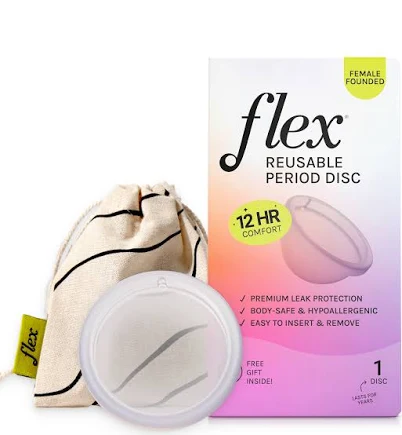
Flex Reusable Menstrual Disc
Lower-concern choice since silicone isn't a PFAS vector, but brand offers no transparency.
Flex Menstrual Discs are medical-grade silicone without inherent need for PFAS coatings or treatments. The brand doesn't disclose PFAS practices or hold third-party certifications. Silicone's intrinsic properties reduce the likelihood of PFAS use compared to water-resistant or stain-resistant textiles.
We flunk more products than we pass. This one earned its grade. How we grade
Material
medical-grade silicone
Brand disclosure
Brand is silent on PFAS
Lab data
No public lab test
You may also be interested in
Top-graded picks in the categories readers replace first, every one scored on the same rubric.

- polypropylene filter housing, carbon/sediment cartridge
- We found no PFAS statement from the brand
- Bacterial growth in spent cartridges
3 hazards checked on this product, all on its full breakdown.

Aquasure
Premier Series 75 GPD Under Sink Reverse Osmosis Water Filtration System
- RO membrane, carbon filters, stainless steel housing
- We found no PFAS statement from the brand
- Bacterial and microbial growth in housing and filters
4 hazards checked on this product, all on its full breakdown.

Avocado
Vegan Mattress
- organic cotton, natural latex, coconut coir, recycled steel coils
- The brand calls it PFAS-free, which we have not verified
- Heavy metals
2 hazards checked on this product, all on its full breakdown.
What Flex Reusable Menstrual Disc is made of, ingredients and materials
Flex Disc is constructed from medical-grade silicone, a synthetic polymer chosen for menstrual products because it resists degradation, does not leach estrogen-mimicking chemicals like BPA, and tolerates repeated sterilization. Medical-grade silicone has a higher purity standard than consumer-grade silicone and is inert at body temperature. The disc design (flat, crescent-shaped) differs from traditional cups but uses the same base material, eliminating material-specific hazard concerns that apply to latex or thermoplastic elastomers.
What’s concerning
Category baseline
The starting point for this type of product, before anything specific to this product is counted.
No PFAS disclosure
No public statement from the brand about PFAS in this product.
Bacterial or fungal contamination
While silicone itself resists microbial biofilm better than latex, improper storage (damp conditions, airtight containers) or infrequent cleaning can allow odor-causing bacteria or yeast to proliferate; this is a use-and-care issue, not a material defect.
PFAS
Some medical-grade silicone suppliers may use PFAS in processing or as mold-release agents. Flex has not disclosed testing or supplier vetting for PFAS. Given the brand's silence and the known presence of PFAS in some silicone products, low-level PFAS exposure cannot be ruled out, though it remains unlikely to exceed regulatory limits.
Source, ATSDR ↗Loss of elasticity and structural failure
Users report occasional cracking or loss of flexibility after 1-3 years of use, particularly with heat exposure or aggressive cleaning. This is a durability concern rather than a chemical safety hazard but can lead to discomfort or leakage if the disc becomes rigid.
What’s reassuring
Base material not linked to PFAS
The main material recorded for this product is not one associated with PFAS.
Silicone degradation and leachates
Medical-grade silicone used in Flex Disc is stable under normal use conditions. No published studies document leaching of oligomers or other degradation products from silicone menstrual discs at body temperature or with common household cleaners.
Allergic reaction to silicone or additives
IgE-mediated silicone allergy is extremely rare in clinical literature. Flex Disc is not known to cause contact dermatitis or systemic allergic responses; however, the brand does not disclose colorants or curing additives that might trigger sensitive individuals.
How is this PFAS grade calculated?
The brand's record and disclosure
Flex has not published ingredient certifications, manufacturing standards, or third-party testing results on their website or marketing materials. The company does not disclose PFAS testing data despite PFAS being found in some medical-grade silicone sourced from certain suppliers. No recalls, litigation, or formal safety complaints against Flex Disc have been documented in FDA or CPSC records. The brand's silence on manufacturing transparency and PFAS testing is notably less rigorous than competitors like Saalt or Lunette, which provide material certifications.
How it compares in its category
Menstrual discs and cups made from medical-grade silicone show lower concern regarding toxic leaching compared to other reusable menstrual products, with no documented cases of toxic leaching in clinical or consumer data. Flex Disc sits midfield on transparency, it avoids the chemical concerns of latex or polyurethane alternatives but lags peer brands in certifications (e.g., ISO 10993 biocompatibility). Plastic applicators or storage cases sometimes introduce BPA or phthalate concerns; Flex's packaging includes minimal single-use plastic, reducing this secondary exposure.
If you buy it
Rinse with cool water after each cycle and store dry in a breathable pouch; avoid prolonged contact with heat above 65 degrees Celsius or bleach, which can degrade silicone elasticity over years. Replace every 2 years if the disc loses flexibility or develops visible wear. Do not use during pregnancy or with IUDs without consulting a gynecologist. Clean before first use and after heavy menstrual flow; silicone does not harbor bacterial growth as readily as porous materials, but neglected discs can develop odor.
What is not known about PFAS in this product?
- Basis
- Model estimate, 72% confidence, not a lab result
- Lab test
- None on record for this exact product
- Brand statement
- Flex has made none
Formulations change between production runs, so check the current label. How we grade.
What are the PFAS-free alternatives to Flex Reusable Menstrual Disc?
- medical-grade silicone
- A third party reports verifying it as PFAS-free
- Silicone degradation or leaching from improper cleaning agents
3 hazards checked on this product, all on its full breakdown.
More menstrual cups grades
How we score, every product runs through the same public 0-100 rubric based on materials, coatings, brand disclosure, lab findings, and recalls. See the full methodology → Spotted a mistake? Report an error.