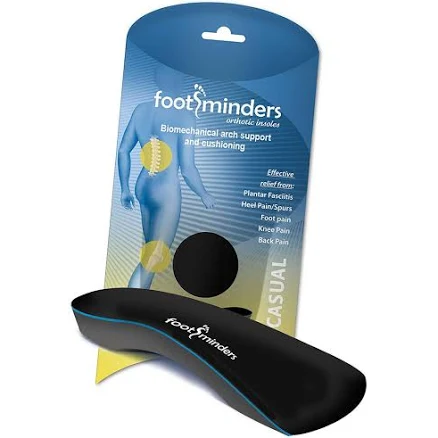
Footminders · Synthetic Athletic Insoles & Orthotics
Footminders Casual Orthotic Arch Support Insoles for Dress Slip-On Shoes
Lower concern. Standard orthotic materials rarely need PFAS.
These orthotics use basic foam and fabric without water-resistant or non-stick treatments that typically require PFAS. The brand hasn't shared PFAS information or made public test results available.
Still want this one anyway? Check the price on Amazon. We’d swap it.
Material
EVA foam, fabric liner, adhesive
Brand disclosure
Brand is silent on PFAS
Lab data
No public lab test
You may also be interested in
Top-graded picks in the categories readers replace first, every one scored on the same rubric.

- polypropylene filter housing, carbon/sediment cartridge
- We found no PFAS statement from the brand
- Bacterial growth in spent cartridges
3 hazards checked on this product, all on its full breakdown.

Aquasure
Premier Series 75 GPD Under Sink Reverse Osmosis Water Filtration System
- RO membrane, carbon filters, stainless steel housing
- We found no PFAS statement from the brand
- Bacterial and microbial growth in housing and filters
4 hazards checked on this product, all on its full breakdown.

Avocado
Vegan Mattress
- organic cotton, natural latex, coconut coir, recycled steel coils
- The brand calls it PFAS-free, which we have not verified
- Heavy metals
2 hazards checked on this product, all on its full breakdown.
What Footminders Casual Orthotic Slip-On Shoes is made of, ingredients and materials
Footminders Casual Orthotic Arch Support insoles use EVA (ethylene-vinyl acetate) foam as the core structural material, lined with fabric (likely polyester or cotton blend). EVA is a closed-cell, relatively inert foam commonly used in orthotic and athletic footwear; it does not contain PVC, phthalates, or BPA by formulation. The fabric liner and adhesives used to bond layers are the chemical exposure points, though standard shoe-grade adhesives and textiles in this product category carry low volatile organic compound (VOC) risk compared to other footwear.
What’s concerning
Category baseline
The starting point for this type of product, before anything specific to this product is counted.
No PFAS disclosure
No public statement from the brand about PFAS in this product.
Adhesive volatiles (VOC off-gassing)
Foam-to-fabric and fabric-to-insole adhesives may emit low levels of volatile organics on first use or in warm conditions. No specific test data for this product exists, but off-gassing from shoe insole adhesives is typically minimal and dissipates within days to weeks of airing.
EVA foam degradation byproducts
Over extended use, EVA can break down mechanically and release micro-particles, particularly if exposed to heat or prolonged moisture. This is a physical degradation risk rather than a chemical hazard, and it occurs slowly under normal wear conditions.
What’s reassuring
Base material not linked to PFAS
The main material recorded for this product is not one associated with PFAS.
Azo dyes in fabric liner
Fabric liner composition is not disclosed; if dyed, azo dyes could theoretically be present. However, no incidents or recalls of azo dye release from orthotic insoles in this price and product class are on record, and insole-to-skin contact is minimal compared to apparel.
Formaldehyde / VOCs
Fabric liners sometimes receive formaldehyde-based resin finishes for water resistance or wrinkle reduction. No documentation of formaldehyde use in Footminders insoles is available; standard orthotic insole fabrics typically use minimal finishing chemistry.
Source, ATSDR ↗Antimony in polyester
If the fabric liner is polyester, antimony catalyst residues could theoretically be present from fiber production. Antimony leaching from polyester fabric is not a documented concern in orthotic insoles, which see brief skin contact.
How is this PFAS grade calculated?
The brand's record and disclosure
Footminders does not publicly disclose material sourcing, chemical certifications, or manufacturing standards on their website or product documentation available in the public record. No documented recalls, safety violations, or chemical contamination incidents are associated with the brand. The company's silence on PFAS and other chemical policies is typical for smaller orthotic insert manufacturers, though it reflects a lack of proactive transparency rather than known hazard.
How it compares in its category
Orthotic insoles are lower-risk than most textiles or footwear because they are secondary (non-primary-contact) clothing items with limited skin contact and no food-contact exposure. EVA foam is a standard material choice in this category and is generally preferred over PVC alternatives because it avoids phthalate concerns. Competitors using similar EVA construction (e.g., Superfeet, Dr. Scholl's) do not report significant chemical hazards, making Footminders' material profile unremarkable within its peer group.
If you buy it
Store insoles in a cool, dry location away from direct heat sources (above 140F) to prevent EVA degradation; EVA is stable under normal wear but softens if exposed to sustained high temperatures. Replace insoles every 12-24 months depending on wear, as foam compression reduces orthotic support over time rather than creating a chemical safety trigger. Clean insoles with mild soap and air-dry; do not machine wash or immerse, as moisture can degrade adhesive bonds. No special disposal precautions are required beyond standard trash.
What is not known about PFAS in this product?
- Basis
- Model estimate, 72% confidence, not a lab result
- Lab test
- None on record for this exact product
- Brand statement
- Footminders has made none
Formulations change between production runs, so check the current label. How we grade.
More synthetic athletic insoles & orthotics grades
How we score, every product runs through the same public 0-100 rubric based on materials, coatings, brand disclosure, lab findings, and recalls. See the full methodology → Spotted a mistake? Report an error.