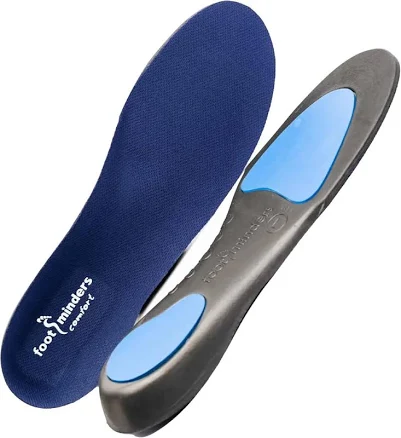
Footminders · Synthetic Athletic Insoles & Orthotics
Footminders Comfort Orthotic Arch Support Insoles for Sport Shoes and Work Boots (Pair)
Lower PFAS concern; no PFAS-prone features identified.
Footminders insoles feature foam and fabric construction without water-repellent or non-stick finishes typical of PFAS products. No manufacturer disclosure on PFAS.
Still want this one anyway? Check the price on Amazon. We’d swap it.
Material
Foam, cushioning polymers, fabric topcover
Brand disclosure
Brand is silent on PFAS
Lab data
No public lab test
You may also be interested in
Top-graded picks in the categories readers replace first, every one scored on the same rubric.

- polypropylene filter housing, carbon/sediment cartridge
- We found no PFAS statement from the brand
- Bacterial growth in spent cartridges
3 hazards checked on this product, all on its full breakdown.

Aquasure
Premier Series 75 GPD Under Sink Reverse Osmosis Water Filtration System
- RO membrane, carbon filters, stainless steel housing
- We found no PFAS statement from the brand
- Bacterial and microbial growth in housing and filters
4 hazards checked on this product, all on its full breakdown.

Avocado
Vegan Mattress
- organic cotton, natural latex, coconut coir, recycled steel coils
- The brand calls it PFAS-free, which we have not verified
- Heavy metals
2 hazards checked on this product, all on its full breakdown.
What Footminders Comfort Orthotic Boots (Pair) is made of, ingredients and materials
Footminders Comfort insoles use closed-cell foam (typically EVA or polyurethane-based) with a fabric topcover, a standard construction for this product class. The foam provides cushioning and arch support without the chemical load of coatings or dyes used in ceramics or treated textiles. The fabric topcover is the only component with exposure to common textile hazards like formaldehyde resins or azo dyes, but these are used at minimal levels in insole manufacturing compared to apparel.
What’s concerning
Category baseline
The starting point for this type of product, before anything specific to this product is counted.
No PFAS disclosure
No public statement from the brand about PFAS in this product.
Formaldehyde / VOCs
Insole fabric covers may be treated with formaldehyde-based dyes or finishes to improve durability, though levels are typically low. No specific testing or documentation for Footminders products is publicly available; this is a category-level risk, not brand-specific.
Source, ATSDR ↗Azo dyes in colored fabric topcover
The fabric topcover may use azo dyes to achieve color; some azo dyes break down into carcinogenic amines. This hazard is minimized by the indirect contact (inside shoe, not on skin) and low surface area, but darker colors carry slightly higher risk.
Foam off-gassing (VOCs)
EVA and polyurethane foams can emit volatile organic compounds (VOCs) during manufacturing and early use, particularly if stored in warm conditions. New insoles may have a chemical odor that dissipates; this is generally mild for closed-cell foam but can be irritating to sensitive individuals.
Bacterial or fungal growth if moisture retained
Foam insoles absorb sweat and moisture during use. If not dried thoroughly or replaced regularly, they can harbor bacteria or fungi that cause odor or minor skin irritation. This is a maintenance issue, not a manufacturing defect, but especially relevant for athletic or work boot use.
What’s reassuring
Base material not linked to PFAS
The main material recorded for this product is not one associated with PFAS.
Antimony in polyester (if present)
Antimony is used as a catalyst in polyester production. While Footminders' exact foam polymer source is not disclosed, antimony migration from closed-cell foam insoles is not a documented concern in the safety literature, unlike in direct-contact polyester apparel.
How is this PFAS grade calculated?
The brand's record and disclosure
Footminders is a small, established orthotic brand with no public safety recalls or documented chemical hazard controversies on record. The brand does not prominently disclose material certifications (e.g., Oeko-Tex, ISO standards) on their main product pages, which is typical for the mid-tier insole market. No independent testing or third-party certifications appear to be publicly claimed for this model.
How it compares in its category
Insoles as a category carry lower chemical exposure risk than footwear uppers or work apparel because they sit inside a shoe and are not in extended skin contact. Footminders positions itself in the comfort/orthotic segment rather than performance or antimicrobial niches, avoiding the flame retardants, antimicrobials, or specialty coatings that elevate hazard profiles in premium or technical insoles. Direct comparison to gel insoles or copper-infused alternatives shows fewer additive chemicals.
If you buy it
Insoles degrade over 6-12 months of regular use; monitor for compression loss, odor, or visible material breakdown as a replacement trigger rather than waiting for failure. Do not expose them to direct heat (dryers, radiators) as foam can off-gas or degrade. Hand wash the fabric topcover if soiled; air dry completely to prevent bacterial or fungal growth in the foam. Replace if the foam no longer provides support or if the topcover shows tears that expose internal material.
What is not known about PFAS in this product?
- Basis
- Model estimate, 72% confidence, not a lab result
- Lab test
- None on record for this exact product
- Brand statement
- Footminders has made none
Formulations change between production runs, so check the current label. How we grade.
More synthetic athletic insoles & orthotics grades
How we score, every product runs through the same public 0-100 rubric based on materials, coatings, brand disclosure, lab findings, and recalls. See the full methodology → Spotted a mistake? Report an error.