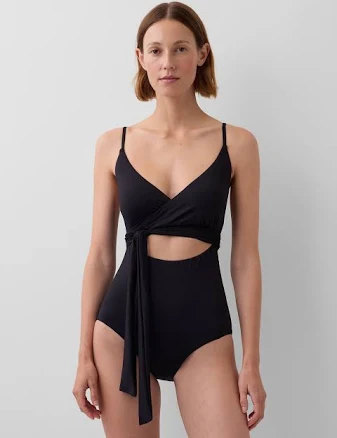
Gap Women's Cutout Wrap One-Piece Swimsuit
Lower concern for standard nylon-spandex, though Gap lacks transparency.
A basic nylon-spandex one-piece with no known PFAS-intensive treatments documented. Gap makes no public disclosures about PFAS practices or chemical testing.
The better-graded swap
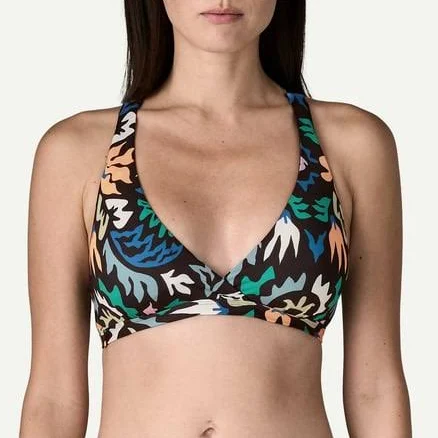
Patagonia
Patagonia Women's Bottom Turn Racerback Bikini Top
90/100 safety
Same rubric that flunked this product. The swap earned Excellent.
Still want this one anyway? Check the price on Amazon. We’d swap it.
Material
nylon/spandex blend swimsuit fabric
Brand disclosure
Brand is silent on PFAS
Lab data
No public lab test
What Gap Women's Cutout Wrap One-Piece Swimsuit is made of, ingredients and materials
This swimsuit is a nylon and spandex (elastane) blend, the industry standard for chlorine-resistant swimwear. Nylon is a synthetic polymer that does not leach plasticizers or bisphenols into skin or water under normal use; spandex provides stretch and recovery without significant chemical release at body temperature. The cutout and wrap design does not introduce novel material hazards, though any applied dyes, finishes, or adhesives in seams are the primary chemical exposure points.
What’s concerning
Category baseline
The starting point for this type of product, before anything specific to this product is counted.
No PFAS disclosure
No public statement from the brand about PFAS in this product.
Azo dyes and colorant migration
Gap does not disclose dye chemistry or heavy metal testing for this swimsuit. Nylon readily accepts synthetic dyes; restricted azo dyes can break down into aromatic amines under sweat, chlorine, or UV. No recall or testing data available for this specific product, but risk is present in unregulated mass-market dyed textiles.
Spandex degradation and microfiber shedding
Elastane (spandex) breaks down over 2-3 years of use, especially with heat and chlorine exposure. Degraded fibers shed as microplastics into wash water and aquatic environments. This is inherent to all swimwear in this category and not specific to Gap, but replacement timeline matters for exposure reduction.
Formaldehyde / VOCs
Nylon textiles may be treated with formaldehyde-based resins for wrinkle resistance, water-repellency, or dye fixation. Gap does not disclose finishing agents. Residual formaldehyde can off-gas during wear and washing, especially in new garments. Brief skin exposure is unlikely to cause harm, but sensitivity is individual.
Source, ATSDR ↗Adhesive residue in seams and applique
The cutout design and wrap detail likely involve gluing or heat-fusing during assembly. Industrial textile adhesives may contain residual solvents or volatile compounds. No specific testing or disclosure from Gap; risk is low but unquantified in mass-market sewn goods.
What’s reassuring
Base material not linked to PFAS
The main material recorded for this product is not one associated with PFAS.
Heavy metals
No documented heavy metal contamination in Gap swimwear; however, unregulated manufacturers sometimes use cadmium or lead-based colorants. Gap's silence on supplier audits and testing makes independent verification impossible. Standard nylon dyes are not typically heavy-metal-based, but transparency is absent.
Source, FDA ↗The full breakdown
The brand's record and disclosure
Gap Inc. does not publish material safety data sheets or chemical restriction lists for swimwear, and does not voluntarily disclose PFAS use or testing results. The brand has faced criticism for lack of transparency on textile chemicals, though no recalls or regulatory violations specific to swimwear have been documented. Gap holds no third-party certifications (Oeko-Tex, GOTS) for chemical safety on this product line, making independent verification difficult.
How it compares in its category
Nylon-spandex swimsuits are the baseline for consumer swimwear and pose lower chemical risk than polyester blends or vintage rubber. Competitors like Speedo and TYR offer identical material composition without superior disclosure. Certified alternatives (e.g., Patagonia, Girlfriend Collective) provide Oeko-Tex certification and restrict more chemicals, but at higher price and material tradeoff. Gap's offering is middle-of-the-road in safety and transparency for mass-market swimwear.
If you buy it
Rinse the swimsuit in fresh water after chlorine or salt water exposure to prevent degradation and remove residual disinfectants. Avoid prolonged sun exposure when wet, as UV can degrade the dyes and elastane over years of use. Wash in cool water with mild detergent; do not tumble dry or expose to heat above 40°C, which can break down spandex. Replace after 2-3 seasons or when elastic loses recovery, as material breakdown can increase microfiber shedding.
What we don’t know
- Basis
- Model estimate, 62% confidence, not a lab result
- Lab test
- None on record for this exact product
- Brand statement
- Gap has made none
Formulations change between production runs, so check the current label. How we grade.
Better-graded alternatives in Swimwear
Patagonia
Women's Bottom Turn Racerback Bikini Top
- Nylon/polyester blend with elastane (standard swimwear)
- The brand calls it PFAS-free, which we have not verified
- Elastane (spandex) degradation under heat or chlorine
More swimwear grades
How we score, every product runs through the same public 0-100 rubric based on materials, coatings, brand disclosure, lab findings, and recalls. See the full methodology → Spotted a mistake? Report an error.