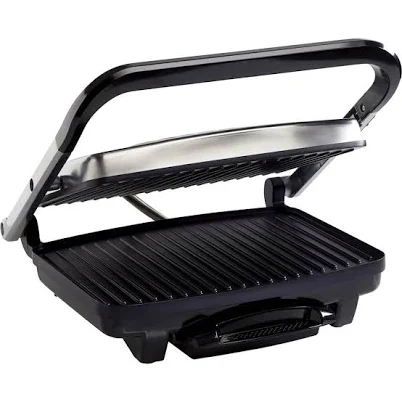
Hamilton Beach · Panini Presses
Hamilton Beach Panini Press Electric Grill
Skip until coating details clarified, nonstick cookware without PFAS disclosure warrants caution.
Hamilton Beach won't publicly disclose the composition of the nonstick coating on this panini press. Nonstick cookware historically uses Teflon-type coating or other Teflon-family coating, though some modern alternatives exist, PFAS status remains unknown.
Still want this one anyway? Check the price on Amazon. We’d swap it.
Material
Nonstick coating on cooking surfaces; material unspecified by brand
Brand disclosure
Brand is silent on PFAS
Lab data
No public lab test
You may also be interested in
Top-graded picks in the categories readers replace first, every one scored on the same rubric.

- polypropylene filter housing, carbon/sediment cartridge
- We found no PFAS statement from the brand
- Bacterial growth in spent cartridges
3 hazards checked on this product, all on its full breakdown.

Aquasure
Premier Series 75 GPD Under Sink Reverse Osmosis Water Filtration System
- RO membrane, carbon filters, stainless steel housing
- We found no PFAS statement from the brand
- Bacterial and microbial growth in housing and filters
4 hazards checked on this product, all on its full breakdown.

Avocado
Vegan Mattress
- organic cotton, natural latex, coconut coir, recycled steel coils
- The brand calls it PFAS-free, which we have not verified
- Heavy metals
2 hazards checked on this product, all on its full breakdown.
What Hamilton Beach Panini Press Electric Grill is made of, ingredients and materials
Hamilton Beach does not publicly disclose the specific nonstick coating chemistry on this panini press, critical information for assessing PFAS content. The cooking surfaces are nonstick-coated metal plates, likely aluminum or steel underneath. Without coating identification (Teflon-type coating, ceramic, silicone, or proprietary blend), you cannot confirm whether legacy PFAS compounds or lower-concern alternatives are present. This opacity is the primary safety concern.
What’s concerning
Category baseline
The starting point for this type of product, before anything specific to this product is counted.
No PFAS disclosure
No public statement from the brand about PFAS in this product.
Non-stick, chemistry undisclosed
Marketed as non-stick without stating the coating chemistry.
Nonstick coating degradation and fume release
Unspecified coating identity means unknown thermal stability profile. Overheating (above 500°F) or physical damage to the nonstick surface can release polymer fumes; risk is low during normal panini use but increases if temperature controls fail or coating chips.
Aluminum leaching from substrate
If the base metal is aluminum and the nonstick coating degrades, direct contact between acidic foods (e.g., tomato, vinegar) and bare aluminum is possible. This occurs only after visible coating failure; routine use poses minimal risk if coating remains intact.
Burn hazard and thermal runaway
Electric grills with manual temperature controls can reach unsafe surface temperatures if thermostat malfunctions. A few complaints exist in consumer forums of Hamilton Beach grills not shutting off automatically, though no formal recall is documented; always use with caution and verify shutdown.
Microplastic shedding from nonstick wear
As nonstick coating ages and fragments, microscopic particles may shed into food, particularly if the surface is scraped or abraded. No quantified risk exists for Hamilton Beach specifically; avoidance of metal utensils and gentle cleaning reduce this risk.
What’s reassuring
Heavy metals
No testing or recalls document lead, cadmium, or antimony in Hamilton Beach nonstick coatings. Standard FDA food-contact regulations apply; risk is theoretical but unverified due to lack of third-party testing data.
Source, FDA ↗How is this PFAS grade calculated?
The brand's record and disclosure
Hamilton Beach has not published a corporate PFAS phase-out statement or cookware safety certification (e.g., Greenguard, NSF). The brand is silent on nonstick coating composition across its cookware line, which is consistent with many mid-market small appliance manufacturers but reflects minimal transparency. No major recalls specific to PFAS or coating degradation in Hamilton Beach panini presses are on public record, though absence of disclosure does not indicate absence of risk.
How it compares in its category
Most electric panini presses use nonstick coatings without disclosure; Hamilton Beach is typical rather than a leader or laggard in transparency. Ceramic-coated or uncoated cast iron alternatives exist but are less convenient and slower to heat. Some competitors (e.g., higher-end brands) specify Teflon-type coating-free or PFOA-free formulations; Hamilton Beach's silence puts it in the middle of the disclosure spectrum and increases buyer uncertainty.
If you buy it
Operate between 200-400°F (typical panini range); never exceed 500°F to avoid accelerating coating breakdown or fume release. Hand wash only; dishwasher use degrades nonstick faster and increases leaching risk. Inspect the cooking surface annually for chips, peeling, or discoloration; replace the unit if coating integrity fails. Store in a dry place to prevent corrosion of any exposed metal at damage sites.
What is not known about PFAS in this product?
- Basis
- Model estimate, 35% confidence, not a lab result
- Lab test
- None on record for this exact product
- Brand statement
- Hamilton Beach has made none
Formulations change between production runs, so check the current label. How we grade.
What are the PFAS-free alternatives to Hamilton Beach Panini Press Electric Grill?
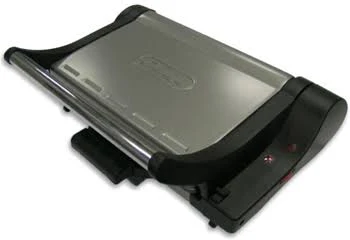
- stainless steel cooking plates
- We found no PFAS statement from the brand
- Thermal burn hazard (housing and handles)
3 hazards checked on this product, all on its full breakdown.
Find an alternative on AmazonMore panini presses grades
How we score, every product runs through the same public 0-100 rubric based on materials, coatings, brand disclosure, lab findings, and recalls. See the full methodology → Spotted a mistake? Report an error.