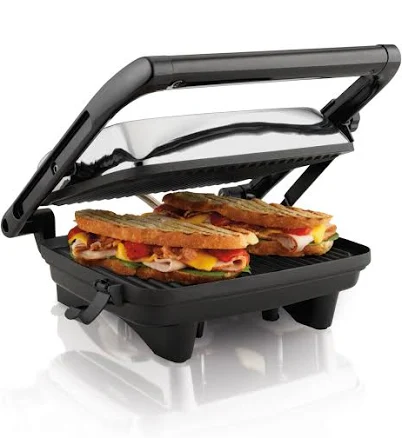
Hamilton Beach · Panini Presses
Hamilton Beach Panini Press Gourmet Sandwich Maker 25460A
Skip or contact Hamilton Beach directly about nonstick coating chemistry.
Hamilton Beach won't publicly disclose the coating material or PFAS status of this model's cooking plates. The nonstick surface raises typical PFAS concern common to pressed sandwich makers, but the brand provides no transparency.
Still want this one anyway? Check the price on Amazon. We’d swap it.
Material
nonstick-coated cooking plates (coating type unspecified)
Brand disclosure
Brand is silent on PFAS
Lab data
No public lab test
You may also be interested in
Top-graded picks in the categories readers replace first, every one scored on the same rubric.

- polypropylene filter housing, carbon/sediment cartridge
- We found no PFAS statement from the brand
- Bacterial growth in spent cartridges
3 hazards checked on this product, all on its full breakdown.

Aquasure
Premier Series 75 GPD Under Sink Reverse Osmosis Water Filtration System
- RO membrane, carbon filters, stainless steel housing
- We found no PFAS statement from the brand
- Bacterial and microbial growth in housing and filters
4 hazards checked on this product, all on its full breakdown.

Avocado
Vegan Mattress
- organic cotton, natural latex, coconut coir, recycled steel coils
- The brand calls it PFAS-free, which we have not verified
- Heavy metals
2 hazards checked on this product, all on its full breakdown.
What Hamilton Beach Panini Press Maker 25460A is made of, ingredients and materials
The Hamilton Beach 25460A uses nonstick-coated cooking plates, but Hamilton Beach has not publicly disclosed whether the coating is Teflon-type coating (Teflon)-based or an alternative chemistry like ceramic or silicone. This matters because Teflon-type coating coatings can release fumes if overheated above 500F, while coating composition also determines longevity and leaching risk. The heating element and housing materials are typical aluminum or stainless steel with unspecified finishes. Without transparency on the nonstick formulation, full hazard assessment is incomplete.
What’s concerning
Category baseline
The starting point for this type of product, before anything specific to this product is counted.
No PFAS disclosure
No public statement from the brand about PFAS in this product.
Non-stick, chemistry undisclosed
Marketed as non-stick without stating the coating chemistry.
Teflon-type coating fume inhalation risk
If the nonstick coating is Teflon-type coating, overheating above 500F can release fluorinated fumes; the exact coating type is unconfirmed by the brand. Typical panini cooking occurs at 300-400F, which is below concern threshold, but preheating or malfunction could reach temperatures associated with increased degradation risk.
Coating degradation and flaking
Nonstick coatings on lower-cost appliances like this model typically degrade after 1-3 years of regular use, especially if abrasively cleaned. Flaking nonstick particles can enter food; no major recalls recorded for Hamilton Beach panini presses, but wear is common in user reviews.
PFAS
If coating contains PFOA or other legacy PFAS, migration into fatty or acidic foods is theoretically possible, especially at sustained higher temperatures. No independent testing of this model has been published; see separate PFAS grading for full assessment.
Source, ATSDR ↗What’s reassuring
Aluminum leaching (if uncoated heating surfaces contact food)
The cooking plates are nonstick-coated, so direct aluminum contact is unlikely under normal use. Leaching risk exists only if the coating is severely damaged and the underlying aluminum is exposed to acidic foods over extended time.
Electrical or burn hazard (product design, not material)
No material-specific chemical hazard; standard appliance safety applies. Hot plate surfaces are a burn risk inherent to panini presses, not a toxicological concern.
How is this PFAS grade calculated?
The brand's record and disclosure
Hamilton Beach does not appear to have issued public statements about PFAS or nonstick coating chemistry for its small appliances, including this model. The brand has no established third-party certifications (such as GreenGuard or NSF) relating to coating safety for this product line. This silence is common among mid-tier kitchen appliance makers but leaves consumers without independent verification of coating type or migration testing.
How it compares in its category
Panini presses and sandwich makers in this price range typically use Teflon-type coating or ceramic nonstick coatings; Hamilton Beach's approach is standard but not differentiated. Premium brands (Breville, Cuisinart) sometimes disclose coating chemistry; budget competitors often do not. Few panini presses in this category undergo third-party migration or PFAS testing at retail, making Hamilton Beach typical rather than outlying.
If you buy it
Keep the appliance below 400F during use to avoid Teflon-type coating fume risk if coating is Teflon-type coating-based; refer to the manual for temperature specifications. Do not preheat beyond the manufacturer's recommended setting and avoid heating empty plates. Inspect the nonstick coating monthly for scratches, peeling, or wear; discard the appliance if coating degrades significantly, as damaged nonstick surfaces may flake into food. Hand-wash plates with soft sponges; abrasive scrubbing accelerates coating degradation.
What is not known about PFAS in this product?
- Basis
- Model estimate, 35% confidence, not a lab result
- Lab test
- None on record for this exact product
- Brand statement
- Hamilton Beach has made none
Formulations change between production runs, so check the current label. How we grade.
What are the PFAS-free alternatives to Hamilton Beach Panini Press Gourmet Sandwich Maker 25460A?
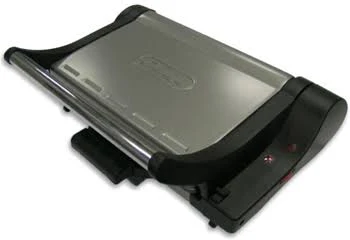
- stainless steel cooking plates
- We found no PFAS statement from the brand
- Thermal burn hazard (housing and handles)
3 hazards checked on this product, all on its full breakdown.
Find an alternative on AmazonMore panini presses grades
How we score, every product runs through the same public 0-100 rubric based on materials, coatings, brand disclosure, lab findings, and recalls. See the full methodology → Spotted a mistake? Report an error.