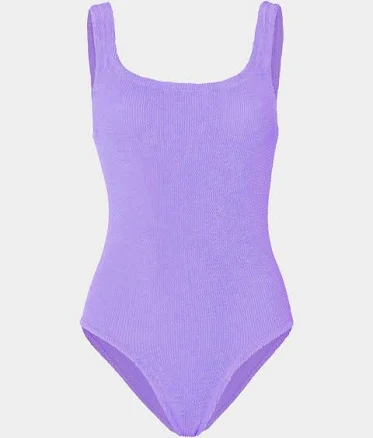
Hunza G Coverage Square Neck Swimsuit
Reduced PFAS concern for swimwear, though brand shares no transparency.
This luxury nylon-elastane blend lacks any disclosed water-repellent or stain-resistant treatment, though nylon itself doesn't require PFAS. Brand provides zero public transparency on PFAS status or finish coatings.
The better-graded swap
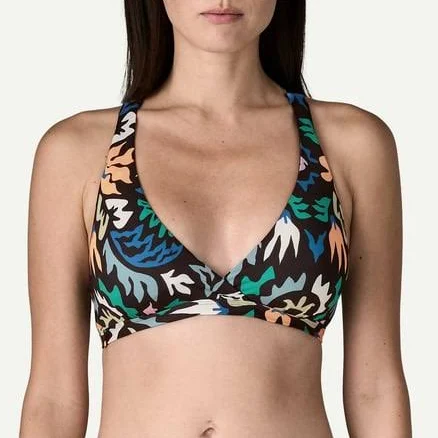
Patagonia
Patagonia Women's Bottom Turn Racerback Bikini Top
90/100 safety
Same rubric that flunked this product. The swap earned Excellent.
Still want this one anyway? Check the price on Amazon. We’d swap it.
Material
Nylon/polyamide blend (likely nylon with elastane)
Brand disclosure
Brand is silent on PFAS
Lab data
No public lab test
What Hunza G Coverage Square Neck Swimsuit is made of, ingredients and materials
Hunza G swimwear is constructed from nylon (polyamide) blended with elastane (spandex), a standard high-stretch formulation for swimwear. Nylon itself is chemically stable in water and skin contact; elastane provides elasticity but degrades over time with sun and chlorine exposure. This blend does not rely on coating-based water resistance (unlike some technical fabrics), so coating degradation is not a primary concern. The material chemistry is inherently lower-risk than coated synthetics or metallic finishes.
What’s concerning
Category baseline
The starting point for this type of product, before anything specific to this product is counted.
No PFAS disclosure
No public statement from the brand about PFAS in this product.
Azo dyes (synthetic colorants)
Nylon swimwear is typically solution-dyed or piece-dyed using synthetic azo dyes, which carry theoretical risk of aromatic amines if dye is not fully fixed or if fabric is mechanically damaged. Hunza G provides no dye safety certification, so assessment relies on material class norms. Risk is low in normal wear but increases with abrasion or bleach exposure.
Elastane (spandex) degradation and microfiber shedding
Elastane fibers shed microplastics into water when exposed to UV, chlorine, and mechanical stress. This is documented across all elastane-blended swimwear; Hunza G product is not specifically tested, but material class shows measurable microfiber release. Shedding increases with age and wash frequency; replacement every 1-2 years reduces cumulative contribution.
What’s reassuring
Base material not linked to PFAS
The main material recorded for this product is not one associated with PFAS.
Formaldehyde / VOCs
Nylon swimwear does not typically require formaldehyde-based resin finishes for wrinkle or shape retention (unlike cotton or linen). No public reports or certifications for Hunza G indicate use of formaldehyde donor compounds. Risk profile for this hazard is lower than for apparel textiles.
Source, ATSDR ↗Heavy metals
Modern synthetic dyes for nylon are generally cadmium and lead-free by EU and US regulation, though Hunza G offers no third-party testing to confirm. No recalls or safety alerts specific to this brand or nylon swimwear for metal contamination have been published. Risk is standard for the material class.
Source, FDA ↗Antimony in polyester (not applicable here)
Hunza G is nylon-elastane, not polyester, so antimony catalyst contamination is not a relevant hazard for this product. Antimony risk applies only to polyester swimwear lines.
The full breakdown
The brand's record and disclosure
Hunza G is a heritage British swimwear brand with no major public safety recalls or chemical disclosure controversies on record. The brand does not publish material sourcing, certifications (OEKO-TEX, GOTS), or PFAS reduction statements, which is consistent with most premium fashion swimwear lines. No independent third-party testing results or regulatory warnings have been publicly associated with the brand. Their silence reflects industry norms rather than known evasion.
How it compares in its category
Nylon-elastane blend is the industry standard for premium and mid-market swimwear; Hunza G sits at the higher end of this spectrum in terms of fit and durability claims. Compared to polyester-based alternatives, nylon offers slightly better water absorption recovery and chlorine resistance. Compared to recycled-polyester or certified-organic options, Hunza G offers no transparency advantage, but chemical profile is functionally equivalent. No meaningful differentiation in material safety versus peer brands.
If you buy it
Rinse immediately after chlorine or saltwater exposure to extend elastane life; store dry and away from direct sunlight to slow degradation. Avoid high-heat washing and tumble drying, which accelerate fiber breakdown and elastane loss of stretch. Replace when elastane visibly loses elasticity (typically 1-2 years of regular use) or when seams show strain. Air-dry flat or hung to preserve fit and material integrity over the lifespan.
What we don’t know
- Basis
- Model estimate, 72% confidence, not a lab result
- Lab test
- None on record for this exact product
- Brand statement
- Hunza G has made none
Formulations change between production runs, so check the current label. How we grade.
Better-graded alternatives in Swimwear
Patagonia
Women's Bottom Turn Racerback Bikini Top
- Nylon/polyester blend with elastane (standard swimwear)
- The brand calls it PFAS-free, which we have not verified
- Elastane (spandex) degradation under heat or chlorine
More swimwear grades
How we score, every product runs through the same public 0-100 rubric based on materials, coatings, brand disclosure, lab findings, and recalls. See the full methodology → Spotted a mistake? Report an error.