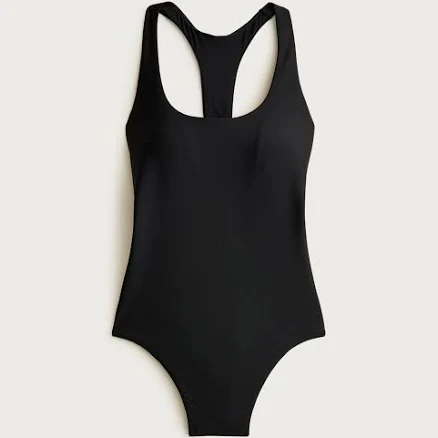
J.Crew Women's Gail One-piece
Lower PFAS concern for basic nylon. J.Crew discloses nothing about treatment.
The Gail one-piece is a nylon swimsuit with no public PFAS information from J.Crew. Standard swimwear nylon carries lower inherent PFAS risk than water-repellent coating-treated apparel.
The better-graded swap
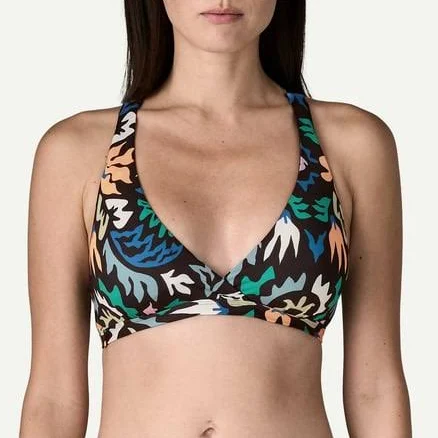
Patagonia
Patagonia Women's Bottom Turn Racerback Bikini Top
90/100 safety
Same rubric that flunked this product. The swap earned Excellent.
Still want this one anyway? Check the price on Amazon. We’d swap it.
Material
Polyamide/nylon blend (swimwear)
Brand disclosure
Brand is silent on PFAS
Lab data
No public lab test
You may also be interested in
Top-graded picks in the categories readers replace first, every one scored on the same rubric.

- polypropylene filter housing, carbon/sediment cartridge
- We found no PFAS statement from the brand
- Bacterial growth in spent cartridges
3 hazards checked on this product, all on its full breakdown.

Aquasure
Premier Series 75 GPD Under Sink Reverse Osmosis Water Filtration System
- RO membrane, carbon filters, stainless steel housing
- We found no PFAS statement from the brand
- Bacterial and microbial growth in housing and filters
4 hazards checked on this product, all on its full breakdown.

Avocado
Vegan Mattress
- organic cotton, natural latex, coconut coir, recycled steel coils
- The brand calls it PFAS-free, which we have not verified
- Heavy metals
2 hazards checked on this product, all on its full breakdown.
What J.Crew Women's Gail One-piece is made of, ingredients and materials
The Gail One-piece is constructed from polyamide (nylon), a synthetic polymer widely used in swimwear for its stretch, durability, and quick-dry properties. Nylon itself is chemically stable and does not leach harmful monomers like BPA. The 'water-resistant' designation likely refers to the fit and fabric construction rather than a chemical coating, though J.Crew does not publicly specify whether any water-repellent coating (water-repellent coating) finish is applied. If a water-repellent coating finish is present, it may historically have contained PFAS, though modern formulations increasingly avoid them.
What’s concerning
Category baseline
The starting point for this type of product, before anything specific to this product is counted.
No PFAS disclosure
No public statement from the brand about PFAS in this product.
PFAS
If the garment has a water-repellent coating (water-repellent coating) treatment, legacy formulations used long-chain PFAS. J.Crew does not disclose treatment method or whether newer, shorter-chain alternatives are used. Risk is moderate if finish is present but unspecified.
Source, ATSDR ↗Microplastic shedding
Like all synthetic textiles, nylon sheds microfibers during laundering. The Gail's construction (stretchy, fitted nylon) may shed slightly more than densely woven alternatives, contributing to aquatic microplastic load. This is inherent to nylon and not specific to J.Crew's production.
What’s reassuring
Base material not linked to PFAS
The main material recorded for this product is not one associated with PFAS.
Azo dyes
No reported incidents or third-party testing of J.Crew swimwear for restricted azo dyes. Nylon accepts dyes readily and reputable manufacturers typically comply with EU/ZDHC restrictions, but J.Crew does not publicly certify this.
Heavy metals
No documented contamination in J.Crew apparel. Nylon fabric dyeing can introduce trace metals (e.g., chromium, nickel) if quality controls are lax, but mainstream US-distributed swimwear rarely shows reportable levels.
Source, FDA ↗Formaldehyde / VOCs
Nylon does not typically require formaldehyde-based wrinkle or shrink-resist resins. Risk is very low for untreated nylon swimwear unless special performance claims are made.
Source, ATSDR ↗How is this PFAS grade calculated?
The brand's record and disclosure
J.Crew has not publicly disclosed chemical safety testing, material sourcing certifications, or PFAS treatment policies for swimwear. The brand is not known for third-party certifications like Bluesign or OEKO-TEX in its standard lines. J.Crew has faced some labor and environmental sourcing criticism historically, but no major chemical safety recalls or contamination incidents in apparel are on record. The lack of transparency is typical of mainstream fashion brands but limits consumer certainty.
How it compares in its category
Basic nylon swimwear presents lower concern from a chemical perspective, as nylon is not a material linked to formaldehyde off-gassing or azo dye concerns at typical levels. Competitors like Athleta and Patagonia offer more explicit chemical disclosures and eco-certifications; J.Crew's Gail sits in the standard mainstream category with no distinguishing safety advantage. Price point ($98-128 range) suggests standard manufacturing without specialized low-chemical processing.
If you buy it
Rinse the swimsuit in fresh water after each use and air dry away from direct heat or sunlight to preserve elastic integrity and prevent degradation of any applied coatings. Avoid chlorine-heavy pools or hot tubs for extended periods, as these can accelerate wear. Machine wash in cold water on gentle cycle if needed; do not bleach or dry clean. Replace when elastic fails or seams separate, typically after 50-100 wears depending on care.
What is not known about PFAS in this product?
- Basis
- Model estimate, 72% confidence, not a lab result
- Lab test
- None on record for this exact product
- Brand statement
- J.Crew has made none
Formulations change between production runs, so check the current label. How we grade.
What are the PFAS-free alternatives to J.Crew Women's Gail One-piece?
- Nylon/polyester blend with elastane (standard swimwear)
- The brand calls it PFAS-free, which we have not verified
- Elastane (spandex) degradation under heat or chlorine
More swimwear grades
How we score, every product runs through the same public 0-100 rubric based on materials, coatings, brand disclosure, lab findings, and recalls. See the full methodology → Spotted a mistake? Report an error.