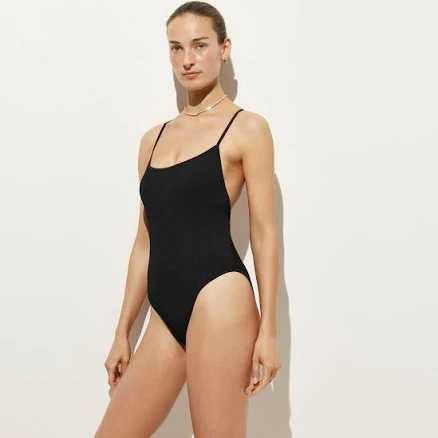
J.Crew Women's Sydney Scrunchie One-Piece Swimsuit
Lower concern. Standard swimsuit with no known PFAS-risk treatment. No brand transparency.
The Sydney Scrunchie is a basic nylon one-piece with no visible water-repellent or stain-resistant treatment that typically drives PFAS use. J.Crew doesn't disclose PFAS policies.
The better-graded swap
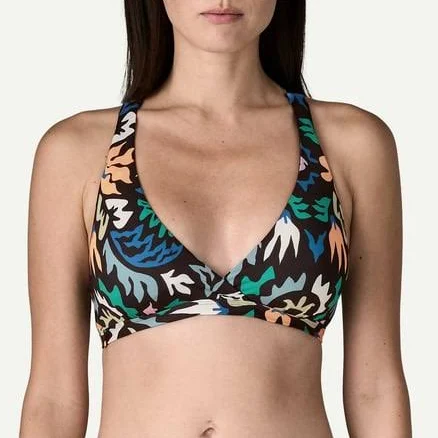
Patagonia
Patagonia Women's Bottom Turn Racerback Bikini Top
90/100 safety
Same rubric that flunked this product. The swap earned Excellent.
Still want this one anyway? Check the price on Amazon. We’d swap it.
Material
Nylon/polyamide blend swimsuit fabric
Brand disclosure
Brand is silent on PFAS
Lab data
No public lab test
You may also be interested in
Top-graded picks in the categories readers replace first, every one scored on the same rubric.

- polypropylene filter housing, carbon/sediment cartridge
- We found no PFAS statement from the brand
- Bacterial growth in spent cartridges
3 hazards checked on this product, all on its full breakdown.

Aquasure
Premier Series 75 GPD Under Sink Reverse Osmosis Water Filtration System
- RO membrane, carbon filters, stainless steel housing
- We found no PFAS statement from the brand
- Bacterial and microbial growth in housing and filters
4 hazards checked on this product, all on its full breakdown.

Avocado
Vegan Mattress
- organic cotton, natural latex, coconut coir, recycled steel coils
- The brand calls it PFAS-free, which we have not verified
- Heavy metals
2 hazards checked on this product, all on its full breakdown.
What J.Crew Women's Sydney Scrunchie Swimsuit is made of, ingredients and materials
The Sydney scrunchie one-piece is constructed from nylon/polyamide blend fabric, a petroleum-derived synthetic polymer chosen for stretch, durability, and quick-dry properties in swimwear. Nylon itself is chemically stable against body moisture and chlorine at normal use temperatures. The scrunchie detail (elastic gathering at the shoulders) uses the same material or nylon-spandex blend, which poses minimal leaching risk compared to metal hardware in swimwear.
What’s concerning
Category baseline
The starting point for this type of product, before anything specific to this product is counted.
No PFAS disclosure
No public statement from the brand about PFAS in this product.
Elastane (spandex) degradation and microfiber shedding
Nylon-spandex blends shed microplastics when worn and washed, especially as elasticity fails. This is inherent to the material class, not J.Crew-specific; washing in cold water and air drying minimizes shedding relative to hot washing.
What’s reassuring
Base material not linked to PFAS
The main material recorded for this product is not one associated with PFAS.
Azo dyes in synthetic colorants
Nylon swimwear often uses disperse dyes, some historically linked to allergic contact dermatitis in sensitive users. No specific recalls or test results available for J.Crew Sydney scrunchie; standard nylon processing does not require restricted azo compounds.
Formaldehyde / VOCs
No evidence that J.Crew applies formaldehyde-based durable-press or antimicrobial finishes to swimwear. Nylon does not require such finishes to resist water or mildew, unlike cotton or blended basics.
Source, ATSDR ↗Heavy metals
Solid-color nylon swimsuits (assuming this style) carry lower heavy metal risk than multi-color prints. No specific testing or contamination reports documented for J.Crew apparel in this category.
Source, FDA ↗Antimony in polyester or catalysts
This is a nylon product, not polyester; antimony is a polyester-specific catalyst residue and not present in nylon fabric chemistry.
How is this PFAS grade calculated?
The brand's record and disclosure
J.Crew does not publicly disclose material testing, chemical restrictions, or PFAS avoidance policies for swimwear. The brand has no documented recalls or safety alerts tied to this product line. J.Crew is not certified by third-party textile safety programs (OEKO-TEX, GOTS) for most apparel, reflecting limited transparency rather than confirmed safety gaps.
How it compares in its category
Nylon swimwear is industry standard and carries lower chemical concern than polyester or elastane-heavy blends. Many competitors (Speedo, Land's End) use identical nylon composition without enhanced disclosure. J.Crew's lack of certification is typical for mainstream retail swimwear; premium brands (Patagonia, Girlfriend Collective) distinguish themselves with third-party testing and PFAS-free statements.
If you buy it
Rinse thoroughly after ocean or chlorinated water to remove salt and chemicals that degrade elasticity over time. Air dry away from direct heat and sunlight, which can weaken nylon fibers. Do not machine wash hot or dry-clean, as heat and solvents accelerate fabric breakdown. Replace when elasticity noticeably decreases (typically 2-3 years with regular use), as degraded elastane can shed micro-fragments.
What is not known about PFAS in this product?
- Basis
- Model estimate, 72% confidence, not a lab result
- Lab test
- None on record for this exact product
- Brand statement
- J.Crew has made none
Formulations change between production runs, so check the current label. How we grade.
What are the PFAS-free alternatives to J.Crew Women's Sydney Scrunchie One-Piece Swimsuit?
- Nylon/polyester blend with elastane (standard swimwear)
- The brand calls it PFAS-free, which we have not verified
- Elastane (spandex) degradation under heat or chlorine
More swimwear grades
How we score, every product runs through the same public 0-100 rubric based on materials, coatings, brand disclosure, lab findings, and recalls. See the full methodology → Spotted a mistake? Report an error.