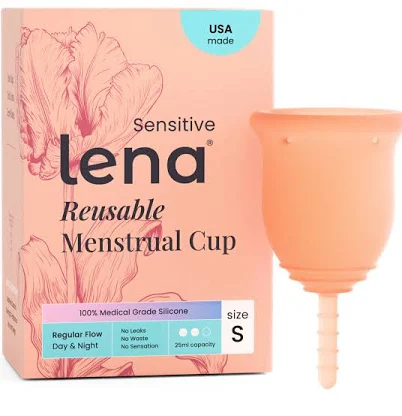
Lena Sensitive Menstrual Cup
Lower-concern product, medical-grade silicone isn't a known PFAS vector, but brand offers no transparency.
This Lena silicone cup isn't typically associated with PFAS contamination. The brand doesn't disclose PFAS testing or make claims about the topic. No third-party verification or lab data exists publicly. Silicone's natural properties reduce PFAS likelihood.
We flunk more products than we pass. This one earned its grade. How we grade
Material
Medical-grade silicone (body); no disclosed coatings
Brand disclosure
Brand is silent on PFAS
Lab data
No public lab test
You may also be interested in
Top-graded picks in the categories readers replace first, every one scored on the same rubric.

- polypropylene filter housing, carbon/sediment cartridge
- We found no PFAS statement from the brand
- Bacterial growth in spent cartridges
3 hazards checked on this product, all on its full breakdown.

Aquasure
Premier Series 75 GPD Under Sink Reverse Osmosis Water Filtration System
- RO membrane, carbon filters, stainless steel housing
- We found no PFAS statement from the brand
- Bacterial and microbial growth in housing and filters
4 hazards checked on this product, all on its full breakdown.

Avocado
Vegan Mattress
- organic cotton, natural latex, coconut coir, recycled steel coils
- The brand calls it PFAS-free, which we have not verified
- Heavy metals
2 hazards checked on this product, all on its full breakdown.
What Lena Sensitive Menstrual Cup is made of, ingredients and materials
Lena Sensitive is constructed from medical-grade silicone, a high-purity elastomer formulated for biocompatibility and minimal reactivity with body fluids. Unlike lower-grade silicone or alternative polymers (rubber, thermoplastic elastomer), medical-grade silicone does not contain plasticizers like phthalates or BPA to maintain flexibility. The body composition is the primary contact surface; Lena does not disclose any coatings, dyes, or additives that would introduce leaching pathways.
What’s concerning
Category baseline
The starting point for this type of product, before anything specific to this product is counted.
No PFAS disclosure
No public statement from the brand about PFAS in this product.
Bacterial or mold colonization
Like all reusable menstrual cups, Lena Sensitive can harbor bacteria or mold if stored wet, in sealed containers, or if internal ridges are not cleaned thoroughly. This is a maintenance issue rather than a material defect; proper drying and breathable storage eliminate the risk.
Allergic contact dermatitis or sensitization
Medical-grade silicone is hypoallergenic for most users, but rare individuals report contact irritation. This is user-specific and not a product-wide hazard; if irritation occurs, switching to a latex-free alternative (not latex, which carries its own allergenic risk) is advised.
Incomplete sterilization if boiled improperly
Rapid boiling or incomplete submersion may leave bacteria in cup ridges; however, proper 5-minute full submersion boil or household dishwasher cycles are sufficient for reusable menstrual cup hygiene. This is a user-execution risk, not an inherent product flaw.
What’s reassuring
Base material not linked to PFAS
The main material recorded for this product is not one associated with PFAS.
Silicone degradation and leaching
Medical-grade silicone is chemically stable and does not release monomers or plasticizers under normal vaginal pH and temperature. No literature or recalls document leaching from Lena Sensitive or comparable medical-grade menstrual cups.
Heavy metals
Lena Sensitive is opaque silicone without disclosed dyes or pigments; colored menstrual cups have occasionally raised concerns about azo dyes or cadmium in colorants, but Lena's standard versions carry no public record of testing or controversy on this front.
Source, FDA ↗How is this PFAS grade calculated?
The brand's record and disclosure
Lena (owned by Femtech company Lena Inc.) does not publish third-party certification (FDA clearance, CE marking, or independent toxicology reports) on its public-facing materials, though medical-grade silicone products in this category typically meet FDA or European medical device standards. The brand has not publicly addressed PFAS exposure or committed to transparency testing. No recalls or safety controversies are on record for this product line as of public databases.
How it compares in its category
Menstrual cups in this price and material tier (Lena Sensitive, Lunette, DivaCup silicone variants) all use similar medical-grade silicone; differentiation is in ergonomics, firmness, and design rather than chemical safety. Cheaper alternatives using lower-grade silicone or thermoplastic elastomers present higher residual monomer and plasticizer leaching risks. Lena Sensitive's smaller, softer design targets comfort rather than addressing chemical exposure.
If you buy it
Rinse thoroughly before first use and after each cycle; avoid prolonged boiling (over 5 minutes) which can degrade silicone over years of use, though acute sterilization by boiling is a standard care practice. Store in a breathable container to prevent mold or bacterial biofilm in humid conditions. Replace every 5-10 years or if the cup shows visible tears, permanent staining, or odor that cleaning does not resolve. Do not use with oil-based lubricants or in extreme heat environments.
What is not known about PFAS in this product?
- Basis
- Model estimate, 72% confidence, not a lab result
- Lab test
- None on record for this exact product
- Brand statement
- Lena has made none
Formulations change between production runs, so check the current label. How we grade.
What are the PFAS-free alternatives to Lena Sensitive Menstrual Cup?
- medical-grade silicone
- A third party reports verifying it as PFAS-free
- Silicone degradation or leaching from improper cleaning agents
3 hazards checked on this product, all on its full breakdown.
More menstrual cups grades
How we score, every product runs through the same public 0-100 rubric based on materials, coatings, brand disclosure, lab findings, and recalls. See the full methodology → Spotted a mistake? Report an error.