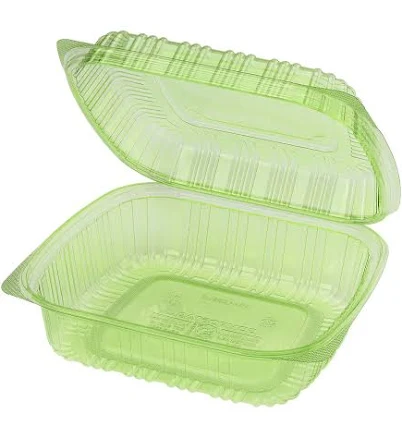
Karat Earth PLA Hinged Containers
Lower PFAS risk, but no explicit brand assurance provided.
Karat Earth's PLA hinged containers use plant-based polylactic acid that doesn't require PFAS-based coatings. The brand makes no public PFAS disclosure or independent testing verification.
We flunk more products than we pass. This one earned its grade. How we grade
Material
PLA (polylactic acid) bioplastic, plant-based
Brand disclosure
Brand is silent on PFAS
Lab data
No public lab test
You may also be interested in
Top-graded picks in the categories readers replace first, every one scored on the same rubric.

- polypropylene filter housing, carbon/sediment cartridge
- We found no PFAS statement from the brand
- Bacterial growth in spent cartridges
3 hazards checked on this product, all on its full breakdown.

Aquasure
Premier Series 75 GPD Under Sink Reverse Osmosis Water Filtration System
- RO membrane, carbon filters, stainless steel housing
- We found no PFAS statement from the brand
- Bacterial and microbial growth in housing and filters
4 hazards checked on this product, all on its full breakdown.

Avocado
Vegan Mattress
- organic cotton, natural latex, coconut coir, recycled steel coils
- The brand calls it PFAS-free, which we have not verified
- Heavy metals
2 hazards checked on this product, all on its full breakdown.
What Karat Earth PLA Hinged Containers is made of, ingredients and materials
Karat Earth hinged containers are PLA (polylactic acid), a plant-based bioplastic derived from corn starch or sugarcane. PLA does not require fluorinated coatings for water or grease resistance, eliminating a major PFAS pathway common in paperboard takeout containers. However, PLA is thermally sensitive, it softens around 50-60°C and can leach trace monomers or additives when in contact with hot foods or prolonged sun exposure. The hinged design means multiple plastic components and seams where degradation can begin.
What’s concerning
Category baseline
The starting point for this type of product, before anything specific to this product is counted.
No PFAS disclosure
No public statement from the brand about PFAS in this product.
Thermal leaching of PLA monomers and additives
PLA containers can release trace lactic acid oligomers and processing aids when exposed to warm or hot foods (above 50°C). This risk is low for cold foods but increases with temperature and contact time; it is not equivalent to BPA leaching but represents a known material limitation of bioplastics.
Microplastic shedding from wear and seam degradation
Hinged containers are mechanically stressed at hinge and latch points. Over repeated use and if exposed to sunlight or warm storage, seams may crack and shed microplastic particles, particularly when in contact with moist or fatty foods.
Undisclosed additives or fillers in PLA formulation
Loliware does not publicly list colorants, plasticizers, or anti-static agents used in the Karat Earth line. PLA often contains processing aids or UV stabilizers; without ingredient disclosure, residual or migrating additives cannot be ruled out.
What’s reassuring
Base material not linked to PFAS
The main material recorded for this product is not one associated with PFAS.
BPA & bisphenols
No public records indicate BPA/BPS in Karat Earth containers or Loliware products. However, the brand does not explicitly certify the closure components or adhesives as BPA-free, leaving this unconfirmed.
Source, FDA ↗Inadequate compostability standards in practice
PLA is marketed as compostable but requires industrial composting infrastructure; home composting or landfill disposal does not reliably degrade it and may fragment into microplastics. This is an end-of-life concern rather than a direct food-contact hazard but relevant to overall product safety footprint.
How is this PFAS grade calculated?
The brand's record and disclosure
Loliware is a compostable-packaging vendor focused on plant-based alternatives; the company has not faced major product recalls or safety controversies in public records. However, Loliware provides no explicit third-party certifications (like BPA-free declarations or FDA compliance statements) on the Karat Earth line, and the brand does not publicly disclose formulation details, additives, or PFAS testing. This silence reflects typical industry practice for small eco-packaging vendors but limits transparency for risk-averse consumers.
How it compares in its category
Karat Earth PLA containers sit between virgin plastics (polypropylene, which may contain additives) and coated paperboard (which often includes PFAS-based grease barriers). PLA avoids synthetic polymer contamination and fluorinated coatings but sacrifices thermal durability compared to polypropylene. They are similar in safety profile to other uncoated plant-based food containers but less heat-stable than petroleum-based alternatives; they are appropriate for cold or warm (not hot) foods.
If you buy it
Use these containers for cold or lukewarm foods only (below 50°C); do not microwave or fill with hot takeout. Store away from direct sunlight to prevent UV-induced degradation and monomer leaching. Inspect hinges and seams regularly for cracks or cloudiness, signs of material breakdown; discard if visible wear develops. Do not reuse repeatedly for hot foods; replace after 1-2 months of regular use to minimize cumulative additive migration.
What is not known about PFAS in this product?
- Basis
- Model estimate, 78% confidence, not a lab result
- Lab test
- None on record for this exact product
- Brand statement
- Karat has made none
Formulations change between production runs, so check the current label. How we grade.
What are the PFAS-free alternatives to Karat Earth PLA Hinged Containers?
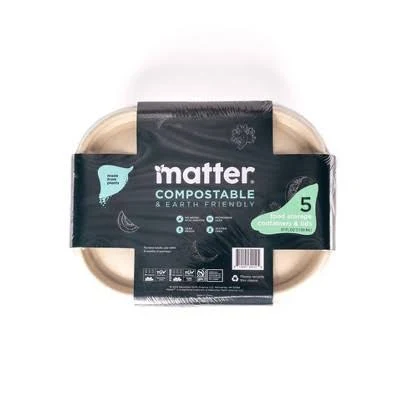
- Plant-based fiber pulp (compostable)
- A third party reports verifying it as PFAS-free
- Microbe/mold growth if stored damp
2 hazards checked on this product, all on its full breakdown.
Eco-Products
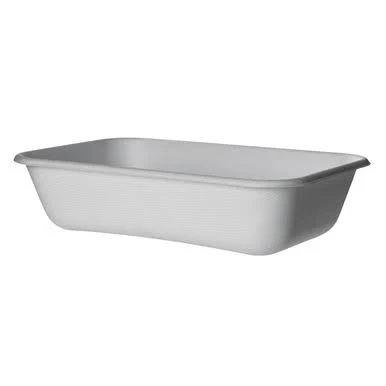
Eco Products WorldView Compostable Take-Out Containers EP-SCRC32
- Plant-based fiber (compostable sugarcane bagasse)
- A third party reports verifying it as PFAS-free
- Bleaching agents and processing residues
3 hazards checked on this product, all on its full breakdown.
Eco-Products
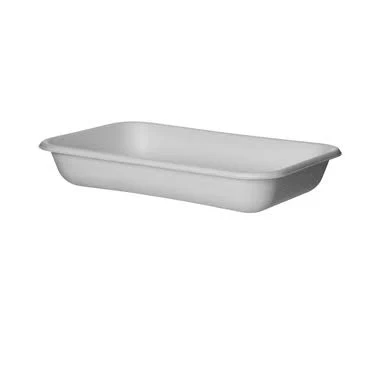
WorldView Sugarcane Take-Out Containers
- Sugarcane bagasse (post-consumer fiber)
- A third party reports verifying it as PFAS-free
- Cellulose fiber degradation and food contact
2 hazards checked on this product, all on its full breakdown.
More food packaging grades
How we score, every product runs through the same public 0-100 rubric based on materials, coatings, brand disclosure, lab findings, and recalls. See the full methodology → Spotted a mistake? Report an error.