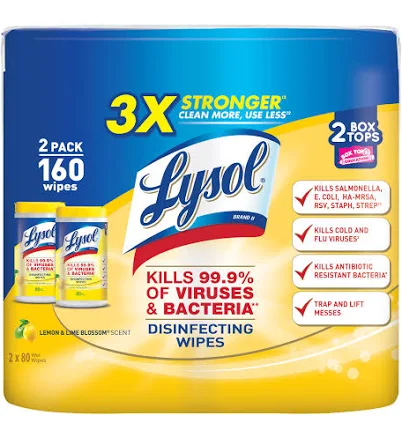
Disinfecting Wipes Lysol
Silent on PFAS; formula opacity warrants caution despite no obvious fluorinated triggers.
Lysol Disinfecting Wipes are marketed solely on antimicrobial efficacy; the brand does not disclose PFAS status. Without public ingredient transparency or third-party testing, consumer assurance is limited.
We flunk more products than we pass. This one earned its grade. How we grade
Material
nonwoven fabric blend (polypropylene/polyester base), aqueous disinfectant formulation
Lab data
No public lab test
You may also be interested in
Top-graded picks in the categories readers replace first, every one scored on the same rubric.

- polypropylene filter housing, carbon/sediment cartridge
- We found no PFAS statement from the brand
- Bacterial growth in spent cartridges
3 hazards checked on this product, all on its full breakdown.

Aquasure
Premier Series 75 GPD Under Sink Reverse Osmosis Water Filtration System
- RO membrane, carbon filters, stainless steel housing
- We found no PFAS statement from the brand
- Bacterial and microbial growth in housing and filters
4 hazards checked on this product, all on its full breakdown.

Avocado
Vegan Mattress
- organic cotton, natural latex, coconut coir, recycled steel coils
- The brand calls it PFAS-free, which we have not verified
- Heavy metals
2 hazards checked on this product, all on its full breakdown.
What Disinfecting Wipes Lysol is made of, ingredients and materials
Lysol Disinfecting Wipes use a nonwoven substrate of polypropylene and polyester fibers saturated with an aqueous disinfectant blend. The active ingredient is typically alkyl dimethyl benzyl ammonium saccharinate (ADBAC) or similar quaternary ammonium compounds (quats). These materials are chosen for efficacy and durability, but the nonwoven carrier and full formula composition are not fully disclosed on consumer packaging, making independent safety verification difficult.
What’s concerning
Category baseline
The starting point for this type of product, before anything specific to this product is counted.
No PFAS disclosure
No public statement from the brand about PFAS in this product.
Quaternary ammonium compound (quat) inhalation and skin sensitization
ADBAC and similar quats are respiratory irritants and can cause occupational contact dermatitis with frequent use. No major acute toxicity incidents recorded in consumer use, but prolonged or poorly ventilated application poses risk to sensitive individuals and healthcare workers.
Incomplete formula disclosure
Lysol does not list all ingredients on the package label, citing trade secret formulations. This prevents consumers and safety analysts from identifying potential sensitizers, preservatives, or undisclosed additives that may be present in trace amounts.
Microplastic shedding from nonwoven substrate
Polypropylene and polyester nonwovens can fragment during use, especially with aggressive wiping. While individual wipe use does not accumulate significantly, repeated disposal and environmental persistence of microfibers remain a known concern for the nonwoven wipe category overall.
What’s reassuring
Base material not linked to PFAS
The main material recorded for this product is not one associated with PFAS.
Heavy metals
No public recalls or test data indicate lead, cadmium, or arsenic contamination in Lysol wipes. The brand's manufacturing standards are audited for major contaminants, though independent third-party verification is not routinely published.
Source, FDA ↗Formaldehyde / VOCs
Lysol disinfecting wipes do not list formaldehyde or known formaldehyde releasers (such as DMDM hydantoin) in disclosed ingredients. Quaternary ammonium and alcohol-based systems typically do not require this class of preservative.
Source, ATSDR ↗How is this PFAS grade calculated?
The brand's record and disclosure
Reckitt Benckiser, Lysol's parent company, does not publicly disclose whether PFAS are intentionally added to disinfecting wipes, though fluorinated compounds are absent from listed active ingredients. The brand has faced scrutiny over misleading advertising claims (notably EPA warning letters in 2020) but no major safety recalls tied to chemical toxicity in the wipes themselves. Transparency on full formulation remains limited compared to some competitors.
How it compares in its category
Lysol wipes are among the most widely used disinfecting wipes in North America. They occupy the mainstream middle ground, more heavily marketed and chemically complex than simple vinegar or alcohol wipes, but less specialized than probiotic or enzyme-based alternatives. Most conventional disinfecting wipes carry similar opacity around complete formula disclosure, making Lysol representative rather than exceptional in safety profile.
If you buy it
Use wipes in well-ventilated spaces and avoid prolonged skin contact or inhalation; quaternary ammonium compounds can irritate sensitive individuals with repeated exposure. Store in a cool, dry place to prevent drying or chemical degradation. Do not use on surfaces that will contact food or infants' mouths without rinsing afterward. Replace the container if wipes dry out, as dried saturant can concentrate irritants.
What is not known about PFAS in this product?
- Basis
- Model estimate, 45% confidence, not a lab result
- Lab test
- None on record for this exact product
- Brand statement
- Lysol has made a specific claim
Formulations change between production runs, so check the current label. How we grade.
More cleaning wipes grades
How we score, every product runs through the same public 0-100 rubric based on materials, coatings, brand disclosure, lab findings, and recalls. See the full methodology → Spotted a mistake? Report an error.