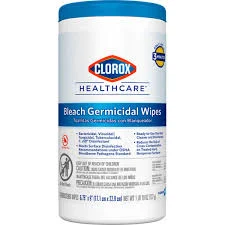
Clorox Healthcare Germicidal Bleach Wipes
Lower concern for PFAS; Clorox provides no transparency on wipe composition or chemical treatments.
Clorox Healthcare Germicidal Bleach Wipes are disposable bleach-saturated wipes with no known Teflon-type coating or Teflon-family coating. Clorox does not disclose whether water-resistant treatments are applied.
We flunk more products than we pass. This one earned its grade. How we grade
Material
nonwoven wipe substrate (likely polypropylene/cellulose blend) with bleach solution
Lab data
No public lab test
You may also be interested in
Top-graded picks in the categories readers replace first, every one scored on the same rubric.

- polypropylene filter housing, carbon/sediment cartridge
- We found no PFAS statement from the brand
- Bacterial growth in spent cartridges
3 hazards checked on this product, all on its full breakdown.

Aquasure
Premier Series 75 GPD Under Sink Reverse Osmosis Water Filtration System
- RO membrane, carbon filters, stainless steel housing
- We found no PFAS statement from the brand
- Bacterial and microbial growth in housing and filters
4 hazards checked on this product, all on its full breakdown.

Avocado
Vegan Mattress
- organic cotton, natural latex, coconut coir, recycled steel coils
- The brand calls it PFAS-free, which we have not verified
- Heavy metals
2 hazards checked on this product, all on its full breakdown.
What Clorox Healthcare Germicidal Bleach Wipes is made of, ingredients and materials
Clorox Healthcare Germicidal Bleach Wipes consist of a nonwoven substrate (likely polypropylene and/or cellulose fibers) saturated with sodium hypochlorite solution (typically 0.5 to 1% available chlorine). The wipe material itself is designed to be disposable and dissolve or break down during use. Bleach is the active ingredient and the primary chemical of concern; the substrate is secondary and inert once the solution is applied.
What’s concerning
Category baseline
The starting point for this type of product, before anything specific to this product is counted.
No PFAS disclosure
No public statement from the brand about PFAS in this product.
Sodium hypochlorite (bleach) skin and mucous membrane irritation
Direct contact or inhalation of bleach vapor can cause irritation, chemical burns, or respiratory effects. This is the intended active ingredient and is inherent to all bleach products; Clorox's formulation is standard for the category and carries the same risk profile as competitors.
Nonwoven substrate degradation and microfiber shedding
Extended storage or exposure to moisture may cause the polypropylene and cellulose fibers to degrade, potentially releasing small fibers during use. No specific data on Clorox wipe shed rates is published; this is a low-probability concern for a product designed for single-use disposal.
Chemical residue on surfaces after disinfection
Bleach-based wipes may leave residual sodium hypochlorite on surfaces if not rinsed afterward, which can cause irritation or interact with other cleaning agents. Clorox label instructions typically recommend allowing surfaces to air-dry; residue is a known outcome of the product's chemistry, not a manufacturing defect.
Chlorine gas release if mixed with ammonia or other cleaners
Bleach reacts with ammonia and acid-based cleaners to produce toxic chlorine gas. This is not a manufacturing hazard but a user error risk clearly labeled on Clorox packaging; always follow label warnings against mixing.
What’s reassuring
Base material not linked to PFAS
The main material recorded for this product is not one associated with PFAS.
Allergic contact dermatitis from fragrance or dyes in wipe substrate
Clorox Healthcare Germicidal Bleach Wipes are unscented and minimal-dye formulations designed for healthcare use; no established allergen concerns in the substrate have been reported. Risk is lower than for consumer-grade wipes that may include dyes or fragrances.
How is this PFAS grade calculated?
The brand's record and disclosure
Clorox publishes Safety Data Sheets (SDS) for this product and complies with EPA and FDA labeling requirements for disinfectants. The company does not publicly disclose detailed wipe substrate composition or chemical treatments applied to fibers. No major safety recalls or regulatory actions specific to these wipes are on record. Clorox maintains certification through healthcare and sanitation channels but provides minimal transparency on PFAS use in manufacturing or water-resistant coatings.
How it compares in its category
Bleach-based wipes are a standard category for hospital and healthcare disinfection; Clorox is a market leader. Alternatives include quaternary ammonium (quat) wipes, alcohol-based wipes, and hydrogen peroxide wipes, each with different efficacy and residue profiles. Bleach wipes carry a known irritation and corrosion risk that is inherent to the active ingredient, not unique to Clorox's formulation. Non-bleach alternatives may have lower chemical irritation but less broad-spectrum antimicrobial activity.
If you buy it
Use only as directed on the label; wear gloves to prevent skin contact with bleach solution. Do not inhale fumes and ensure adequate ventilation, especially in enclosed spaces. Dispose of wipes in regular trash after use; do not flush. Store in a cool, dry place away from children and pets, and replace container if wipes dry out or if the solution color changes.
What is not known about PFAS in this product?
- Basis
- Model estimate, 45% confidence, not a lab result
- Lab test
- None on record for this exact product
- Brand statement
- Clorox has made a specific claim
Formulations change between production runs, so check the current label. How we grade.
More cleaning wipes grades
How we score, every product runs through the same public 0-100 rubric based on materials, coatings, brand disclosure, lab findings, and recalls. See the full methodology → Spotted a mistake? Report an error.