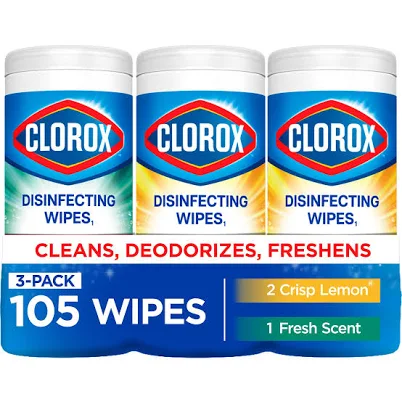
Clorox Disinfecting Cleaning Wipes Variety Pack, Bleach Free, Fresh Scent and Crisp Lemon, 35 Count Each, Pack of 3
Low concern, though Clorox offers no transparency on PFAS.
These bleach-free nonwoven wipes are designed for quick disposal and don't need water-repellent or grease-resistant coatings. Clorox hasn't publicly addressed PFAS in this product.
We flunk more products than we pass. This one earned its grade. How we grade
Material
nonwoven fabric wipes (polyester/polypropylene blend)
Lab data
No public lab test
You may also be interested in
Top-graded picks in the categories readers replace first, every one scored on the same rubric.

- polypropylene filter housing, carbon/sediment cartridge
- We found no PFAS statement from the brand
- Bacterial growth in spent cartridges
3 hazards checked on this product, all on its full breakdown.

Aquasure
Premier Series 75 GPD Under Sink Reverse Osmosis Water Filtration System
- RO membrane, carbon filters, stainless steel housing
- We found no PFAS statement from the brand
- Bacterial and microbial growth in housing and filters
4 hazards checked on this product, all on its full breakdown.

Avocado
Vegan Mattress
- organic cotton, natural latex, coconut coir, recycled steel coils
- The brand calls it PFAS-free, which we have not verified
- Heavy metals
2 hazards checked on this product, all on its full breakdown.
What Clorox Disinfecting Count Each, Pack is made of, ingredients and materials
These wipes are a nonwoven fabric blend of polyester and polypropylene saturated with a liquid cleaning formula. The nonwoven structure is designed to trap soil and liquids without falling apart during use. Bleach-free formulations eliminate chlorine-based oxidant hazards but rely on surfactants and other actives (often quaternary ammonium compounds) to disinfect. No data suggests the fabric itself introduces chemical leaching when used as directed on hard surfaces.
What’s concerning
Category baseline
The starting point for this type of product, before anything specific to this product is counted.
No PFAS disclosure
No public statement from the brand about PFAS in this product.
Skin and respiratory irritation from cleaning actives (quaternary ammonium compounds and f
These wipes contain quaternary ammonium disinfectants and fragrance (Fresh Scent, Crisp Lemon variants). Direct skin contact during use may cause mild irritation in sensitive individuals; inhalation of aerosolized droplets during vigorous wiping is not typical but possible. Clorox does not highlight fragrance allergen data on the label.
Microplastic shedding from nonwoven fabric substrate during use
Polyester and polypropylene nonwoven fibers can shed small particles during friction. When wipes are used on hard surfaces or compressed, fibers may detach. No published study isolates shedding rates for this specific product, but the material class and saturation method present low to moderate risk of microfiber release into environment.
Antimicrobial residue on food-contact surfaces if used improperly
If wipes are used on cutting boards, utensils, or table surfaces where food is prepared, quaternary ammonium residue may remain unless rinsed with water afterward. The product label directs use on hard surfaces but does not explicitly warn against food-contact areas without rinsing. Risk is contingent on user practice, not inherent product hazard.
Container seal failure and formula evaporation in storage
Pre-moistened wipe packs rely on a resealable or flip-top closure to prevent drying. Clorox packs are not marketed as airtight or hermetic. Repeated opening or improper closure can allow the saturating liquid to evaporate over weeks, reducing efficacy and potentially allowing bacterial growth in residual moisture.
What’s reassuring
Base material not linked to PFAS
The main material recorded for this product is not one associated with PFAS.
Lead
The polyester and polypropylene nonwoven substrate does not include ceramic, enamel, or resin coatings that would introduce heavy metals or formaldehyde resins. No recalls or hazard reports link these materials to toxic metal or aldehyde leaching in cleaning wipe products.
Source, ATSDR ↗How is this PFAS grade calculated?
The brand's record and disclosure
Clorox is a major household disinfectant manufacturer with a long market presence; the company has faced scrutiny over product formulation transparency but has not issued recalls tied to these wipes. Clorox does not publicly disclose PFAS testing or presence for this product line, despite low empirical concern for nonwoven wipes in general. The bleach-free label reflects market demand for alternatives but does not denote third-party certification.
How it compares in its category
Bleach-free disinfecting wipes occupy the mainstream consumer segment. Clorox's offering is typical in material (nonwoven polyester/PP blend) and chemical profile (surfactants and antimicrobials). Comparable brands (e.g., Lysol, Method) use similar nonwoven substrates. Pre-moistened wipes inherently have higher water content than dry cloths, which reduces dust and fabric shedding but increases packaging waste.
If you buy it
Use on hard, non-porous surfaces such as countertops, doorknobs, and phones as labeled. Do not use on porous materials (wood, fabric) without testing first, as saturation can cause staining or damage. Store the pack sealed in a cool, dry place to prevent wipe drying and formula separation. Replace the pack if wipes become dry or develop odor indicating microbial growth in the opened container.
What is not known about PFAS in this product?
- Basis
- Model estimate, 72% confidence, not a lab result
- Lab test
- None on record for this exact product
- Brand statement
- Clorox has made a specific claim
Formulations change between production runs, so check the current label. How we grade.
More cleaning wipes grades
How we score, every product runs through the same public 0-100 rubric based on materials, coatings, brand disclosure, lab findings, and recalls. See the full methodology → Spotted a mistake? Report an error.