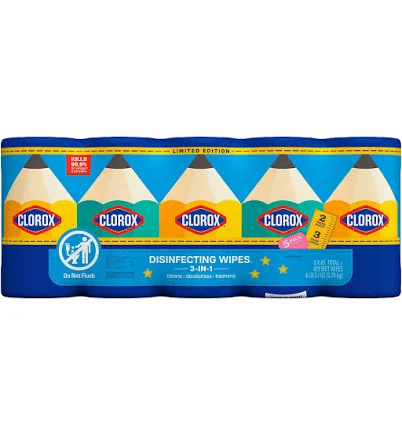
Clorox Disinfecting Cleaning Wipes Variety Pack
Skip or contact Clorox; no public PFAS commitment for a product category where PFAS-based coatings are common.
Clorox has not disclosed PFAS ingredients or manufacturing details for these wipes. Disinfecting wipes are sometimes treated with water-repellent or antimicrobial coatings that may contain PFAS.
We flunk more products than we pass. This one earned its grade. How we grade
Material
nonwoven fabric wipes with surfactants and disinfectants
Lab data
No public lab test
You may also be interested in
Top-graded picks in the categories readers replace first, every one scored on the same rubric.

- polypropylene filter housing, carbon/sediment cartridge
- We found no PFAS statement from the brand
- Bacterial growth in spent cartridges
3 hazards checked on this product, all on its full breakdown.

Aquasure
Premier Series 75 GPD Under Sink Reverse Osmosis Water Filtration System
- RO membrane, carbon filters, stainless steel housing
- We found no PFAS statement from the brand
- Bacterial and microbial growth in housing and filters
4 hazards checked on this product, all on its full breakdown.

Avocado
Vegan Mattress
- organic cotton, natural latex, coconut coir, recycled steel coils
- The brand calls it PFAS-free, which we have not verified
- Heavy metals
2 hazards checked on this product, all on its full breakdown.
What Clorox Disinfecting Cleaning Variety Pack is made of, ingredients and materials
Clorox Disinfecting Wipes are nonwoven fabric (typically polypropylene or cellulose blend) saturated with quaternary ammonium compounds (quats) as the primary disinfectant, plus surfactants and water. The variety pack typically includes scents achieved through fragrance compounds. The concern is not the quat chemistry itself, which is well-tolerated, but whether the nonwoven substrate or coating contains PFAS-based antimicrobial or water-repellent treatments common in wipe manufacturing. Clorox has not publicly disclosed this.
What’s concerning
Category baseline
The starting point for this type of product, before anything specific to this product is counted.
No PFAS disclosure
No public statement from the brand about PFAS in this product.
Quaternary ammonium compound (quat) sensitization and irritation
Clorox wipes contain quats at concentrations (typically 0.1-0.5%) known to cause contact dermatitis and respiratory irritation in sensitive individuals or with repeated skin contact. Not an acute toxin, but chronic exposure or individual sensitivity is documented in occupational health literature.
Microfiber shedding and environmental persistence
Nonwoven polypropylene wipes shed microfibers during use and disposal. These particles accumulate in water systems and are not biodegradable. While not a direct consumer toxicity hazard, repeated product use contributes to microplastic pollution.
Fragrance allergens (in scented varieties)
The variety pack includes scented versions. Fragrance compounds are not itemized on labels and may contain allergens such as limonene or linalool. Individuals with fragrance sensitivity or asthma may experience headache or airway irritation.
PFAS
Industry-standard antimicrobial and water-repellent finishes on nonwoven wipes often use PFAS compounds. Clorox has not disclosed whether this product uses such treatments. If present, wipe contact with food or skin could result in low-level PFAS transfer.
Source, ATSDR ↗Residual disinfectant on surfaces if not fully dried
Excess quat-based disinfectant left on food contact surfaces or skin can cause irritation if not rinsed. The product label recommends air drying, but incomplete evaporation in humid conditions may leave active residue.
What’s reassuring
Base material not linked to PFAS
The main material recorded for this product is not one associated with PFAS.
How is this PFAS grade calculated?
The brand's record and disclosure
Clorox maintains EPA-approved disinfectant formulations and publishes safety data sheets, showing ingredient transparency for the liquid phase. However, the company has no public commitment to phasing PFAS from product lines and has not addressed whether this wipe substrate or manufacturing uses PFAS-based coatings. For a category where fluorinated repellents are industry-standard cost drivers, silence is a material gap. No recalls tied to chemical leaching in wipes are on record.
How it compares in its category
Most disposable disinfecting wipes (Lysol, generic store brands) use similar quat-based chemistry and face identical PFAS disclosure gaps. Plant-based alternatives (e.g., seventh generation, some store brands) may use different antimicrobials but rarely disclose substrate composition. Clorox's scale and EPA registration are industry standard; the lack of differentiation on PFAS is typical but not a pass. Homemade cloth wipes with dilute bleach eliminate the nonwoven microfiber and PFAS unknowns entirely.
If you buy it
Use wipes for intended disinfection only; do not apply to skin or ingest residue. Dispose in trash, not sewers (nonwoven can clog pipes). Store sealed in cool, dry conditions to prevent evaporation and potency loss. Replace when fabric loses cohesion or disinfectant dries out. If used on food-contact surfaces, rinse thoroughly with clean water before use. Consider contacting Clorox directly to request PFAS status before repeat purchase.
What is not known about PFAS in this product?
- Basis
- Model estimate, 45% confidence, not a lab result
- Lab test
- None on record for this exact product
- Brand statement
- Clorox has made a specific claim
Formulations change between production runs, so check the current label. How we grade.
More cleaning wipes grades
How we score, every product runs through the same public 0-100 rubric based on materials, coatings, brand disclosure, lab findings, and recalls. See the full methodology → Spotted a mistake? Report an error.