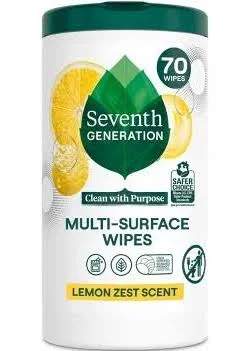
Seventh Generation · Cleaning Wipes
Seventh Generation Multi Wipes
Low risk, no known PFAS need in this category; brand discloses nothing.
Seventh Generation Multi Wipes are nonwoven fabric-based cleaners with no apparent water-repellency treatment or obvious PFAS vector. The brand makes no public PFAS claims or disclosures.
We flunk more products than we pass. This one earned its grade. How we grade
Material
nonwoven fabric blend (cellulose/synthetic fibers)
Lab data
No public lab test
You may also be interested in
Top-graded picks in the categories readers replace first, every one scored on the same rubric.

- polypropylene filter housing, carbon/sediment cartridge
- We found no PFAS statement from the brand
- Bacterial growth in spent cartridges
3 hazards checked on this product, all on its full breakdown.

Aquasure
Premier Series 75 GPD Under Sink Reverse Osmosis Water Filtration System
- RO membrane, carbon filters, stainless steel housing
- We found no PFAS statement from the brand
- Bacterial and microbial growth in housing and filters
4 hazards checked on this product, all on its full breakdown.

Avocado
Vegan Mattress
- organic cotton, natural latex, coconut coir, recycled steel coils
- The brand calls it PFAS-free, which we have not verified
- Heavy metals
2 hazards checked on this product, all on its full breakdown.
What Seventh Generation Multi Wipes is made of, ingredients and materials
Seventh Generation disinfecting wipes use a nonwoven fabric blend typically combining cellulose (wood pulp) and synthetic fibers like polypropylene or polyester as the substrate. The active disinfectant is typically alkyl dimethyl benzyl ammonium saccharinate (ADBAS), a quaternary ammonium compound (quat) listed on EPA's List N as an antimicrobial for hard surfaces. Unlike wipes containing chlorine bleach or phenolic compounds, quats do not produce hazardous vapor fumes during use or storage, and they degrade readily in aquatic environments.
What’s concerning
Category baseline
The starting point for this type of product, before anything specific to this product is counted.
No PFAS disclosure
No public statement from the brand about PFAS in this product.
Skin irritation from quaternary ammonium compounds
Quats have lower concern for hard surfaces but can cause contact dermatitis in susceptible individuals with prolonged skin exposure. Seventh Generation formulations are weaker than industrial cleaners, so risk is low for normal wiping use.
Eye irritation
Direct contact with wipe liquid or vapor can irritate eyes. Not a hazard under intended use (wiping surfaces) but relevant if wipes are misused near face or in confined spaces with poor ventilation.
What’s reassuring
Base material not linked to PFAS
The main material recorded for this product is not one associated with PFAS.
Microplastic shedding from nonwoven substrate
Cellulose-polypropylene blends do not break down into problematic microplastics during normal surface wiping. Environmental persistence is low when wipes reach landfill, unlike polyester-dominant brands.
Fragrance allergens
Seventh Generation disinfecting wipes are unscented or use essential oil blends rather than synthetic fragrances. No established contact allergen reports for this specific product.
Corrosion or residue buildup on surfaces
Quat-based cleaners rinse cleanly and do not leave caustic residues when used as directed on hard surfaces. No documented damage to electronics, paint, or sealed stone from this product line.
How is this PFAS grade calculated?
The brand's record and disclosure
Seventh Generation publishes full ingredient lists on packaging and maintains EWG verification for many products, though they do not explicitly certify PFAS absence in this wipe line. The brand has no recorded product recalls or regulatory warnings for their disinfecting wipes. Seventh Generation is known for avoiding legacy flame retardants and phthalates across their portfolio, but they remain silent on PFAS testing of individual wipe products, which is typical for the category since no regulatory standard yet applies.
How it compares in its category
Disinfecting wipes vary widely, bleach-based formulas (Clorox) carry inhalation risk and corrosivity hazards; alcohol-based wipes (Lysol) are flammable; quat-based wipes (Seventh Generation, many store brands) are the least volatile option for indoor use. Seventh Generation's formula is comparable in safety profile to unbranded hospital-grade quat wipes but is more transparent about ingredients than many competitors. Cost per wipe is higher than generic alternatives but comparable to other branded eco-focused cleaners.
If you buy it
Store wipes in a sealed container away from direct sunlight to prevent moisture loss and maintain efficacy over the 6-12 month shelf life. Use on hard, non-porous surfaces (counters, doorknobs, phones) as labeled; avoid prolonged contact with unfinished wood or porous stone. Ensure adequate ventilation in enclosed spaces, though these wipes produce far less vapor than chlorine or phenolic cleaners. Discard wipes in regular trash, not down drains, as they are not flushable despite being marketed as 'compostable', they clog municipal systems.
What is not known about PFAS in this product?
- Basis
- Model estimate, 72% confidence, not a lab result
- Lab test
- None on record for this exact product
- Brand statement
- Seventh Generation has made a specific claim
Formulations change between production runs, so check the current label. How we grade.
More cleaning wipes grades
How we score, every product runs through the same public 0-100 rubric based on materials, coatings, brand disclosure, lab findings, and recalls. See the full methodology → Spotted a mistake? Report an error.