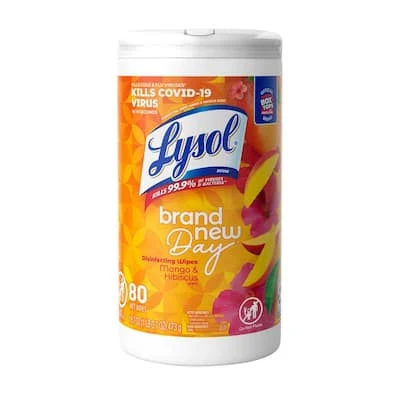
Lysol Brand New Day Disinfecting Wipes
Disinfectant wipes have no known reason to contain PFAS; Lysol does not disclose coating details.
Lysol Brand New Day wipes are fabric and aqueous liquid without inherent PFAS use. However, the brand provides no transparency about surface treatments or coatings that might include water-resistant additives.
We flunk more products than we pass. This one earned its grade. How we grade
Material
nonwoven fabric (cellulose/polypropylene blend), aqueous disinfectant solution
Lab data
No public lab test
You may also be interested in
Top-graded picks in the categories readers replace first, every one scored on the same rubric.

- polypropylene filter housing, carbon/sediment cartridge
- We found no PFAS statement from the brand
- Bacterial growth in spent cartridges
3 hazards checked on this product, all on its full breakdown.

Aquasure
Premier Series 75 GPD Under Sink Reverse Osmosis Water Filtration System
- RO membrane, carbon filters, stainless steel housing
- We found no PFAS statement from the brand
- Bacterial and microbial growth in housing and filters
4 hazards checked on this product, all on its full breakdown.

Avocado
Vegan Mattress
- organic cotton, natural latex, coconut coir, recycled steel coils
- The brand calls it PFAS-free, which we have not verified
- Heavy metals
2 hazards checked on this product, all on its full breakdown.
What Lysol Brand New Day Disinfecting Wipes is made of, ingredients and materials
Lysol New Day wipes consist of a nonwoven substrate (cellulose and polypropylene blend) saturated with an aqueous disinfectant solution containing quaternary ammonium compounds (quats) as the active ingredient, plus water, surfactants, and preservatives. The nonwoven material itself is not inherently hazardous under normal use; however, the chemical composition of the saturating liquid and any surface coatings applied to the substrate are not fully disclosed by Lysol. The lack of transparency about potential water-resistance coatings is the main safety gap in this product category.
What’s concerning
Category baseline
The starting point for this type of product, before anything specific to this product is counted.
No PFAS disclosure
No public statement from the brand about PFAS in this product.
Quaternary ammonium compound (quat) sensitization
Quats are the active disinfectant in Lysol wipes and are known respiratory and skin sensitizers in sensitive populations, particularly with repeated exposure in poorly ventilated spaces. No specific allergic reaction recalls for New Day wipes exist in public records, but susceptible users (asthma, dermatitis history) should use gloves and ensure ventilation.
Preservative or fragrance allergens
Disinfectant wipes typically contain preservatives and fragrances to maintain shelf stability and mask chemical odors. Lysol does not fully itemize these additives; common culprits include methylisothiazolinone (MIT), which is a known skin and respiratory allergen. Users with fragrance sensitivity or existing dermatitis should test on a small inconspicuous area first.
Aqueous liquid leachate into skin or eyes on contact
The saturating solution can cause irritation if the wet wipe contacts eyes or abraded skin directly. Lysol labeling includes standard warnings about eye contact and use precautions, and such exposure is manageable with rinsing. This is a standard category risk, not unique to New Day, but bears mentioning for households with young children.
PFAS
Lysol does not disclose whether the nonwoven substrate receives a water-resistance or durability coating, which are common in the category. If such a coating exists and contains PFAS or similar fluorinated compounds, potential leaching into skin or indoor air during storage is unquantified. The PFAS concern is graded separately; this reflects uncertainty about non-PFAS coating materials as well.
Source, ATSDR ↗What’s reassuring
Base material not linked to PFAS
The main material recorded for this product is not one associated with PFAS.
Uncoated or inadequately sealed nonwoven substrate shedding microfibers
While microfiber shedding from wipes during use is theoretically possible, no public data demonstrates significant microfiber release from Lysol wipes or this product class under normal use. The nonwoven substrate is dense and wet, which tends to minimize fiber dispersal compared to dry materials.
How is this PFAS grade calculated?
The brand's record and disclosure
Lysol (Reckitt Benckiser) has no major safety recalls specific to New Day wipes in public records. The brand does not voluntarily disclose the complete ingredient list or coating materials beyond the active disinfectant. Lysol has faced some scrutiny regarding ingredient transparency in other product lines but maintains EPA registration for its disinfectant claims. The company's silence on potential PFAS or similar water-resistant coatings is a notable gap, not a confirmed problem.
How it compares in its category
Disinfecting wipes are a mature product category with Lysol as the market leader. Competitor products (Clorox, Seventh Generation) face the same disclosure limitations regarding substrate coatings. Some eco-focused alternatives use fully disclosed plant-based disinfectants and uncoated nonwovens, though their antimicrobial efficacy claims may be narrower. Overall, Lysol sits in the mainstream segment with standard ingredient opacity; it is neither better nor worse than comparable national brands on disclosed information.
If you buy it
Use wipes as directed, pull one at a time to avoid waste, apply until surface is wet, and allow 10 seconds of contact time for disinfection to work. Store the container sealed to prevent premature drying and evaporation of the active solution. Do not use on porous or untreated wood surfaces, as the aqueous solution can cause swelling or damage. For regular household use, one canister typically lasts 1-2 weeks depending on frequency; replace when wipes become noticeably dry or solution consistency changes.
What is not known about PFAS in this product?
- Basis
- Model estimate, 45% confidence, not a lab result
- Lab test
- None on record for this exact product
- Brand statement
- Lysol has made a specific claim
Formulations change between production runs, so check the current label. How we grade.
More cleaning wipes grades
How we score, every product runs through the same public 0-100 rubric based on materials, coatings, brand disclosure, lab findings, and recalls. See the full methodology → Spotted a mistake? Report an error.