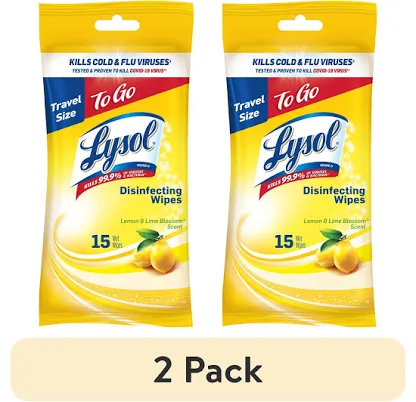
Lysol Disinfecting Wipes Lemon Lime Blossom 15 Count
Skip until brand discloses PFAS content or testing, wipes often use fluorinated biocides.
Lysol Disinfecting Wipes are nonwoven fabric wipes designed for rapid antimicrobial action. The brand makes no public disclosure of PFAS presence, absence, or testing.
We flunk more products than we pass. This one earned its grade. How we grade
Material
nonwoven fabric wipes (likely polypropylene/polyester blend)
Lab data
No public lab test
You may also be interested in
Top-graded picks in the categories readers replace first, every one scored on the same rubric.

- polypropylene filter housing, carbon/sediment cartridge
- We found no PFAS statement from the brand
- Bacterial growth in spent cartridges
3 hazards checked on this product, all on its full breakdown.

Aquasure
Premier Series 75 GPD Under Sink Reverse Osmosis Water Filtration System
- RO membrane, carbon filters, stainless steel housing
- We found no PFAS statement from the brand
- Bacterial and microbial growth in housing and filters
4 hazards checked on this product, all on its full breakdown.

Avocado
Vegan Mattress
- organic cotton, natural latex, coconut coir, recycled steel coils
- The brand calls it PFAS-free, which we have not verified
- Heavy metals
2 hazards checked on this product, all on its full breakdown.
What Lysol Disinfecting Wipes Lemon Lime Count is made of, ingredients and materials
Lysol Disinfecting Wipes are nonwoven fabric (polypropylene and/or polyester blend) saturated with a quaternary ammonium disinfectant solution. The wipes contain water, isopropyl alcohol, and preservatives to prevent bacterial growth in the sealed package. The nonwoven substrate itself is not inherently hazardous, but the chemical formulation applied to it, and whether that formulation includes PFAS-based surfactants or water-repellent coatings, remains undisclosed by the manufacturer.
What’s concerning
Category baseline
The starting point for this type of product, before anything specific to this product is counted.
No PFAS disclosure
No public statement from the brand about PFAS in this product.
PFAS
Disinfecting wipes commonly use fluorinated surfactants or water-repellent coatings to maintain saturation. Lysol has not disclosed PFAS testing; absence of disclosure does not mean absence of PFAS.
Source, ATSDR ↗Isopropyl alcohol inhalation risk
Lysol wipes contain isopropyl alcohol as the active antimicrobial. Prolonged use in poorly ventilated spaces or on large areas can cause respiratory irritation, headache, and dizziness; this is a known effect of the product category, not a defect.
Preservative allergens and irritants
Disinfecting wipes typically contain methylchloroisothiazolinone (MCI/MI) or similar preservatives to prevent microbial growth in the package. These are known contact irritants and allergens; individuals with sensitive skin may react to residues on treated surfaces.
Package closure integrity and bacterial regrowth
If the package seal degrades or is left open, preservatives may evaporate and bacteria can colonize the saturant solution, reducing disinfectant efficacy and creating a bacterial source on your surfaces.
What’s reassuring
Base material not linked to PFAS
The main material recorded for this product is not one associated with PFAS.
Nonwoven microfiber shedding
No specific reports of Lysol wipes shedding microfibers, but degraded or torn wipes could theoretically release fibers onto surfaces; this is not an established hazard for this product.
How is this PFAS grade calculated?
The brand's record and disclosure
Lysol (Reckitt Benckiser) has not published testing data or made public commitments regarding PFAS in disinfecting wipes despite growing industry scrutiny. The brand does not prominently disclose the full chemical composition of the saturant solution beyond active ingredients. No major recalls or safety violations specific to this product have been documented, but Lysol's silence on PFAS in wipes contrasts with competitors who have begun voluntary testing or reformulation.
How it compares in its category
Most disinfecting wipes carry similar PFAS uncertainty; Lysol is mid-market in terms of transparency. Brands like Seventh Generation and Ecos have disclosed testing for PFAS absence, while Clorox and Lysol have not. For spray disinfectants, alcohol-based alternatives reduce PFAS exposure but may have higher inhalation risk. If avoiding PFAS is a priority, wipes from manufacturers with public PFAS test reports may have lower concern for PFAS contamination.
If you buy it
Use wipes only on surfaces where disinfection is medically necessary; routine cleaning with soap and water presents lower concern for chemical exposure. Ensure good ventilation when using, especially on large surface areas, to minimize inhalation of isopropyl alcohol vapors. Do not allow prolonged skin contact; these are not hand wipes. Store in a cool, dry place and replace if the package dries out, as this signals loss of preservative efficacy and increased bacterial risk in the remaining wipes.
What is not known about PFAS in this product?
- Basis
- Model estimate, 45% confidence, not a lab result
- Lab test
- None on record for this exact product
- Brand statement
- Lysol has made a specific claim
Formulations change between production runs, so check the current label. How we grade.
More cleaning wipes grades
How we score, every product runs through the same public 0-100 rubric based on materials, coatings, brand disclosure, lab findings, and recalls. See the full methodology → Spotted a mistake? Report an error.