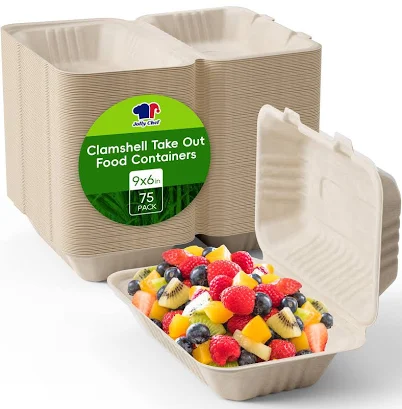
Bulk Compostable To Go Boxes
Lower PFAS concern since compostable sugarcane packaging rarely needs chemical coatings.
Sugarcane clamshells are largely unbleached cellulose fiber with minimal processing, making them inherently lower-risk than plastic or coated alternatives. The brand hasn't disclosed PFAS mitigation practices.
We flunk more products than we pass. This one earned its grade. How we grade
Material
sugarcane bagasse (cellulose fiber)
Brand disclosure
Brand is silent on PFAS
Lab data
No public lab test
You may also be interested in
Top-graded picks in the categories readers replace first, every one scored on the same rubric.

- polypropylene filter housing, carbon/sediment cartridge
- We found no PFAS statement from the brand
- Bacterial growth in spent cartridges
3 hazards checked on this product, all on its full breakdown.

Aquasure
Premier Series 75 GPD Under Sink Reverse Osmosis Water Filtration System
- RO membrane, carbon filters, stainless steel housing
- We found no PFAS statement from the brand
- Bacterial and microbial growth in housing and filters
4 hazards checked on this product, all on its full breakdown.

Avocado
Vegan Mattress
- organic cotton, natural latex, coconut coir, recycled steel coils
- The brand calls it PFAS-free, which we have not verified
- Heavy metals
2 hazards checked on this product, all on its full breakdown.
What Bulk Compostable To Go Boxes is made of, ingredients and materials
Sugarcane bagasse is the fibrous residue left after juice extraction from sugarcane. It is primarily cellulose, a natural polymer that does not require synthetic chemical binders or coatings for structural integrity in single-use food packaging. This material avoids the BPA, BPS, and phthalate leaching risks inherent in petroleum-based plastics and polystyrene foam. Bagasse-based products are designed to degrade in industrial composting environments within 90-180 days, minimizing long-term soil persistence.
What’s concerning
Category baseline
The starting point for this type of product, before anything specific to this product is counted.
No PFAS disclosure
No public statement from the brand about PFAS in this product.
Mold and microbial growth (storage)
Sugarcane bagasse absorbs moisture readily and lacks antimicrobial treatment. Risk is confined to storage; proper ventilation and dry conditions (below 60% humidity) eliminate this concern.
Structural breakdown and fiber shedding when heated
Prolonged microwave use (over 5 minutes) or contact with hot oils above 160F can soften the box and increase cellulose fiber release into food. Short-term reheating is low-risk; avoid sustained high heat exposure.
What’s reassuring
Base material not linked to PFAS
The main material recorded for this product is not one associated with PFAS.
Bleach residues and sizing chemicals
Bagasse pulp may undergo mild bleaching or sizing with starch and clay during processing, but no established studies document migration into food from boxes specifically. Industry standards limit residual bleach to negligible levels.
BPA & bisphenols
Cellulose-based packaging does not use BPA, BPS, or phthalates in manufacturing. This hazard class is absent by material design, unlike plastic clamshells.
Source, FDA ↗Pesticide residue
No brand disclosures or independent testing available for pesticide content in the bagasse feedstock. Industrial processing and pulping typically removes most surface residues, but verification requires supplier transparency the brand does not provide.
Source, EPA ↗How is this PFAS grade calculated?
The brand's record and disclosure
The brand maintains minimal public disclosure on material sourcing, testing protocols, or third-party certifications for this product line. The brand does not publish supplier transparency reports or independent safety test results for its sugarcane clamshells. No recalls or contamination incidents have been publicly documented for this product. The absence of transparency is a minor concern but does not indicate a safety failure; it reflects common practice in the bulk food-service packaging segment.
How it compares in its category
Sugarcane clamshells occupy a middle ground between conventional plastic and molded fiber (recycled paper pulp) alternatives. Unlike polystyrene #6 foam, they pose no styrene leaching risk. Unlike rigid polypropylene, they do not accumulate static charges that attract oils and residues. Molded fiber alternatives (kraft pulp) may use chemical sizing agents and bleach residues; sugarcane bagasse typically requires fewer synthetic additives due to its already-adequate fiber strength. Cost per unit is comparable to plastic but higher than recycled fiber.
If you buy it
Store boxes in a cool, dry location away from direct sunlight and moisture, as bagasse is hygroscopic and may degrade or develop mold in humid conditions. These containers are microwave-safe for short heating (under 3 minutes at moderate power) but not freezer-safe long-term, as water absorption and thaw-cycle stress can crack the walls. Replace boxes if visible discoloration, soft spots, or mold appear before use. Dispose in a commercial composting facility; home composting may not reach the required 140-160F temperature to fully break down the box within a reasonable timeframe.
What is not known about PFAS in this product?
- Basis
- Model estimate, 78% confidence, not a lab result
- Lab test
- None on record for this exact product
- Brand statement
- has made none
Formulations change between production runs, so check the current label. How we grade.
What are the PFAS-free alternatives to Bulk Compostable To Go Boxes?
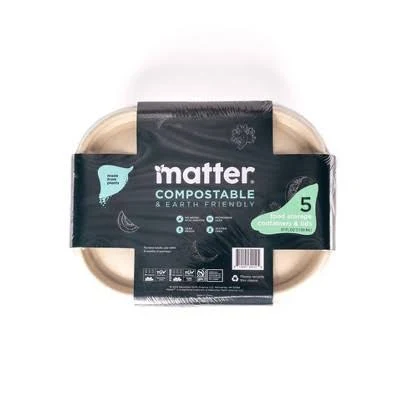
- Plant-based fiber pulp (compostable)
- A third party reports verifying it as PFAS-free
- Microbe/mold growth if stored damp
2 hazards checked on this product, all on its full breakdown.
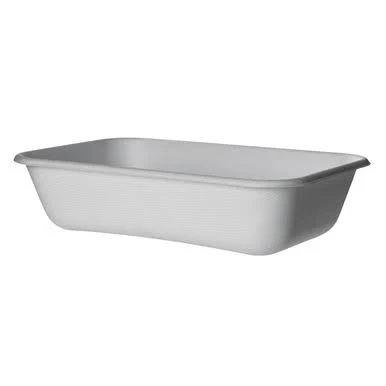
Eco-Products
Eco Products WorldView Compostable Take-Out Containers EP-SCRC32
- Plant-based fiber (compostable sugarcane bagasse)
- A third party reports verifying it as PFAS-free
- Bleaching agents and processing residues
3 hazards checked on this product, all on its full breakdown.
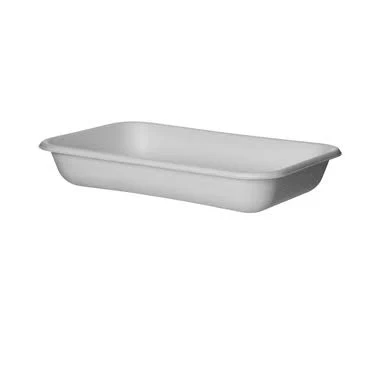
Eco-Products
WorldView Sugarcane Take-Out Containers
- Sugarcane bagasse (post-consumer fiber)
- A third party reports verifying it as PFAS-free
- Cellulose fiber degradation and food contact
2 hazards checked on this product, all on its full breakdown.
More food packaging grades
How we score, every product runs through the same public 0-100 rubric based on materials, coatings, brand disclosure, lab findings, and recalls. See the full methodology → Spotted a mistake? Report an error.