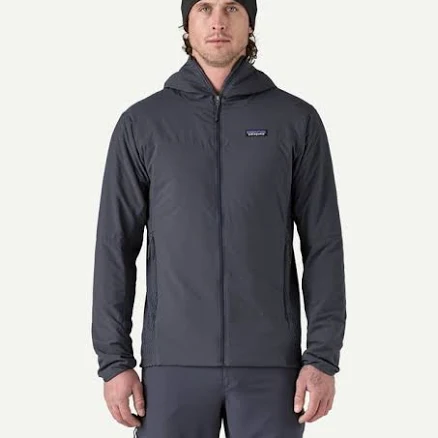
Patagonia Men's Nano-Air Light Hybrid Hoody
A water-repellent or grease-resistant treatment of unstated chemistry, with a brand PFAS statement we have not verified.
Patagonia says 100% of its new products from Spring 2025 are made without intentionally added PFAS. We record that as an unverified brand claim. Its record describes a water-repellent or grease-resistant treatment of unstated chemistry, which is still counted.
Brand says: “Patagonia says 100% of its new products from Spring 2025 are made without intentionally added PFAS.”
Still want this one anyway? Check the price on Amazon. We’d swap it.
Material
Polyester ripstop with water-repellent coating finish (nylon stretch side)
Brand disclosure
Brand claims PFAS-free
Lab data
No public lab test
You may also be interested in
Top-graded picks in the categories readers replace first, every one scored on the same rubric.

- polypropylene filter housing, carbon/sediment cartridge
- We found no PFAS statement from the brand
- Bacterial growth in spent cartridges
3 hazards checked on this product, all on its full breakdown.

Aquasure
Premier Series 75 GPD Under Sink Reverse Osmosis Water Filtration System
- RO membrane, carbon filters, stainless steel housing
- We found no PFAS statement from the brand
- Bacterial and microbial growth in housing and filters
4 hazards checked on this product, all on its full breakdown.

Avocado
Vegan Mattress
- organic cotton, natural latex, coconut coir, recycled steel coils
- The brand calls it PFAS-free, which we have not verified
- Heavy metals
2 hazards checked on this product, all on its full breakdown.
What Patagonia Men's Nano-Air Hybrid Hoody is made of, ingredients and materials
The Nano-Air Light Hybrid combines polyester ripstop (main shell) with nylon stretch panels and a water-repellent coating (water-repellent coating) finish. Polyester itself is chemically stable once manufactured and does not leach monomers into skin or sweat at normal wearing temperatures. The concern centers on the water-repellent coating applied to achieve water resistance, Patagonia has publicly committed to PFAS-free treatments but has not disclosed the specific chemistry of this jacket's finish, leaving the actual substance unknown.
What’s concerning
Category baseline
The starting point for this type of product, before anything specific to this product is counted.
Waterproof / stain-resistant treatment
Water-repellent coating treatments have historically used PFAS.
water-repellent coating chemistry (unidentified)
Patagonia claims PFAS-free treatment but has not publicly named the specific water-repellent coating used on this jacket. The coating's long-term durability, leaching potential, and breakdown products under laundering or UV exposure are therefore unverified.
What’s reassuring
Brand-stated PFAS-free
The brand states this product is PFAS-free. We have not verified the claim.
Microplastics
Polyester fabrics shed microfibers during washing, a known issue across the apparel industry. This jacket's ripstop weave and hybrid construction do not appear to involve special treatments claimed to reduce shedding, nor is there evidence of commercial anti-shed coating, so standard washing precautions apply.
Source, EPA ↗Synthetic dye chemistry (azo dyes)
No specific reports or recalls of azo dyes or heavy metal pigments in Patagonia polyester-nylon jackets. The brand's supply chain standards are generally considered strict, but dyestuff composition is not routinely disclosed for apparel.
Antimony in polyester fiber
Polyester is sometimes produced with antimony catalysts; regulatory limits exist in the EU and some U.S. jurisdictions. Patagonia has not published material safety data confirming antimony-free production for this jacket, but no recalls or warnings are on record for this product line.
Nylon stretch panel durability and degradation
Nylon is chemically stable in normal wear and laundering. The stretch side panel may contain elastane (spandex) for flex; elastane does not typically leach at skin temperature but can degrade faster than nylon under heat or UV, potentially shortening the garment's functional life without affecting acute safety.
How is this PFAS grade calculated?
The brand's record and disclosure
Patagonia is recognized among major outdoor brands for transparency about environmental toxins and has made a public commitment to eliminate PFAS from its product line by a stated deadline. However, the company's own communications acknowledge a transition period during which some existing products may still contain legacy or alternative water-repellent chemistries. For this specific Nano-Air model, Patagonia has not published detailed treatment composition, making independent verification impossible. The brand's overall governance on restricted substances is stronger than industry average, but this product's label does not clarify whether it uses a verified PFAS-free water-repellent coating or an interim formula.
How it compares in its category
Hybrid softshells with polyester-nylon blends are standard in active wear, and water-repellent coating finishing is nearly universal for water resistance in this segment. Many competitors (Arc'teryx, The North Face, Columbia) offer similar constructions with equally opaque treatment disclosure. Patagonia's stated PFAS-avoidance goal is more progressive than most brands' actual practice, but this particular jacket's lack of transparent specification places it in the middle of the market's typical opacity rather than ahead of it. Consumers seeking confirmed PFAS-free alternatives would need to prioritize brands with published chemical data sheets or third-party certifications for this layer type.
If you buy it
Machine wash in cool water with mild detergent and air-dry; heat damages both polyester and synthetic water-repellent coatings. The water-repellent coating finish will degrade with repeated washing (typically after 20-40 cycles); when water no longer beads on the fabric, re-treatment with Patagonia's or a third-party water-repellent coating spray may extend life, though this introduces another coating variable. Check care tags carefully and avoid fabric softeners, which block water-repellency. If PFAS exposure is a primary concern, contact Patagonia directly to request confirmation of the treatment chemistry before purchase, as no public specification exists for this model.
What is not known about PFAS in this product?
- Basis
- Model estimate, 45% confidence, not a lab result
- Lab test
- None on record for this exact product
- Brand statement
- Patagonia has made a specific claim
Formulations change between production runs, so check the current label. How we grade.
More softshell jackets grades
How we score, every product runs through the same public 0-100 rubric based on materials, coatings, brand disclosure, lab findings, and recalls. See the full methodology → Spotted a mistake? Report an error.