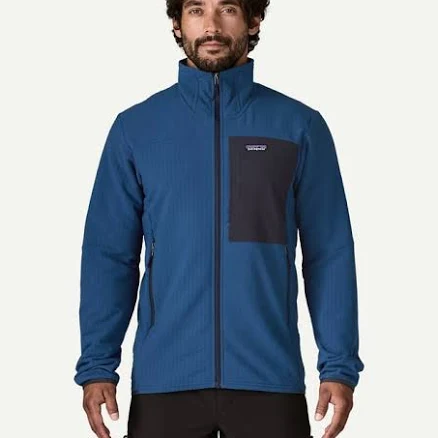
Patagonia Men's R2 TechFace Jacket
A water-repellent or grease-resistant treatment of unstated chemistry, with a brand PFAS statement we have not verified.
Patagonia says 100% of its new products from Spring 2025 are made without intentionally added PFAS. We record that as an unverified brand claim. Its record describes a water-repellent or grease-resistant treatment of unstated chemistry, which is still counted.
Brand says: “Patagonia says 100% of its new products from Spring 2025 are made without intentionally added PFAS.”
Still want this one anyway? Check the price on Amazon. We’d swap it.
Material
Polyester with water-repellent coating (water-repellent coating) treatment
Brand disclosure
Brand claims PFAS-free
Lab data
No public lab test
You may also be interested in
Top-graded picks in the categories readers replace first, every one scored on the same rubric.

- polypropylene filter housing, carbon/sediment cartridge
- We found no PFAS statement from the brand
- Bacterial growth in spent cartridges
3 hazards checked on this product, all on its full breakdown.

Aquasure
Premier Series 75 GPD Under Sink Reverse Osmosis Water Filtration System
- RO membrane, carbon filters, stainless steel housing
- We found no PFAS statement from the brand
- Bacterial and microbial growth in housing and filters
4 hazards checked on this product, all on its full breakdown.

Avocado
Vegan Mattress
- organic cotton, natural latex, coconut coir, recycled steel coils
- The brand calls it PFAS-free, which we have not verified
- Heavy metals
2 hazards checked on this product, all on its full breakdown.
What Patagonia Men's R2 TechFace Jacket is made of, ingredients and materials
The R2 TechFace is a polyester-based softshell with a water-repellent coating (water-repellent coating) finish applied to the outer layer. Polyester itself is chemically stable and does not leach known endocrine disruptors under normal wear. The water-repellent coating treatment is the critical unknown, Patagonia has stated a commitment to PFAS-free water repellents, but the specific chemistry of this jacket's finish is not disclosed in available product documentation, making independent verification impossible.
What’s concerning
Category baseline
The starting point for this type of product, before anything specific to this product is counted.
Waterproof / stain-resistant treatment
Water-repellent coating treatments have historically used PFAS.
water-repellent coating chemistry, unspecified fluorocarbon alternative
Patagonia claims PFAS-free water-repellent coating but does not publicly disclose the substitute chemistry (silicone, wax, or other fluorocarbon compound). Non-PFAS fluorocarbons and some silicone treatments have minimal data on human or environmental toxicity; the specific product used here cannot be verified.
Polyester fiber degradation and microfiber shedding
Softshell polyester jackets shed microplastics during washing and wear. While Patagonia does not make claims about microfiber reduction in this model, the risk is inherent to the material class and documented across the industry.
Thermal degradation during industrial heat setting or drying
Polyester softshells undergo heat-setting during manufacturing to stabilize the weave and water-repellent coating. High temperatures during production can theoretically increase off-gassing risk, though finished garments typically have negligible volatile organic compound (VOC) emissions if manufactured under standard controls.
What’s reassuring
Brand-stated PFAS-free
The brand states this product is PFAS-free. We have not verified the claim.
Formaldehyde / VOCs
No evidence of formaldehyde-based finishing agents in Patagonia's stated product specifications for this jacket. Polyester textiles from major manufacturers typically comply with OEKO-TEX or REACH limits, but Patagonia does not provide full chemical disclosure for this model.
Source, ATSDR ↗Heavy metals
Patagonia is known for avoiding restricted azo dyes and has aligned with bluesign and OEKO-TEX standards on many product lines. No specific dye or pigment analysis is available for the R2 TechFace colorways, but brand practice suggests compliance with industry safety thresholds.
Source, FDA ↗How is this PFAS grade calculated?
The brand's record and disclosure
Patagonia has publicly committed to phasing out PFAS-based water-repellent coating treatments and has made PFAS-free claims across its product line, but has not disclosed the alternative chemistry (fluorocarbon-free, silicone-based, wax-based, or other) used in specific garments. The brand is known for environmental advocacy and has faced scrutiny for transparency gaps on chemical treatments. No recalls or regulatory violations are on record for this model.
How it compares in its category
Most mid-range softshells still use traditional PFAS-based water-repellent coating; Patagonia's claimed PFAS-free approach (if verified) would place it ahead of competitors like The North Face and Arc'teryx on this metric alone. However, many competitors similarly claim but do not fully disclose their water-repellent coating chemistry. High-end alternatives like Rab and some Arcteryx lines offer equivalent or better transparency on non-fluorocarbon treatments.
If you buy it
Wash in cool water and avoid machine drying at high heat, which can degrade polyester fibers and the water-repellent coating. water-repellent coating treatments naturally diminish with repeated laundering (typically after 20-40 washes); re-apply commercial PFAS-free water-repellent coating spray if water no longer beads on the surface. Do not bleach or use harsh detergents. Store dry to prevent mildew; the jacket is durable under normal use but is not intended for extreme heat exposure.
What is not known about PFAS in this product?
- Basis
- Model estimate, 45% confidence, not a lab result
- Lab test
- None on record for this exact product
- Brand statement
- Patagonia has made a specific claim
Formulations change between production runs, so check the current label. How we grade.
More softshell jackets grades
How we score, every product runs through the same public 0-100 rubric based on materials, coatings, brand disclosure, lab findings, and recalls. See the full methodology → Spotted a mistake? Report an error.