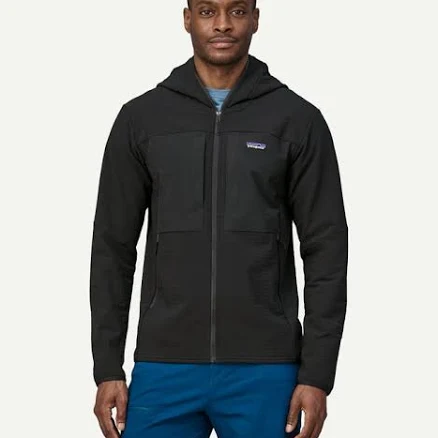
Patagonia Men's R2 TechFace Hoody
A water-repellent or grease-resistant treatment of unstated chemistry, with a brand PFAS statement we have not verified.
Patagonia says 100% of its new products from Spring 2025 are made without intentionally added PFAS. We record that as an unverified brand claim. Its record describes a water-repellent or grease-resistant treatment of unstated chemistry, which is still counted.
Brand says: “Patagonia says 100% of its new products from Spring 2025 are made without intentionally added PFAS.”
Still want this one anyway? Check the price on Amazon. We’d swap it.
Material
Polyester shell with water-repellent coating treatment
Brand disclosure
Brand claims PFAS-free
Lab data
No public lab test
You may also be interested in
Top-graded picks in the categories readers replace first, every one scored on the same rubric.

- polypropylene filter housing, carbon/sediment cartridge
- We found no PFAS statement from the brand
- Bacterial growth in spent cartridges
3 hazards checked on this product, all on its full breakdown.

Aquasure
Premier Series 75 GPD Under Sink Reverse Osmosis Water Filtration System
- RO membrane, carbon filters, stainless steel housing
- We found no PFAS statement from the brand
- Bacterial and microbial growth in housing and filters
4 hazards checked on this product, all on its full breakdown.

Avocado
Vegan Mattress
- organic cotton, natural latex, coconut coir, recycled steel coils
- The brand calls it PFAS-free, which we have not verified
- Heavy metals
2 hazards checked on this product, all on its full breakdown.
What Patagonia Men's R2 TechFace Hoody is made of, ingredients and materials
The R2 TechFace uses a polyester shell with a water-repellent coating (water-repellent coating) treatment applied to the fabric surface. Polyester itself is a stable synthetic polymer with no known leaching hazards during normal wear. The concern centers entirely on the water-repellent coating chemistry, Patagonia states it avoids PFOA and PFOS, but the specific treatment compound is not disclosed in publicly available product documentation, making independent verification impossible.
What’s concerning
Category baseline
The starting point for this type of product, before anything specific to this product is counted.
Waterproof / stain-resistant treatment
Water-repellent coating treatments have historically used PFAS.
PFAS
Patagonia claims PFAS-free water-repellent coating but does not publicly name the active compound. Alternative water-repellent coating systems exist (wax, silicone, non-fluorocarbon synthetics) but their long-term skin/respiratory exposure profile is less studied than PFAS. Hazard level reflects uncertainty, not evidence of harm.
Source, ATSDR ↗Polyester microfiber shedding
Polyester textiles release microfibers during washing, a documented phenomenon in the literature. The R2 TechFace's knit construction and regular laundering contribute to this; wear a washing bag or use a microfiber filter to reduce environmental release.
Heat sensitivity and thermal decomposition
Polyester begins to soften above 65C and degrades chemically above 80C. High-heat drying or ironing risks fabric damage and potential release of oligomers; low-heat or air drying is recommended.
What’s reassuring
Brand-stated PFAS-free
The brand states this product is PFAS-free. We have not verified the claim.
Formaldehyde / VOCs
No formaldehyde-based finishing resins have been identified in Patagonia's polyester softshell products in public disclosures. Polyester does not require formaldehyde curing as do cotton blends or wool, reducing this risk.
Source, ATSDR ↗Azo dyes or restricted colorants
Patagonia does not publicly disclose specific dye classes used in the R2 TechFace. The brand's OEKO-TEX certification on many products suggests compliance with azo restrictions, but this specific item's dye sheet is not consumer-accessible.
How is this PFAS grade calculated?
The brand's record and disclosure
Patagonia has made a corporate commitment to eliminating PFAS from products and published a roadmap toward that goal. However, the company does not routinely disclose the exact water-repellent coating chemistry on individual product labels or technical specs, relying instead on third-party certifications and internal testing Patagonia has not made fully public. This creates a trust-based model rather than a transparency-based one; the brand's reputation for environmental accountability is well-established, but verification of this specific garment's water-repellent coating agent is not possible from consumer-facing sources.
How it compares in its category
Softshell jackets universally use water-repellent coating treatments because water repellency is core to function; most mainstream brands use fluorocarbon-based systems (PFAS) or proprietary alternatives. Patagonia's PFAS-free repositioning puts it ahead of brands making no such commitment, but behind brands that openly name their water-repellent coating chemistry or carry third-party certifications (e.g., OEKO-TEX Standard 100). The R2 TechFace sits in the middle, better intent than mass-market competitors, but less transparent than full-disclosure leaders.
If you buy it
Wash in cool water with mild detergent; avoid fabric softeners and excessive heat, which can degrade polyester and reduce water-repellent coating performance. Air dry or tumble dry on low; do not iron or expose to direct flame or high heat (above 70C). Reapply water-repellent coating treatment after 2-3 years or when water no longer beads on the surface, using a product Patagonia recommends (many commercial water-repellent coating reapplications still contain PFAS, so check the treatment product label separately). Store dry and away from prolonged sunlight to slow polyester UV degradation.
What is not known about PFAS in this product?
- Basis
- Model estimate, 78% confidence, not a lab result
- Lab test
- None on record for this exact product
- Brand statement
- Patagonia has made a specific claim
Formulations change between production runs, so check the current label. How we grade.
More softshell jackets grades
How we score, every product runs through the same public 0-100 rubric based on materials, coatings, brand disclosure, lab findings, and recalls. See the full methodology → Spotted a mistake? Report an error.