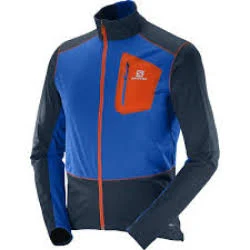
Salomon Men's Equipe Softshell Jacket
Avoid until Salomon clarifies water-repellent coating chemistry, softshell waterproofing commonly uses PFAS.
This polyester softshell uses a water-repellent coating treatment historically associated with PFAS, but Salomon doesn't publicly disclose the water-repellent coating's chemical composition. Request detailed specifications or consider brands with transparent sourcing.
Still want this one anyway? Check the price on Amazon. We’d swap it.
Material
Polyester softshell with water-repellent coating water-repellent finish
Lab data
No public lab test
You may also be interested in
Top-graded picks in the categories readers replace first, every one scored on the same rubric.

- polypropylene filter housing, carbon/sediment cartridge
- We found no PFAS statement from the brand
- Bacterial growth in spent cartridges
3 hazards checked on this product, all on its full breakdown.

Aquasure
Premier Series 75 GPD Under Sink Reverse Osmosis Water Filtration System
- RO membrane, carbon filters, stainless steel housing
- We found no PFAS statement from the brand
- Bacterial and microbial growth in housing and filters
4 hazards checked on this product, all on its full breakdown.

Avocado
Vegan Mattress
- organic cotton, natural latex, coconut coir, recycled steel coils
- The brand calls it PFAS-free, which we have not verified
- Heavy metals
2 hazards checked on this product, all on its full breakdown.
What Salomon Men's Equipe Softshell Jacket is made of, ingredients and materials
This jacket is polyester softshell fabric with a water-repellent coating (water-repellent coating) finish applied to the surface. Polyester itself is stable and non-leaching, but the water-repellent coating is the concern, it repels water and stains, and in the softshell category, most commercial water-repellent coating finishes historically rely on PFAS "forever chemicals" (PFAS), although some brands have migrated to fluorine-free alternatives. Salomon has not publicly disclosed which chemistry they use for this model, leaving the water-repellent coating hazard unresolved.
What’s concerning
Category baseline
The starting point for this type of product, before anything specific to this product is counted.
No PFAS disclosure
No public statement from the brand about PFAS in this product.
Waterproof / stain-resistant treatment
Water-repellent coating treatments have historically used PFAS.
PFAS
Softshell jackets commonly use PFAS-based water-repellent coating. Salomon has not disclosed the specific chemistry for this model. PFAS can leach into skin and accumulate in the body over repeated, long-term wear.
Source, ATSDR ↗water-repellent coating degradation and particulate shedding
As the water-repellent coating layer wears over time and through washing, microparticles of the coating may shed. If the coating contains PFAS, this represents a secondary exposure route. Proper care (avoiding abrasion, limiting heat) reduces shedding.
What’s reassuring
Azo dyes in polyester
No public record of azo dye violations or concerns specific to Salomon apparel. Polyester in reputable brands is typically dyed with compliant azo-free or low-risk dyes, though certification documentation is not publicly available for this model.
Formaldehyde / VOCs
Softshell polyester typically does not undergo formaldehyde-heavy finishing (unlike cotton wrinkle-resist treatments). No known formaldehyde risk is documented for Salomon softshells, but fabric finishing chemistry is not disclosed.
Source, ATSDR ↗Antimony in polyester polymer
Antimony oxide is used as a polymerization catalyst in some polyester production but is generally locked within the polymer matrix and not bioavailable during wear. No specific antimony concern is on record for Salomon apparel.
How is this PFAS grade calculated?
The brand's record and disclosure
Salomon (owned by Amer Sports) has not issued a public commitment to phasing out PFAS in apparel or published third-party test results for water-repellent coating-treated products. The brand maintains no visible transparency portal or chemical disclosure policy comparable to outdoor peers like Patagonia or The North Face, both of whom have committed to PFAS-free water treatments. Without direct inquiry to Salomon, consumers cannot verify whether this jacket uses legacy PFAS or modern alternatives.
How it compares in its category
Softshell jackets in this price and performance tier typically carry the same water-repellent coating chemistry gamble. Brands with explicit PFAS-free certifications (e.g., Patagonia, some Arc'teryx lines) or third-party eco-certifications (Bluesign, OEKO-TEX) provide clearer chemical baselines. Salomon's lack of disclosure places this jacket in the middle of the risk spectrum for the category, neither worst nor best practice.
If you buy it
Keep the jacket dry-cleaned or hand-washed in cool water to minimize leaching of any surface coatings. Avoid machine drying or high heat, which can degrade the water-repellent coating layer and potentially release coating particles. Replace the jacket when the water-repellent coating visibly wears (water no longer beads on fabric) or after 5 to 7 years of regular use. Before purchase, contact Salomon directly to confirm the water-repellent coating chemistry; if they cannot or will not specify, that silence itself is a data point.
What is not known about PFAS in this product?
- Basis
- Model estimate, 45% confidence, not a lab result
- Lab test
- None on record for this exact product
- Brand statement
- Salomon has made a specific claim
Formulations change between production runs, so check the current label. How we grade.
What are the PFAS-free alternatives to Salomon Men's Equipe Softshell Jacket?
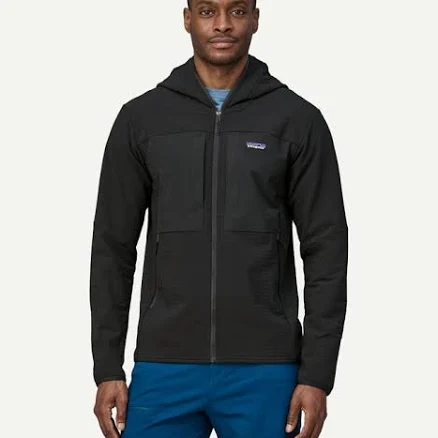
- Polyester shell with water-repellent coating treatment
- The brand calls it PFAS-free, which we have not verified
- PFAS
3 hazards checked on this product, all on its full breakdown.
Find an alternative on Amazon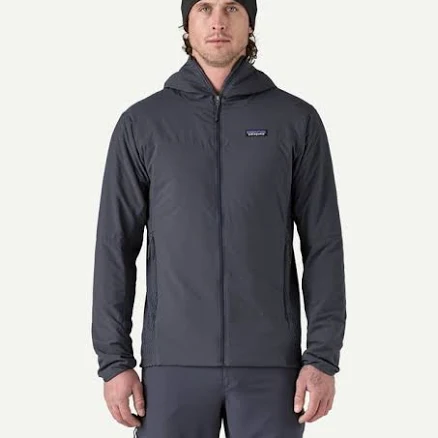
- Polyester ripstop with water-repellent coating finish (nylon stretch side)
- The brand calls it PFAS-free, which we have not verified
- water-repellent coating chemistry (unidentified)
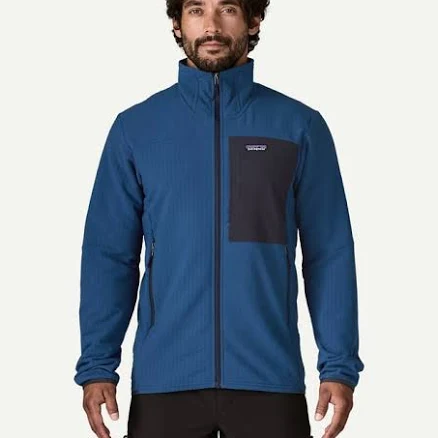
- Polyester with water-repellent coating (water-repellent coating) treatment
- The brand calls it PFAS-free, which we have not verified
- water-repellent coating chemistry, unspecified fluorocarbon alternative
3 hazards checked on this product, all on its full breakdown.
Find an alternative on AmazonMore softshell jackets grades
How we score, every product runs through the same public 0-100 rubric based on materials, coatings, brand disclosure, lab findings, and recalls. See the full methodology → Spotted a mistake? Report an error.