· Synthetic Athletic Insoles & Orthotics
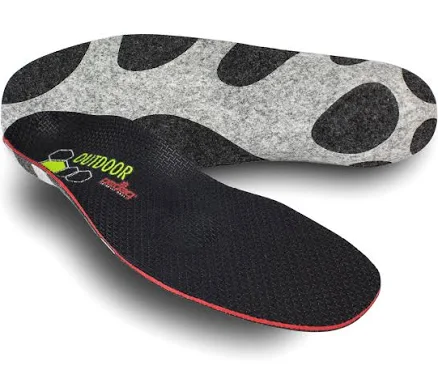
TheInsoleStore.com Outdoor Sportsline Insoles
Insufficient public data on material composition and treatments.
Outdoor insoles lack publicly available detailed material specs or PFAS disclosures. No third-party testing or certifications on record to assess risk level.
Still want this one anyway? Check the price on Amazon. We’d swap it.
Material
foam, gel, or textile cushioning (unspecified composition)
Brand disclosure
Brand is silent on PFAS
Lab data
No public lab test
You may also be interested in
Top-graded picks in the categories readers replace first, every one scored on the same rubric.

- polypropylene filter housing, carbon/sediment cartridge
- We found no PFAS statement from the brand
- Bacterial growth in spent cartridges
3 hazards checked on this product, all on its full breakdown.

Aquasure
Premier Series 75 GPD Under Sink Reverse Osmosis Water Filtration System
- RO membrane, carbon filters, stainless steel housing
- We found no PFAS statement from the brand
- Bacterial and microbial growth in housing and filters
4 hazards checked on this product, all on its full breakdown.

Avocado
Vegan Mattress
- organic cotton, natural latex, coconut coir, recycled steel coils
- The brand calls it PFAS-free, which we have not verified
- Heavy metals
2 hazards checked on this product, all on its full breakdown.
What TheInsoleStore.com Outdoor Insoles is made of, ingredients and materials
TheInsoleStore Outdoor Sportsline insoles are described as foam, gel, or textile cushioning, but the brand has not publicly disclosed specific material composition, densities, or treatment chemicals. This opacity makes it impossible to verify whether foam cores contain legacy flame retardants, adhesives with volatile organic compounds (VOCs), or synthetic textiles treated with formaldehyde resins. Insole safety depends on knowing whether cushioning degrades under foot heat and sweat, potentially releasing monomers or off-gases into skin contact zones.
What’s concerning
Category baseline
The starting point for this type of product, before anything specific to this product is counted.
No PFAS disclosure
No public statement from the brand about PFAS in this product.
Foam/polymer off-gassing and VOC release
Unspecified foam or gel cores may contain volatile adhesives or polyurethane that emit VOCs, especially under heat, sweat, or friction. Risk increases if insoles are worn in enclosed, warm environments (ski boots, cycling shoes) without ventilation.
Formaldehyde / VOCs
If textile cover or top layer is present, it may be treated with formaldehyde-releasing resins for water resistance or shape retention. No OEKO-TEX or equivalent certification is advertised to rule this out.
Source, ATSDR ↗Microplastic shedding from cushioning degradation
Foam and gel insoles degrade over time with repetitive flexing and moisture exposure. Breakdown products may shed microparticles into footwear and eventually soil. Severity depends on foam formulation, which is undisclosed.
Adhesive toxicity in laminated layers
Multi-layer insole construction typically uses adhesives to bond foam, gel, and textile. If solvent-based or phenol-formaldehyde containing, off-gassing is possible, especially in new products or under heat/humidity stress.
What’s reassuring
Base material not linked to PFAS
The main material recorded for this product is not one associated with PFAS.
Azo dyes or antimony in synthetic textiles
No public data confirms presence of banned azo dyes or antimony catalysts in insole fabrics; typical sports insole textiles are low-risk for these unless specifically dyed bright colors without certification.
How is this PFAS grade calculated?
The brand's record and disclosure
The brand is a German footcare company with long history but maintains minimal public safety documentation for this product line. No independent certifications (OEKO-TEX, GOTS, or equivalent) are advertised for these insoles. The brand's silence on PFAS, flame retardant status, and material sourcing reflects a broader industry norm of non-disclosure rather than evidence of safety; absence of disclosure is not assurance. The brand does not appear in major product safety recall databases for this insole line.
How it compares in its category
Sports insoles typically use EVA foam, polyurethane, gel polymers, or cork composites. The brand's refusal to specify which places it below transparent competitors like Superfeet or Powerstep, which publish material certifications. Generic sports insoles are lower-risk than dress shoes (fewer chemical finishes) but higher-risk than plain textile arch supports because cushioning often uses petroleum-derived polymers and adhesives. Without composition data, direct comparison is speculative.
If you buy it
Avoid prolonged direct skin contact if you have sensitive skin or chemical sensitivities; wear socks between insole and skin as barrier. Do not expose to prolonged heat (over 50°C/122°F) or intense UV, as unknown foam cores may off-gas or degrade. Replace if visible deterioration, cracking, or odor develops; degraded cushioning material can shed microparticles. Store in cool, dry conditions; request detailed material safety data sheet (MSDS) from the brand or retailer before purchase if chemical sensitivities are a concern.
What is not known about PFAS in this product?
- Basis
- Model estimate, 35% confidence, not a lab result
- Lab test
- None on record for this exact product
- Brand statement
- has made none
Formulations change between production runs, so check the current label. How we grade.
More synthetic athletic insoles & orthotics grades
How we score, every product runs through the same public 0-100 rubric based on materials, coatings, brand disclosure, lab findings, and recalls. See the full methodology → Spotted a mistake? Report an error.