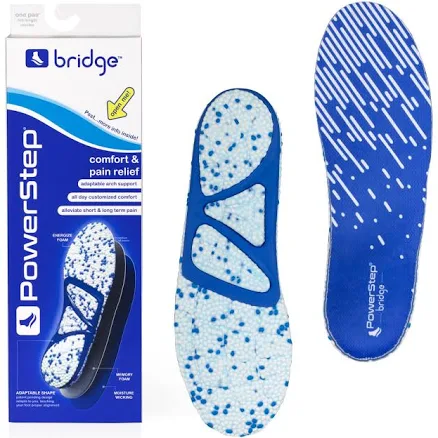
Powerstep · Synthetic Athletic Insoles & Orthotics
PowerStep Bridge Insoles
Limited PFAS risk is likely, but the brand says nothing about it.
PowerStep Bridge uses foam and gel cushioning, materials not typically treated with PFAS. The brand shares no public PFAS claims or testing data.
Still want this one anyway? Check the price on Amazon. We’d swap it.
Material
foam, gel, textile layers
Brand disclosure
Brand is silent on PFAS
Lab data
No public lab test
You may also be interested in
Top-graded picks in the categories readers replace first, every one scored on the same rubric.

- polypropylene filter housing, carbon/sediment cartridge
- We found no PFAS statement from the brand
- Bacterial growth in spent cartridges
3 hazards checked on this product, all on its full breakdown.

Aquasure
Premier Series 75 GPD Under Sink Reverse Osmosis Water Filtration System
- RO membrane, carbon filters, stainless steel housing
- We found no PFAS statement from the brand
- Bacterial and microbial growth in housing and filters
4 hazards checked on this product, all on its full breakdown.

Avocado
Vegan Mattress
- organic cotton, natural latex, coconut coir, recycled steel coils
- The brand calls it PFAS-free, which we have not verified
- Heavy metals
2 hazards checked on this product, all on its full breakdown.
What PowerStep Bridge Insoles is made of, ingredients and materials
PowerStep Bridge Insoles combine closed-cell foam (typically polyurethane or EVA), gel cushioning layers, and textile top covers. Foam and gel materials in insoles are not designed to contact skin for prolonged periods at high temperatures, limiting leaching risk for most chemical additives. The textile layer is a minor exposure pathway because it contacts only the sock-covered foot during normal wear.
What’s concerning
Category baseline
The starting point for this type of product, before anything specific to this product is counted.
No PFAS disclosure
No public statement from the brand about PFAS in this product.
Formaldehyde / VOCs
Textile top covers on insoles may contain formaldehyde-based binders or finishes for wrinkle resistance or antimicrobial properties. Skin contact is intermittent and sock-mediated, so exposure is low, but PowerStep does not disclose whether their textile is treated.
Source, ATSDR ↗Polyurethane foam degradation and off-gassing
Polyurethane foam can off-gas volatile organic compounds (VOCs) during early use and when exposed to heat or UV light. In an enclosed shoe, VOC concentration remains localized and low; risk is minimal compared to indoor foam products, but sensitive individuals may notice odor.
Bacterial growth and mold in gel or foam layers
Damp gel and foam insoles are susceptible to microbial colonization if not dried between uses. This is a hygiene and odor issue rather than a chemical hazard, but can cause skin irritation in people with sensitive skin or fungal susceptibility.
What’s reassuring
Base material not linked to PFAS
The main material recorded for this product is not one associated with PFAS.
Heavy metals
No public data confirms antimony use in PowerStep insole textiles. If the top cover is polyester, antimony may be present as a catalyst, but foot-contact duration and barrier (sock) make migration negligible.
Source, FDA ↗Azo dyes in textile cover
No published data on dye chemistry in PowerStep insoles. Azo dyes are commonly used in textile dyeing and may cause allergic contact dermatitis in sensitive individuals; PowerStep provides no dye standard information.
How is this PFAS grade calculated?
The brand's record and disclosure
PowerStep does not publicly disclose material sourcing, manufacturing standards, or chemical certifications (e.g., bluesign, OEKO-TEX) on their website or product packaging. The brand has no documented safety recalls or hazard controversies in public records. Their silence on PFAS and other chemicals is consistent with most orthotic insole manufacturers, who treat these as commodity foot-care items rather than regulated medical devices in most markets.
How it compares in its category
Orthotic insoles typically carry lower chemical hazard profiles than apparel or footwear uppers because the materials are not dyed, flame-treated, or chemically water-proofed to the extent textiles are. PowerStep's multi-layer foam and gel construction is standard in the category and offers no obvious advantage or disadvantage in chemical safety relative to Superfeet, Powerfeet, or store-brand gel insoles. Certification-bearing alternatives (e.g., some Superfeet or podiatrist-recommended brands with OEKO-TEX labeling) offer more transparency but at higher cost.
If you buy it
Wash insoles in cool water with mild soap every 1-2 weeks to remove sweat and bacteria; do not machine wash or bleach. Replace every 6-12 months depending on activity level, as foam degrades and loses cushioning rather than leaching concern. Store in a dry location; avoid prolonged heat exposure (do not leave in hot vehicles). If you have sensitive skin or notice irritation, consider switching to a certified alternative with known material transparency.
What is not known about PFAS in this product?
- Basis
- Model estimate, 72% confidence, not a lab result
- Lab test
- None on record for this exact product
- Brand statement
- Powerstep has made none
Formulations change between production runs, so check the current label. How we grade.
More synthetic athletic insoles & orthotics grades
How we score, every product runs through the same public 0-100 rubric based on materials, coatings, brand disclosure, lab findings, and recalls. See the full methodology → Spotted a mistake? Report an error.